Notice: تابع WP_Block_Type_Registry::register به طورنادرست فراخوانی شد. نامهای نوع بلوک نباید حروف بزرگ داشته باشند. لطفاً برای اطلاعات بیشتر، اشکال زدایی در وردپرس را مشاهده کنید. (این پیام در نگارش 5.0.0 افزوده شده است.) in /home/ethicsho/public_html/wp-includes/functions.php on line 5313
Warning: Use of undefined constant TDC_PATH_LEGACY - assumed 'TDC_PATH_LEGACY' (this will throw an Error in a future version of PHP) in /home/ethicsho/public_html/wp-content/plugins/td-composer/td-composer.php on line 109
Warning: Use of undefined constant TDSP_THEME_PATH - assumed 'TDSP_THEME_PATH' (this will throw an Error in a future version of PHP) in /home/ethicsho/public_html/wp-content/plugins/td-composer/td-composer.php on line 113 بایگانیهای Routledge & Kegan Paul PLC - خانه اخلاق پژوهان جوان Notice: Trying to access array offset on value of type bool in /home/ethicsho/public_html/wp-content/plugins/wp-ulike/inc/general-functions.php on line 807
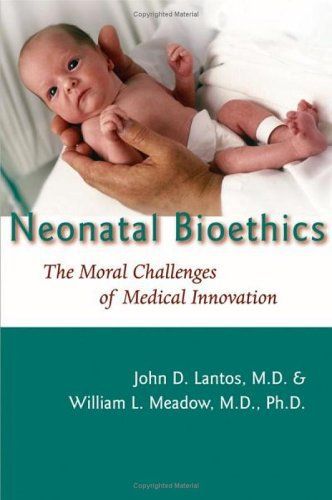
Neonatal intensive care has been one of the most morally controversial areas of medicine during the past thirty years. This study examines the interconnected development of four key aspects of neonatal intensive care: medical advances, ethical analysis, legal scrutiny, and econometric evaluation.The authors assert that a dramatic shift in societal attitudes toward newborns and their medical care was a stimulus for and then a result of developments in the medical care of newborns. They divide their analysis into three eras of neonatal intensive care. The first, characterized by the rapid advance of medical technology from the late 1960s to the Baby Doe case of 1982, established neonatal care as a legitimate specialty of medical care, separate from the rest of pediatrics and medicine. During this era, legal scholars and moral philosophers debated the relative importance of parental autonomy, clinical prognosis, and children’s rights. The second era, beginning with the Baby Doe case (a legal battle that spurred legislation mandating that infants with debilitating birth defects be treated unless the attending physician deems efforts to prolong life “futile”), stimulated efforts to establish a consistent federal standard on neonatal care decisions and raised important moral questions concerning the meaning of “futility” and of “inhumane” treatment. In the third era, a consistent set of decision-making criteria and policies was established. These policies were the result of the synergy and harmonization of newly agreed upon ethical principles and newly discovered epidemiological characteristics of neonatal care.Tracing the field’s recent history, notable advances, and considerable challenges yet to be faced, the authors present neonatal bioethics as a paradigm of complex conversation among physicians, philosophers, policy makers, judges, and legislators which has led to responsible societal oversight of a controversial medical innovation.
In this important book, Jeffrey Reiman responds to recent assaults on liberal theory by proposing a “critical moral liberalism.” It is liberal in maintaining the emphasis of classical liberalism on individual freedom, moral in adhering to a distinctive vision of the good life rather than professing neutrality, and critical in taking seriously the objection-raised by feminists and Marxists, among others-that liberal theories often serve as ideological cover for oppression of one group by others. Critical moral liberalism has a conception of ideology, and resources for testing the suspicion that arrangements that look free are really oppressive. Reiman sets forth the basic arguments for the liberal moral obligation to maximize people’s ability to govern their own lives, and for the conception of the good life that goes with this. He considers and answers objections to the liberal project, and defends liberal conceptions of privacy, moral virtue, economic justice, and Constitutional interpretation. Reiman then takes up specific policy issues, among them abortion, infanticide, euthanasia, moral education, capital punishment, and threats to privacy from modern information technology. Critical Moral Liberalism will be of interest to scholars and students of ethics, social and political philosophy, political theory, and public policy.
Over the last few decades information and communication technology has come to play an increasingly prominent role in our dealings with other people. Computers, in particular, have made available a host of new ways of interacting, which we have increasingly made use of. In the wake of this development a number of ethical questions have been raised and debated. Ethics in Cyberspace focuses on the consequences for ethical agency of mediating interaction by means of computers, seeking to clarify how the conditions of certain kinds of interaction in cyberspace (for example, in chat-rooms and virtual worlds) differ from the conditions of interaction face-to-face and how these differences may come to affect the behaviour of interacting agents in terms of ethics.
ما از اخلاق چه انتظاری داریم؟ این سوال شاید تاحدودی برای عموم مردم و یا متخصصان این رشته قابل پاسخ باشد؛ اینکه خوب بودن را به ما بیاموزد و در تنظیم روابط فردی م...

جشن کتاب تهران به ایستگاه سی و یکم رسیده است. حال و احوال نشر کتاب خوب نیست و باید فرهنگدوستان را به خرید و هدیه دادن کتاب ترغیب نمود. خانه اخلاقپژوهان جوان ب...

بنیاد کتابهای اخلاق اسلامی عمدتا پالایش جان از آلودگیها و آراستن آن به زیباییها است. اندیشه محوری این قبیل کتابها آن است که انسان فعلی آنی نیست که باید باشد...

-
0 Comments