Notice: تابع WP_Block_Type_Registry::register به طورنادرست فراخوانی شد. نامهای نوع بلوک نباید حروف بزرگ داشته باشند. لطفاً برای اطلاعات بیشتر، اشکال زدایی در وردپرس را مشاهده کنید. (این پیام در نگارش 5.0.0 افزوده شده است.) in /home/ethicsho/public_html/wp-includes/functions.php on line 5313
Warning: Use of undefined constant TDC_PATH_LEGACY - assumed 'TDC_PATH_LEGACY' (this will throw an Error in a future version of PHP) in /home/ethicsho/public_html/wp-content/plugins/td-composer/td-composer.php on line 109
Warning: Use of undefined constant TDSP_THEME_PATH - assumed 'TDSP_THEME_PATH' (this will throw an Error in a future version of PHP) in /home/ethicsho/public_html/wp-content/plugins/td-composer/td-composer.php on line 113 بایگانیهای Prometheus Research Group - خانه اخلاق پژوهان جوان Notice: Trying to access array offset on value of type bool in /home/ethicsho/public_html/wp-content/plugins/wp-ulike/inc/general-functions.php on line 807
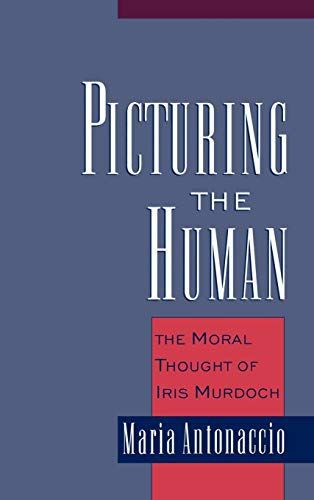
Iris Murdoch has long been known as one of the most deeply insightful and morally passionate novelists of our time. This attention has often eclipsed Murdoch’s sophisticated and influential work as a philosopher, which has had a wide-ranging impact on thinkers in moral philosophy as well as religious ethics and political theory. Yet it has never been the subject of a book-length study in its own right. Picturing the Human seeks to fill this gap. In this groundbreaking book, author Maria Antonaccio presents the first systematic and comprehensive treatment of Murdoch’s moral philosophy. Unlike literary critical studies of her novels, it offers a general philosophical framework for assessing Murdoch’s thought as a whole. Antonaccio also suggests a new interpretive method for reading Murdoch’s philosophy and outlines the significance of her thought in the context of current debates in ethics. This vital study will appeal to those interested in moral philosophy, religious ethics, and literary criticism, and grants those who have long loved Murdoch’s novels a closer look at her remarkable philosophy.
“This book is an original, comprehensive reference source on ethical and security issues relating to the latest technologies. It covers a wide range of themes, including topics such as computer crime, information warfare, privacy, surveillance, intellectual property and education. It is a useful tool for students, academics, and professionals”–Provided by publisher.
The Violence of Love is a powerful collection of extracts from Romero’s homilies, letters, and articles. Each of these passages gives insight into the mind and heart of the man behind them, more insight, perhaps, than any biographic account of his life. They show a man not afraid to expose his weakness, a man whose tremendous faith and hope call us to repentance and renewal.Originally addressed to the people of El Salvador, Romero’s words speak to all people, passionately decrying injustice and violence, exhorting to peace and forgiveness, and inviting all to help build a new, just society. Chronologically arranged, the selections reflect Romero’s own spiritual transformation and call us to experience a similar revolution of the heart.Romero was martyred for his insistence that following Christ cannot be relegated to the spiritual realm. He did not die in vain; the people of Central America say his spirit lives on in them. As their struggle for justice and dignity intensifies, his words take on a renewed urgency.Short, poetic passages make this collection excellent reading for daily reflection and renewal.
In this new edition of the classic book on the moral conduct of war, Sidney Axinn provides a full-length treatment of the military conventions from a philosophical point of view. Axinn considers these basic ethical questions within the context of the laws of warfare: Should a good soldier ever disobey a direct military order? Are there restrictions on how we fight a war? What is meant by “military honour,” and does it really affect the contemporary soldier? Is human dignity possible under battlefield conditions?Axinn answers “yes” to these questions. His objective inA Moral Militaryis to establish a basic framework for moral military action and to assist in analyzing military professional ethics. He argues for the seriousness of the concept of military honour but limits honourable military activity by a strict interpretation of the notion of war crime.With revisions and expansions throughout, including a new chapter on torture,A Moral Militaryis an essential guide on the nature of war during a time when the limits of acceptable behaviour are being stretched in new directions.
Must good deeds be rewarded and wrongdoers punished? Would God be unjust if He failed to punish and reward? And what is it about good or evil actions and moral identity that might generate such necessities? These were some of the vital religious and philosophical questions that eighth- and ninth-century Mu’tazilite theologians and their sophisticated successors attempted to answer, giving rise to a distinctive ethical position and one of the most prominent and controversial intellectual trends in medieval Islam. The Mu’tazilites developed a view of ethics whose distinguishing features were its austere moral objectivism and the crucial role it assigned to reason in the knowledge of moral truths. Central to this ethical vision was the notion of moral desert, and of the good and evil consequences–reward or punishment–deserved through a person’s acts. Moral Agents and Their Desertsis the first book-length study of this central theme in Mu’tazilite ethics, and an attempt to grapple with the philosophical questions it raises. At the same time, it is a bid to question the ways in which modern readers, coming to medieval Islamic thought with a philosophical interest, seek to read and converse with Mu’tazilite theology.Moral Agents and Their Desertstracks the challenges and rewards involved in the pursuit of the right conversation at the seams between modern and medieval concerns.
ما از اخلاق چه انتظاری داریم؟ این سوال شاید تاحدودی برای عموم مردم و یا متخصصان این رشته قابل پاسخ باشد؛ اینکه خوب بودن را به ما بیاموزد و در تنظیم روابط فردی م...

جشن کتاب تهران به ایستگاه سی و یکم رسیده است. حال و احوال نشر کتاب خوب نیست و باید فرهنگدوستان را به خرید و هدیه دادن کتاب ترغیب نمود. خانه اخلاقپژوهان جوان ب...

بنیاد کتابهای اخلاق اسلامی عمدتا پالایش جان از آلودگیها و آراستن آن به زیباییها است. اندیشه محوری این قبیل کتابها آن است که انسان فعلی آنی نیست که باید باشد...

-
0 Comments