Notice: تابع WP_Block_Type_Registry::register به طورنادرست فراخوانی شد. نامهای نوع بلوک نباید حروف بزرگ داشته باشند. لطفاً برای اطلاعات بیشتر، اشکال زدایی در وردپرس را مشاهده کنید. (این پیام در نگارش 5.0.0 افزوده شده است.) in /home/ethicsho/public_html/wp-includes/functions.php on line 5313
Warning: Use of undefined constant TDC_PATH_LEGACY - assumed 'TDC_PATH_LEGACY' (this will throw an Error in a future version of PHP) in /home/ethicsho/public_html/wp-content/plugins/td-composer/td-composer.php on line 109
Warning: Use of undefined constant TDSP_THEME_PATH - assumed 'TDSP_THEME_PATH' (this will throw an Error in a future version of PHP) in /home/ethicsho/public_html/wp-content/plugins/td-composer/td-composer.php on line 113 بایگانیهای Pennsylvania State Univ Pr (Txt) - خانه اخلاق پژوهان جوان Notice: Trying to access array offset on value of type bool in /home/ethicsho/public_html/wp-content/plugins/wp-ulike/inc/general-functions.php on line 807
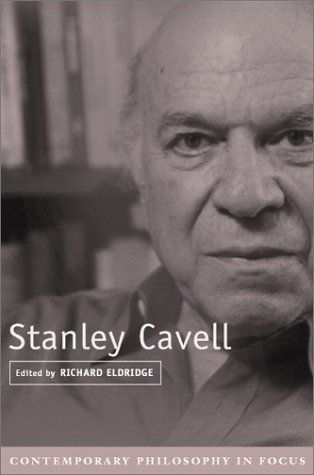
Stanley Cavell has been one of the most creative and independent of contemporary philosophical voices. At the core of his thought is the view that skepticism is not a theoretical position to be refuted by philosophical theory but is a reflection of the fundamental limits of human knowledge of the self, of others and of the external world that must be accepted. This volume is the first attempt systematically and accessibly to describe and assess the full range of Cavell’s work. There are new accounts of Cavell’s contribution to the philosophy of mind and language, the theory of action, ethics, aesthetics, Romanticism, American philosophy. Richard Eldridge is Professor of Philosophy and Chair of the Philsophy Department at Swarthmore College. He is author of The Persistence of Romanticism (Cambridge, 2001), On Moral Personhood: Philosophy, Literature, Criticism, and Self-Understanding (Chicago, 1989) and Leading a Human Life: Wittengenstein, Intentionality, and Romanticism (Chicago, 1997), which won the 1998 Jean-Pierre Barricelli Book Prize awarded by the American Conference on Romanticism. He is the editor of Beyond Representation: Philosophy and Poetic Imagination (Cambridge, 1996).
For decades, Engelhardt has alluded to the ethics that binds moral friends. While his ‘Foundations of Bioethics’ explored the sparse ethics binding moral strangers, this long-awaited volume addresses the morality at the foundations of Christian bioethics. The volume opens with an analysis of the marginalization of Christian bioethics in the 1970s and the irremedial shortcomings of secular ethics in general. Drawing on the Christianity of the first millennium, Engelhardt provides the ontological and epistemological foundations for a Christian bioethics that can remedy the onesidedness of a secular bioethics and supply the bases for a Christian bioethics. The volume then addresses issues from abortion, third-party-assisted reproduction, and cloning, to withholding and withdrawing treatment, physician-assisted suicide, and euthanasia. Practices such as free and informed consent are relocated within a traditional Christian morality. Attention is also given to the allocation of scarce resources in health care, and to the challenge of maintaining the Christian identity of physicians, nurses, patients, and health care institutions in a culture that is now post-Christian.
The philosophy of perception investigates the nature of our sensory experiences and their relation to reality. Raising questions about the conscious character of perceptual experiences, how they enable us to acquire knowledge of the world in which we live, and what exactly it is we are aware of when we hallucinate or dream, the philosophy of perception is a growing area of interest in metaphysics, epistemology, and philosophy of mind.William Fish’s Philosophy of Perception introduces the subject thematically, setting out the major theories of perception together with their motivations and attendant problems. While providing historical background to debates in the field, this comprehensive overview focuses on recent presentations and defenses of the different theories, and looks beyond visual perception to take into account the role of other senses.Topics covered include:The Phenomenal PrinciplePerception and HallucinationPerception and ContentSense-Data, Adverbialism and IdealismDisjunctivism and RelationalismIntentionalism and Combined TheoriesThe Nature of ContentVeridicalityPerception and Empirical ScienceNon-Visual PerceptionWith summaries and suggested further reading at the end of each chapter, this is an ideal introduction to the philosophy of perception.
ما از اخلاق چه انتظاری داریم؟ این سوال شاید تاحدودی برای عموم مردم و یا متخصصان این رشته قابل پاسخ باشد؛ اینکه خوب بودن را به ما بیاموزد و در تنظیم روابط فردی م...

جشن کتاب تهران به ایستگاه سی و یکم رسیده است. حال و احوال نشر کتاب خوب نیست و باید فرهنگدوستان را به خرید و هدیه دادن کتاب ترغیب نمود. خانه اخلاقپژوهان جوان ب...

بنیاد کتابهای اخلاق اسلامی عمدتا پالایش جان از آلودگیها و آراستن آن به زیباییها است. اندیشه محوری این قبیل کتابها آن است که انسان فعلی آنی نیست که باید باشد...

-
0 Comments