Notice: تابع WP_Block_Type_Registry::register به طورنادرست فراخوانی شد. نامهای نوع بلوک نباید حروف بزرگ داشته باشند. لطفاً برای اطلاعات بیشتر، اشکال زدایی در وردپرس را مشاهده کنید. (این پیام در نگارش 5.0.0 افزوده شده است.) in /home/ethicsho/public_html/wp-includes/functions.php on line 5313
Warning: Use of undefined constant TDC_PATH_LEGACY - assumed 'TDC_PATH_LEGACY' (this will throw an Error in a future version of PHP) in /home/ethicsho/public_html/wp-content/plugins/td-composer/td-composer.php on line 109
Warning: Use of undefined constant TDSP_THEME_PATH - assumed 'TDSP_THEME_PATH' (this will throw an Error in a future version of PHP) in /home/ethicsho/public_html/wp-content/plugins/td-composer/td-composer.php on line 113 بایگانیهای Penguin - خانه اخلاق پژوهان جوان Notice: Trying to access array offset on value of type bool in /home/ethicsho/public_html/wp-content/plugins/wp-ulike/inc/general-functions.php on line 807
The Cambridge Companion to the Scottish Enlightenment offers a philosophical perspective on an eighteenth-century movement that has been profoundly influential on western culture. A distinguished team of contributors examines the writings of David Hume, Adam Smith, Thomas Reid, Adam Ferguson, Colin Maclaurin and other Scottish thinkers, in fields including philosophy, natural theology, economics, anthropology, natural science and law. In addition, the contributors relate the Scottish Enlightenment to its historical context and assess its impact and legacy in Europe, America and beyond. The result is a comprehensive and accessible volume that illuminates the richness, the intellectual variety and the underlying unity of this important movement. It will be of interest to a wide range of readers in philosophy, theology, literature and the history of ideas.
This work explains how human beings can live more peacefully with one another by understanding the conditions of possibility for dialogue. Philosophically, this challenge is articulated as the problem of: how dialogue as dia-logos is possible when the shared logos is precisely that which is in question. Emmanuel Levinas, in demonstrating that the shared logos is a function of interhuman relationship, helps us to make some progress in understanding the possibilities for dialogue in this situation. If the terms of the argument to his point are taken largely from Levina’s 1961 Totality & Infinity, Dudiak further proposes that Levina’s 1974 Otherwise than Being can be read as a deepening of these earlier analyses, delineating, both the conditions of possibility & impossibility for discourse itself. Throughout these analyses Dudiak discovers that in Levina’s view dialogue is ultimately possible, only for a gracious subjectivity already graced by God by way of the other, but where the word God is inseparable from my subjectivity as a graciousness to the other. Finally, for Levinas, the facilitation of dialogue, the facilitation of peace, comes down to the subject’s capacity & willingness to be who he or she is, to take the beautiful risk of a peaceful gesture offered to the other & that peace, in this gesture itself. As Levinas himself puts it: “Peace then is under my responsibility. I am a hostage, for I am alone to wage it, running a fine risk, dangerously.” Levinas’s philosophical discourse is precisely itself to be read as such a gesture.
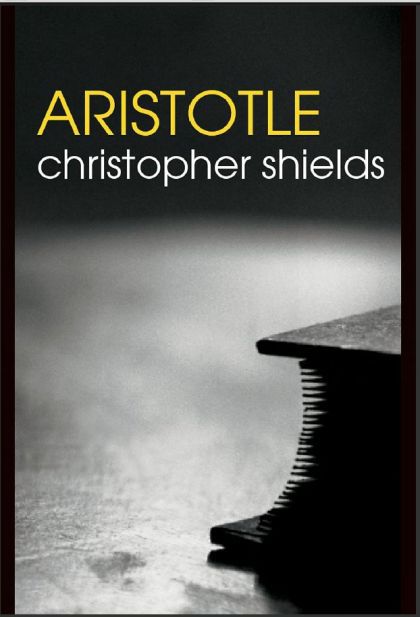
In this excellent introduction, Christopher Shields introduces and assesses the whole of Aristotle?s philosophy, showing how his powerful conception of human nature shaped much of his thinking on the nature of the soul and the mind, ethics, politics and the arts. Beginning with a brief biography, Christopher Shields carefully explains the fundamental elements of Aristotle?s thought: his explanatory framework, his philosophical methodology and his four-causal explanatory scheme. Subsequently he discusses Aristotle?s metaphysics and the theory of categories and logical theory and his conception of the human being and soul and body. In the last part, he concentrates on Aristotle?s value theory as applied to ethics and politics, and assesses his approach to happiness, virtues and the best life for human beings. He concludes with an appraisal of Aristotelianism today.
ما از اخلاق چه انتظاری داریم؟ این سوال شاید تاحدودی برای عموم مردم و یا متخصصان این رشته قابل پاسخ باشد؛ اینکه خوب بودن را به ما بیاموزد و در تنظیم روابط فردی م...

جشن کتاب تهران به ایستگاه سی و یکم رسیده است. حال و احوال نشر کتاب خوب نیست و باید فرهنگدوستان را به خرید و هدیه دادن کتاب ترغیب نمود. خانه اخلاقپژوهان جوان ب...

بنیاد کتابهای اخلاق اسلامی عمدتا پالایش جان از آلودگیها و آراستن آن به زیباییها است. اندیشه محوری این قبیل کتابها آن است که انسان فعلی آنی نیست که باید باشد...

-
0 Comments