Notice: تابع WP_Block_Type_Registry::register به طورنادرست فراخوانی شد. نامهای نوع بلوک نباید حروف بزرگ داشته باشند. لطفاً برای اطلاعات بیشتر، اشکال زدایی در وردپرس را مشاهده کنید. (این پیام در نگارش 5.0.0 افزوده شده است.) in /home/ethicsho/public_html/wp-includes/functions.php on line 5313
Warning: Use of undefined constant TDC_PATH_LEGACY - assumed 'TDC_PATH_LEGACY' (this will throw an Error in a future version of PHP) in /home/ethicsho/public_html/wp-content/plugins/td-composer/td-composer.php on line 109
Warning: Use of undefined constant TDSP_THEME_PATH - assumed 'TDSP_THEME_PATH' (this will throw an Error in a future version of PHP) in /home/ethicsho/public_html/wp-content/plugins/td-composer/td-composer.php on line 113 بایگانیهای Nelson Thornes - خانه اخلاق پژوهان جوان Notice: Trying to access array offset on value of type bool in /home/ethicsho/public_html/wp-content/plugins/wp-ulike/inc/general-functions.php on line 807
Images of loss and yearning played a crucial role in literary texts written in the later part of the twentieth century. Despite deep cultural differences, novelists from Africa, the Caribbean, Great Britain, and the United States share a sense that the economic, social, and political forces associated with late modernity have evoked widespread nostalgia within the communities in which they write. In this original and wide-ranging study, John J. Su explores the relationship between nostalgia and ethics in novels across the English-speaking world. He challenges the tendency in literary studies to characterise memory as positive and nostalgia as necessarily negative. Instead, this book argues that nostalgic fantasies are crucial to the ethical visions presented by topical novels. From Jean Rhys to Wole Soyinka and from V. S. Naipaul to Toni Morrison, Su identifies nostalgia as a central concern in the twentieth-century novel.
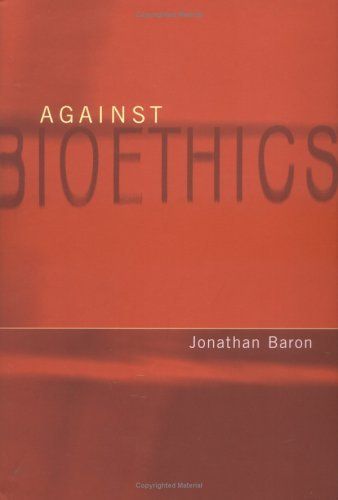
Governments, health professionals, patients, research institutions, and research subjects look to bioethicists for guidance in making important decisions about medical treatment and research. And yet, argues Jonathan Baron in Against Bioethics, applied bioethics lacks the authority of a coherent guiding theory and is based largely on intuitive judgments. Baron proposes an alternative, arguing that bioethics could have a coherent theory based on utilitarianism and decision analysis. Utilitarianism holds that the best option is the one that does the most expected good. Decision analysis provides a way of thinking about the risks and trade-offs of specific options. Like economics, utilitarian decision analysis makes predictions of expected good in complex situations, using data when possible, and focusing human judgment on the issues relevant to consequences. With such a guiding theory, bioethics would never yield decisions that clearly go against the expected good of those involved, as some do now. Baron discusses issues in bioethics that can be illuminated by such analysis, including “enhancements” to nature in the form of genetics, drugs, and mind control; reproduction; death and end-of-life issues, including advance directives, euthanasia, and organ donation; coercion and consent; conflict of interest and the reform of internal review boards; and drug research. Although Baron opposes current practice in bioethics, he argues that by combining utilitarianism and decision analysis, bioethics can achieve its aims of providing authoritative guidance in resolving thorny medical and ethical issues.
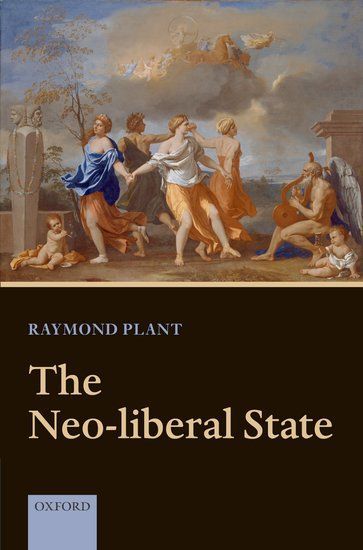
The aim of the book is two-fold. First of all it is to provide a fair, complete and analytical account of the Neo-liberal conception of the role and function of the state in modern society. The second aim is to provide a critical assessment of some of the central elements of this conception. The book will look at the emphasis of Neo-liberals on procedural and rule governed approaches to the role of the state rather than outcome or end state views of the role of government and to consider how this conception of politics relates to issues such as the rule of law, freedom, justice, rights, the relationship to the market economy, to civil society and to look at the role of government in relation to the provision of welfare and public sector services more generally. It builds up the Neo-liberal case in respect of these aspects of modern society by drawing upon the works of central Neo-liberal thinkers such as Hayek, Mises, Menger, as well as thinkers such as Oakeshott, Nozick and Rotbard who are not directly Neo-liberals but whose works have been important for the development of central Neo-liberal themes. The second part of the book provides what might be regarded as an immanent critique of the Neo-liberal case built up in the first part of the study. It takes Neo-liberal ideas very seriously and shows how incoherences arise within and between those ideas such that a plausible form of Neo-liberalism as opposed to Libertarianism on the one hand and Social Democracy on the other is very difficult to state. The theme of this book is very germane given the considerable debate which is now taking place in the context of the world financial crisis about the appropriate role for the state.
ما از اخلاق چه انتظاری داریم؟ این سوال شاید تاحدودی برای عموم مردم و یا متخصصان این رشته قابل پاسخ باشد؛ اینکه خوب بودن را به ما بیاموزد و در تنظیم روابط فردی م...

جشن کتاب تهران به ایستگاه سی و یکم رسیده است. حال و احوال نشر کتاب خوب نیست و باید فرهنگدوستان را به خرید و هدیه دادن کتاب ترغیب نمود. خانه اخلاقپژوهان جوان ب...

بنیاد کتابهای اخلاق اسلامی عمدتا پالایش جان از آلودگیها و آراستن آن به زیباییها است. اندیشه محوری این قبیل کتابها آن است که انسان فعلی آنی نیست که باید باشد...

-
0 Comments