Notice: تابع WP_Block_Type_Registry::register به طورنادرست فراخوانی شد. نامهای نوع بلوک نباید حروف بزرگ داشته باشند. لطفاً برای اطلاعات بیشتر، اشکال زدایی در وردپرس را مشاهده کنید. (این پیام در نگارش 5.0.0 افزوده شده است.) in /home/ethicsho/public_html/wp-includes/functions.php on line 5313
Warning: Use of undefined constant TDC_PATH_LEGACY - assumed 'TDC_PATH_LEGACY' (this will throw an Error in a future version of PHP) in /home/ethicsho/public_html/wp-content/plugins/td-composer/td-composer.php on line 109
Warning: Use of undefined constant TDSP_THEME_PATH - assumed 'TDSP_THEME_PATH' (this will throw an Error in a future version of PHP) in /home/ethicsho/public_html/wp-content/plugins/td-composer/td-composer.php on line 113 بایگانیهای International Institute of Islamic Thought (IIIT) - خانه اخلاق پژوهان جوان Notice: Trying to access array offset on value of type bool in /home/ethicsho/public_html/wp-content/plugins/wp-ulike/inc/general-functions.php on line 807
What does it mean to lead a moral life? In her first extended study of moral philosophy, Judith Butler offers aprovocative outline for a new ethical practice–one responsive to the need for critical autonomy and grounded in a new sense of the human subject. Butler takes as her starting point one’s ability to answer the questions ocirc;What have I done?ouml; and ocirc;What ought I to do?ouml; She shows that these question can be answered only by asking a prior question, ocirc;Who is this aelig;I’ who is under an obligation to give an account of itself and to act in certain ways?ouml; Because I find that I cannot give an account of myself without accounting for the social conditions under which I emerge, ethical reflection requires a turn to social theory. In three powerfully crafted and lucidly written chapters, Butler demonstrates how difficult it is to give an account of oneself, and how this lack of self-transparency and narratibility is crucial to an ethical understanding of the human. In brilliant dialogue with Adorno, Levinas, Foucault, and other thinkers, she eloquently argues the limits, possibilities, and dangers of contemporary ethical thought. Butler offers a critique of the moral self, arguing that the transparent, rational, and continuous ethical subject is an impossible construct that seeks to deny the specificity of what it is to be human. We can know ourselves only incompletely, and only in relation to a broader social world that has always preceded us and already shaped us in ways we cannot grasp. If inevitably we are partially opaque to ourselves, how can giving an account of ourselves define the ethical act? And doesn’t an ethical system that holds us impossibly accountable for full self-knowledge and self-consistency inflict a kind of psychic violence, leading to a culture of self-beratement and cruelty? How does the turn to social theory offer us a chance to understand the specifically social character of our own unknowingness about ourselves? In this invaluable book, by recasting ethics as a project in which being ethical means becoming critical of norms under which we are asked to act, but which we can never fully choose, Butler illuminates what it means for us as ocirc;fallible creaturesouml; to create and share an ethics of vulnerability, humility, and ethical responsiveness.
Crime scenes associated with child sexual exploitation and trafficking in child pornography were once limited to physical locations such as school playgrounds, church vestibules, trusted neighbors’ homes, camping trips and seedy darkly lit back rooms of adult bookstores. The explosion of Internet use has created a virtual hunting ground for sexual predators and has fueled a brisk, multi-billion dollar trade in the associated illicit material. Approximately half of the caseload in computer crimes units involves the computer assisted sexual exploitation of children. Despite the scale of this problem, or perhaps because of it, there are no published resources that bring together the complex mingling of disciplines and expertise required to put together a computer assisted child exploitation case. This work fills this void, providing police, prosecutors and forensic examiners with the historical, legal, technical, and social background for the laws prohibiting child exploitation, in particular, child pornography. The book will become an indispensable resource for those involved in the investigation, prosecution and study of computer-assisted child sexual exploitation. The book provides a history of child exploitation cases and studies, outlining the roles of technology in this type of crime and the evidence they can contain, and documenting new research performed by the authors. It details how successful undercover Internet operations are conducted, how the associated evidence is collected, and how to use the evidence to locate and apprehend the offender. The heart of this work is a legal section, detailing all of the legal issues that arise in Internet child exploitation cases. A forensic examination section presents evidentiary issues from a technical perspective and describes how to conduct a forensic examination of digital evidence gathered in the investigative and probative stages of a child exploitation case.Citations to related documents are provided for readers who want to learn more about certain issues. Actual case examples from computer assisted child exploitation cases are explored, at all times protecting the privacy of the victims while providing enough detail to educate the reader.In addition to providing guidance on the technical and legal aspects of child exploitation investigations, this work identifies and analyzes trends in this type of crime and helps readers understand the similarities and differences between child predators who take to the Internet and predators who do not. Data from the thirty Internet Crimes Against Children (ICAC) Task Forces are compiled and reported to provide a deeper understanding of the types of cases, types of offenders and the level of danger they pose to themselves, their victims, and investigating officers. Also, sex offender data from the Offices of Attorneys General in the United States and similar offices in foreign countries are gathered to increase the study sample size, establish controls, and expand the scope of the research to outside of the United States.- The first comprehensive title in this subject area- It will use real cases and examples of criminal behavior and the means to detect it. – Provides guidelines for developing a Field Manual and a Checklist to supplement the investigation and legal process- Establishes a reliable system and legal, procedural-backed protocol by which to conduct an online sexual investigation and collect evidence
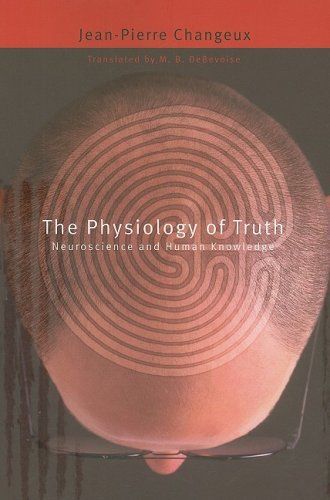
In this wide-ranging book, one of the boldest thinkers in modern neuroscience confronts an ancient philosophical problem: can we know the world as it really is?Drawing on provocative new findings about the psychophysiology of perception and judgment in both human and nonhuman primates, and also on the cultural history of science, Jean-Pierre Changeux makes a powerful case for the reality of scientific progress and argues that it forms the basis for a coherent and universal theory of human rights. On this view, belief in objective knowledge is not a mere ideological slogan or a nave confusion; it is a characteristic feature of human cognition throughout evolution, and the scientific method its most sophisticated embodiment. Seeking to reconcile science and humanism, Changeux holds that the capacity to recognize truths that are independent of subjective personal experience constitutes the foundation of a human civil society.
Jurgen Habermas is unquestionably one of the foremost philosophers writing today. His notions of communicative action and rationality have exerted a profound influence within philosophy and the social sciences. This volume examines the historical and intellectual contexts out of which Habermas’ work emerged, and offers an overview of his main ideas, including those in his most recent publication. Amongst the topics discussed are his relationship to the Frankfurt School of critical theory and Marx, his unique contributions to the philosophy of the social sciences, the concept of ‘communicative ethics’, and the critique of post-modernism. New readers and non-specialists will find this the most convenient, accessible guide to Habermas currently available. Advanced students will find a conspectus of recent developments in the interpretation of Habermas.
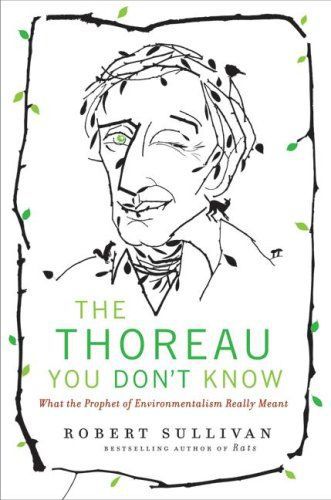
“Thoreau is one of those authors that readers think they know, even if they don’t. He’s the solitary curmudgeon with the shack out in the woods, the mystic worshipping solemnly in the quiet church of nature. He’s our national Natural Man, the prophet of environmentalism. But here Robert Sullivan–who himself has been called an ‘urban Thoreau’ (New York Times Book Review) –presents the Thoreau you don’t know: the activist, the organizer, the gregarious adventurer, the guy who likes to go camping with friends (even if they sometimes accidentally burn the woods down). Sullivan shows us not a lonely eccentric but a man in his growing village, and argues that Walden was a book intended to revive America, a communal work forever pigeonholed as a reclusive one–and that this misreading is at the heart of our troubled relationship with the environment today.”–From publisher description.
ما از اخلاق چه انتظاری داریم؟ این سوال شاید تاحدودی برای عموم مردم و یا متخصصان این رشته قابل پاسخ باشد؛ اینکه خوب بودن را به ما بیاموزد و در تنظیم روابط فردی م...

جشن کتاب تهران به ایستگاه سی و یکم رسیده است. حال و احوال نشر کتاب خوب نیست و باید فرهنگدوستان را به خرید و هدیه دادن کتاب ترغیب نمود. خانه اخلاقپژوهان جوان ب...

بنیاد کتابهای اخلاق اسلامی عمدتا پالایش جان از آلودگیها و آراستن آن به زیباییها است. اندیشه محوری این قبیل کتابها آن است که انسان فعلی آنی نیست که باید باشد...

-
0 Comments