Notice: تابع WP_Block_Type_Registry::register به طورنادرست فراخوانی شد. نامهای نوع بلوک نباید حروف بزرگ داشته باشند. لطفاً برای اطلاعات بیشتر، اشکال زدایی در وردپرس را مشاهده کنید. (این پیام در نگارش 5.0.0 افزوده شده است.) in /home/ethicsho/public_html/wp-includes/functions.php on line 5313
Warning: Use of undefined constant TDC_PATH_LEGACY - assumed 'TDC_PATH_LEGACY' (this will throw an Error in a future version of PHP) in /home/ethicsho/public_html/wp-content/plugins/td-composer/td-composer.php on line 109
Warning: Use of undefined constant TDSP_THEME_PATH - assumed 'TDSP_THEME_PATH' (this will throw an Error in a future version of PHP) in /home/ethicsho/public_html/wp-content/plugins/td-composer/td-composer.php on line 113 بایگانیهای Inst. for Religious and Social Studies [u.a. - خانه اخلاق پژوهان جوان Notice: Trying to access array offset on value of type bool in /home/ethicsho/public_html/wp-content/plugins/wp-ulike/inc/general-functions.php on line 807
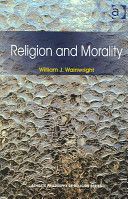
Religion and Morality addresses central issues arising from religion’s relation to morality. Part one offers a sympathetic but critical appraisal of the claim that features of morality provide evidence for the truth of religious belief. Part two examines divine command theories, objections to them, and positive arguments in their support. Part three explores tensions between human morality, as ordinarily understood, and religious requirements by discussing such issues as the conflict between Buddhist and Christian pacifism and requirements of justice, whether virtue without a love of God is really a vice, whether the God of the Abrahamic religions could require us to do something that seems clearly immoral, and the ambiguous relations between religious mysticism and moral behavior.Covering a broad range of topics, this book draws on both historical and contemporary literature, and explores afresh central issues of morality and religion offering new insights for students, academics and the general reader interested in philosophy and religion.
This volume is the first English-language book-length text to trace the development of bioethics in the Ibero-American context. Coverage is given to many particular countries within Latin America with an aim to present the historical development of bioethics therein. This history takes place against the backdrop of a tumultuous period of time in the history of Latin America. The volume also discusses the relationship of bioethics in Latin America to questions and issues in Roman Catholic moral theology and philosophy. Moreover, it specifically touches on how these issues affect women in the region.”Ibero-American Bioethics: History and Perspectives” is a landmark work, collecting the voices of those who participated in the founding and development of bioethics in Latin America, the Caribbean, and the Iberian Peninsula. The volume offers the reader a cluster of perspectives on the various births of bioethics in this region. The essays in part are irreplaceable first-person voices that give an account of how bioethics took shape within the Spanish and Portuguese cultures both in Europe and in the Americas. As such, the volume is a collection of primary sources, otherwise not available in English, that presents historical panoramas and explores the new perspectives born of the different phases of bioethics in Ibero-America – from its assimilation of bioethics to its creation of its own authentic voices. The volume also encompasses critical reflections from this region on the quite different ways in which its local bioethics have taken shape. As such, this volume also offers an introduction into the quite different concerns that frame and direct bioethics in the cultural context of Ibero-America.The book gives a rich, deep, broad, and pluralist presentation of Ibero-American bioethics and its contribution to the international phenomenon of bioethics. It is a volume for all readers interested in bioethics, Ibero-American studies, and international approaches to health care policy.
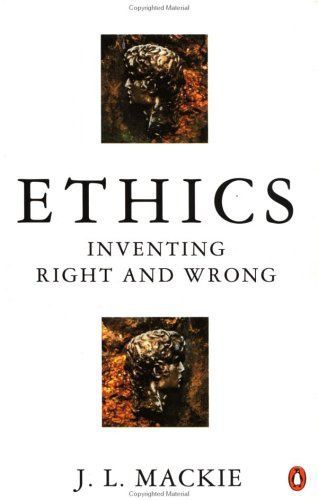
John Mackie’s stimulating book is a complete and clear treatise on moral theory. His writings on normative ethics-the moral principles he recommends-offer a fresh approach on a much neglected subject, and the work as a whole is undoubtedly a major contribution to modern philosophy.The author deals first with the status of ethics, arguing that there are not objective values, that morality cannot be discovered but must be made. He examines next the content of ethics, seeing morality as a functional device, basically the same at all times but changing significantly in response to changes in the human condition. He sketches a practical moral system, criticizing but also borrowing from both utilitarian and absolutist views. Thirdly, the frontiers of ethics, areas of contact with psychology, metaphysics, theology, law and politcs, are explored.Throughout, his aim is to discuss a wide range of questions that are both philosophical and practical, working within a distinctive version of subjectivism-an “error” theory of the apparent objectivity of values. John Mackie has drawn on the contributions of such classic thinkers as Plato, Aristotle, Hobbes, Hume, Kant and Sidgwick, and on more recent discussions, to produce a thought-provoking account that will inspire both the general reader and the student of philosophy.
ما از اخلاق چه انتظاری داریم؟ این سوال شاید تاحدودی برای عموم مردم و یا متخصصان این رشته قابل پاسخ باشد؛ اینکه خوب بودن را به ما بیاموزد و در تنظیم روابط فردی م...

جشن کتاب تهران به ایستگاه سی و یکم رسیده است. حال و احوال نشر کتاب خوب نیست و باید فرهنگدوستان را به خرید و هدیه دادن کتاب ترغیب نمود. خانه اخلاقپژوهان جوان ب...

بنیاد کتابهای اخلاق اسلامی عمدتا پالایش جان از آلودگیها و آراستن آن به زیباییها است. اندیشه محوری این قبیل کتابها آن است که انسان فعلی آنی نیست که باید باشد...

-
0 Comments