Notice: تابع WP_Block_Type_Registry::register به طورنادرست فراخوانی شد. نامهای نوع بلوک نباید حروف بزرگ داشته باشند. لطفاً برای اطلاعات بیشتر، اشکال زدایی در وردپرس را مشاهده کنید. (این پیام در نگارش 5.0.0 افزوده شده است.) in /home/ethicsho/public_html/wp-includes/functions.php on line 5313
Warning: Use of undefined constant TDC_PATH_LEGACY - assumed 'TDC_PATH_LEGACY' (this will throw an Error in a future version of PHP) in /home/ethicsho/public_html/wp-content/plugins/td-composer/td-composer.php on line 109
Warning: Use of undefined constant TDSP_THEME_PATH - assumed 'TDSP_THEME_PATH' (this will throw an Error in a future version of PHP) in /home/ethicsho/public_html/wp-content/plugins/td-composer/td-composer.php on line 113 بایگانیهای George Bell & Sons - خانه اخلاق پژوهان جوان Notice: Trying to access array offset on value of type bool in /home/ethicsho/public_html/wp-content/plugins/wp-ulike/inc/general-functions.php on line 807
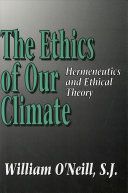
In this book, William O’Neill, S.J., offers an interpretation of the nature and scope of practical reasoning in light of postmodern philosophical criticism. He charts a via media between the abstract formalism of neo-Kantian morality and relativist interpretations of neo-Aristotelian ethics. The three parts of the book treat the eclipse of the classical Aristotelian conception of practical reason; the Kantian heritage in the modern moral theories of John Rawls and R.M. Hare; and the hermeneutical retrieval of a moral interpretation of the world. Drawing upon the philosophical hermeneutics of Hans-Georg Gadamer, modern analytical philosophy, and the discourse ethics of Jurgen Habermas, O’Neill offers a critical reconstruction of practical reason which upholds the primacy of moral community while recognizing the ethical import of historical and cultural difference. The final chapter applies the preceding hermeneutical critique to the question of the distinctiveness of Christian ethics in the writings of Karl Barth, Hans Urs von Balthasar, Josef Fuchs, and Bruno Schuller. This original contribution will be of special interest to students and teachers of moral philosophy and theology.
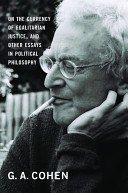
G. A. Cohen was one of the most gifted, influential, and progressive voices in contemporary political philosophy. At the time of his death in 2009, he had plans to bring together a number of his most significant papers. This is the first of three volumes to realize those plans. Drawing on three decades of work, it contains previously uncollected articles that have shaped many of the central debates in political philosophy, as well as papers published here for the first time. In these pieces, Cohen asks what egalitarians have most reason to equalize, he considers the relationship between freedom and property, and he reflects upon ideal theory and political practice.Included here are classic essays such as “Equality of What?” and “Capitalism, Freedom, and the Proletariat,” along with more recent contributions such as “Fairness and Legitimacy in Justice,” “Freedom and Money,” and the previously unpublished “How to Do Political Philosophy.” On ample display throughout are the clarity, rigor, conviction, and wit for which Cohen was renowned. Together, these essays demonstrate how his work provides a powerful account of liberty and equality to the left of Ronald Dworkin, John Rawls, Amartya Sen, and Isaiah Berlin.
The recent tragedy in the Gulf of Mexico and resultant ethical consequences for the engineering profession are introduced and discussed. The need for a new engineering ethic is identified and introduced based upon advancements in science, complex systems and eco-philosophy. Motivations for introducing a new ethic rather than modifying existing ethics are also discussed. Table of Contents: Tragedy in the Gulf / Tragedy Unfolding / Engineering Ethics / Complex Systems / Quantum Mechanics / Evolving Principles of the Universe / A New Engineering Ethic / Epilogue
“What implications do recent empirical findings from the fields of biology, primatology, anthropology, psychology and history have for metaethical theories about moral objectivity? I defend the thesis that these findings detract from the plausibility of a realist account of moral objectivity but leave room for a more moderate, antirealist account of objectivity, framed in terms of stance-invariance. The dissertation consists of six articles written for publication in academic journals. In these articles I present two novel, empirically informed challenges to moral realism, and point out some shortcomings of existing challenges. One of the novel challenges builds on the second horn of Sharon Street’s ‘Darwinian Dilemma’, according to which moral realists are committed to an implausible evolutionary hypothesis, and extends this criticism to the historical realm. The other novel challenge is fuelled by theoretical and experimental work in moral psychology, and takes issue with the presumed advantages of moral realism in explaining the qualities of our moral experience. Apart from criticizing moral realism, I also develop and defend an alternative account of moral objectivity in antirealist terms and argue that it is as least as successful as a realist account in capturing the objectivist commitments of ordinary moral discourse.”– Page 14.
For centuries philosophers have wrestled with the dichotomy between individual freedom on the one hand and collective solidarity on the other. Yet today there is a growing realization that this template is fundamentally flawed. In this book, Mark Young embraces and advocates a more holistic concept of freedom; one which is not merely defined negatively but which positively provides the preconditions for individuals to actively exercise their autonomy and to flourish as human beings in the process.Young posits the idea of ‘freedom in community’ and traces its origin back to Aristotle. Taking as his premise that humans are deeply social beings who live their lives intricately interwoven with each other, he examines what type of political community is relevant for us in this post-Classical, post-Enlightenment and, indeed, post-Existential world. Identifying the failure of traditional ‘statist’ models of politics, Young instead argues for a civil society: a globally interlinked and free set of liberal communities as the best context for nourishing human flourishing. In this way we can achieve a proper setting for Eudaimonia in a modern sense.
ما از اخلاق چه انتظاری داریم؟ این سوال شاید تاحدودی برای عموم مردم و یا متخصصان این رشته قابل پاسخ باشد؛ اینکه خوب بودن را به ما بیاموزد و در تنظیم روابط فردی م...

جشن کتاب تهران به ایستگاه سی و یکم رسیده است. حال و احوال نشر کتاب خوب نیست و باید فرهنگدوستان را به خرید و هدیه دادن کتاب ترغیب نمود. خانه اخلاقپژوهان جوان ب...

بنیاد کتابهای اخلاق اسلامی عمدتا پالایش جان از آلودگیها و آراستن آن به زیباییها است. اندیشه محوری این قبیل کتابها آن است که انسان فعلی آنی نیست که باید باشد...

-
0 Comments