Notice: تابع WP_Block_Type_Registry::register به طورنادرست فراخوانی شد. نامهای نوع بلوک نباید حروف بزرگ داشته باشند. لطفاً برای اطلاعات بیشتر، اشکال زدایی در وردپرس را مشاهده کنید. (این پیام در نگارش 5.0.0 افزوده شده است.) in /home/ethicsho/public_html/wp-includes/functions.php on line 5313
Warning: Use of undefined constant TDC_PATH_LEGACY - assumed 'TDC_PATH_LEGACY' (this will throw an Error in a future version of PHP) in /home/ethicsho/public_html/wp-content/plugins/td-composer/td-composer.php on line 109
Warning: Use of undefined constant TDSP_THEME_PATH - assumed 'TDSP_THEME_PATH' (this will throw an Error in a future version of PHP) in /home/ethicsho/public_html/wp-content/plugins/td-composer/td-composer.php on line 113 بایگانیهای Filiquarian - خانه اخلاق پژوهان جوان Notice: Trying to access array offset on value of type bool in /home/ethicsho/public_html/wp-content/plugins/wp-ulike/inc/general-functions.php on line 807
This volume addresses the complex interplay between the conditions of an agent’s personal autonomy and the constitution of her self in light of two influential background assumptions: a libertarian thesis according to which it is essential for personal autonomy to be able to choose freely how one’s self is shaped, on the one hand, and a line of thought following especially the seminal work of Harry Frankfurt according to which personal autonomy necessarily rests on an already sufficiently shaped self, on the other hand. Given this conceptual framework, a number of influential aspects within current debate can be addressed in a new and illuminating light: accordingly, the volume’s contributions range from 1) discussing fundamental conceptual interconnections between personal autonomy and freedom of the will, 2) addressing the exact role and understanding of different personal traits, e.g. Frankfurt’s notion of volitional necessities, commitments to norms and ideals, emotions, the phenomenon of weakness of will, and psychocorporeal aspects, 3) and finally taking into account social influences, which are discussed in terms of their ability to buttress, to weaken, or even to serve as necessary preconditions of personal autonomy and the forming of one’s self. The volume thus provides readers with an extensive and most up-to-date discussion of various influential strands of current philosophical debate on the topic. It is of equal interest to all those already engaged in the debate as well as to readers trying to get an up-to-date overview or looking for a textbook to use in courses.
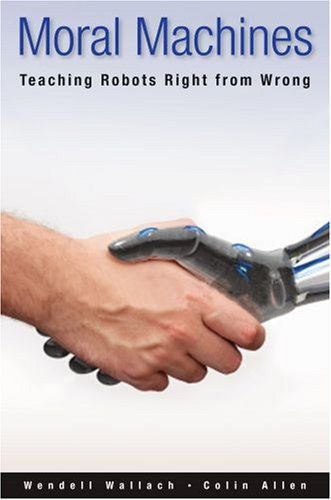
Computers are already approving financial transactions, controlling electrical supplies, and driving trains. Soon, service robots will be taking care of the elderly in their homes, and military robots will have their own targeting and firing protocols. Colin Allen and Wendell Wallach argue that as robots take on more and more responsibility, they must be programmed with moral decision-making abilities, for our own safety. Taking a fast paced tour through the latest thinking about philosophical ethics and artificial intelligence, the authors argue that even if full moral agency for machines is a long way off, it is already necessary to start building a kind of functional morality, in which artificial moral agents have some basic ethical sensitivity. But the standard ethical theories don’t seem adequate, and more socially engaged and engaging robots will be needed. As the authors show, the quest to build machines that are capable of telling right from wrong has begun. Moral Machines is the first book to examine the challenge of building artificial moral agents, probing deeply into the nature of human decision making and ethics.
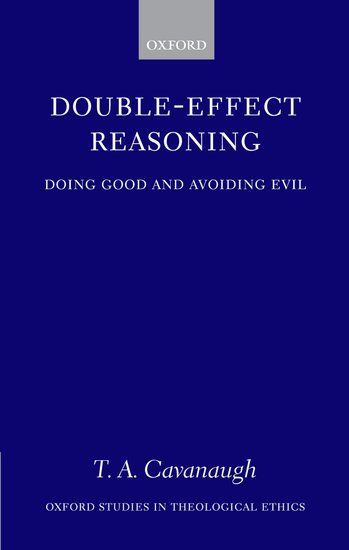
T. A. Cavanaugh defends double-effect reasoning (DER), also known as the principle of double effect. DER plays a role in anti-consequentialist ethics (such as deontology), in hard cases in which one cannot realize a good without also causing a foreseen, but not intended, bad effect (for example, killing non-combatants when bombing a military target). This study is the first book-length account of the history and issues surrounding this controversial approach to hard cases. It will be indispensable in theoretical ethics, applied ethics (especially medical and military), and moral theology. It will also interest legal and public policy scholars.
ما از اخلاق چه انتظاری داریم؟ این سوال شاید تاحدودی برای عموم مردم و یا متخصصان این رشته قابل پاسخ باشد؛ اینکه خوب بودن را به ما بیاموزد و در تنظیم روابط فردی م...

جشن کتاب تهران به ایستگاه سی و یکم رسیده است. حال و احوال نشر کتاب خوب نیست و باید فرهنگدوستان را به خرید و هدیه دادن کتاب ترغیب نمود. خانه اخلاقپژوهان جوان ب...

بنیاد کتابهای اخلاق اسلامی عمدتا پالایش جان از آلودگیها و آراستن آن به زیباییها است. اندیشه محوری این قبیل کتابها آن است که انسان فعلی آنی نیست که باید باشد...

-
0 Comments