Notice: تابع WP_Block_Type_Registry::register به طورنادرست فراخوانی شد. نامهای نوع بلوک نباید حروف بزرگ داشته باشند. لطفاً برای اطلاعات بیشتر، اشکال زدایی در وردپرس را مشاهده کنید. (این پیام در نگارش 5.0.0 افزوده شده است.) in /home/ethicsho/public_html/wp-includes/functions.php on line 5313
Warning: Use of undefined constant TDC_PATH_LEGACY - assumed 'TDC_PATH_LEGACY' (this will throw an Error in a future version of PHP) in /home/ethicsho/public_html/wp-content/plugins/td-composer/td-composer.php on line 109
Warning: Use of undefined constant TDSP_THEME_PATH - assumed 'TDSP_THEME_PATH' (this will throw an Error in a future version of PHP) in /home/ethicsho/public_html/wp-content/plugins/td-composer/td-composer.php on line 113 بایگانیهای EERDMANS, W.B., PUBLISHING COMPANY - خانه اخلاق پژوهان جوان Notice: Trying to access array offset on value of type bool in /home/ethicsho/public_html/wp-content/plugins/wp-ulike/inc/general-functions.php on line 807
In recent years, libertarian impulses have increasingly influenced national and economic debates, from welfare reform to efforts to curtail affirmative action. Murray N. Rothbard’s classic The Ethics of Liberty stands as one of the most rigorous and philosophically sophisticated expositions of the libertarian political position. What distinguishes Rothbard’s book is the manner in which it roots the case for freedom in the concept of natural rights and applies it to a host of practical problems. An economist by profession, Rothbard here proves himself equally at home with philosophy. And while his conclusions are radical–that a social order that strictly adheres to the rights of private property must exclude the institutionalized violence inherent in the state–his applications of libertarian principles prove surprisingly practical for a host of social dilemmas, solutions to which have eluded alternative traditions. The Ethics of Liberty authoritatively established the anarcho-capitalist economic system as the most viable and the only principled option for a social order based on freedom. This edition is newly indexed and includes a new introduction that takes special note of the Robert Nozick-Rothbard controversies.
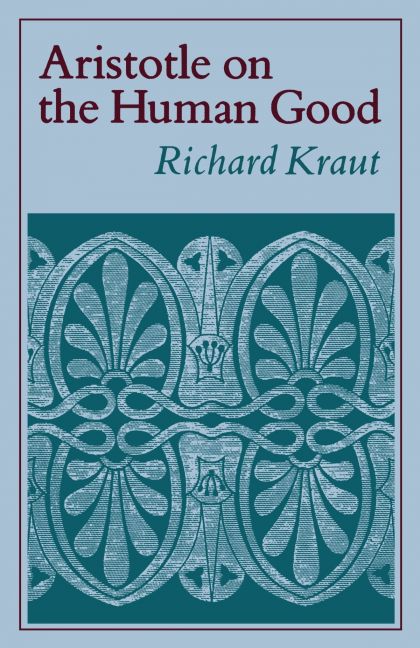
Aristotle’s Nicomachean Ethics, which equates the ultimate end of human life with happiness (eudaimonia), is thought by many readers to argue that this highest goal consists in the largest possible aggregate of intrinsic goods. Richard Kraut proposes instead that Aristotle identifies happiness with only one type of good: excellent activity of the rational soul. In defense of this reading, Kraut discusses Aristotle’s attempt to organize all human goods into a single structure, so that each subordinate end is desirable for the sake of some higher goal.This book also emphasizes the philosopher’s hierarchy of natural kinds, in which every type of creature achieves its good by imitating divine life. As Kraut argues, Aristotle’s belief that thinking is the sole activity of the gods leads him to an intellectualist conception of the ethical virtues. Aristotle values these traits because, by subordinating emotion to reason, they enhance our ability to lead a life devoted to philosophy or politics.
Do citizens have an obligation to obey the law? This book differs from standard approaches by shifting from the language of obedience (orders) to that of deference (normative judgments). The popular view that law claims authority but does not have it is here reversed on both counts: Law does not claim authority but has it. Though the focus is on political obligation, the author approaches that issue indirectly by first developing a more general account of when deference is due to the view of others. Two standard practices that political theorists often consider in exploring the question of political obligation – fair-play and promise-keeping – can themselves be seen as examples of a duty of deference. In this respect the book defends a more general theory of ethics whose scope extends beyond the question of political obligation to questions of duty in the case of law, promises, fair play and friendship.
Zionism and the State of Israelexamines the use of the Bible as a legitimization for the implementation of the ideological and political program of Zionism and its consequences. It includes discussion of the Bible, and biblical hermeneutics, post-biblical Jewish and Christian cultures, the history and development of Zionism, the international law of war and of occupation and human rights.
ما از اخلاق چه انتظاری داریم؟ این سوال شاید تاحدودی برای عموم مردم و یا متخصصان این رشته قابل پاسخ باشد؛ اینکه خوب بودن را به ما بیاموزد و در تنظیم روابط فردی م...

جشن کتاب تهران به ایستگاه سی و یکم رسیده است. حال و احوال نشر کتاب خوب نیست و باید فرهنگدوستان را به خرید و هدیه دادن کتاب ترغیب نمود. خانه اخلاقپژوهان جوان ب...

بنیاد کتابهای اخلاق اسلامی عمدتا پالایش جان از آلودگیها و آراستن آن به زیباییها است. اندیشه محوری این قبیل کتابها آن است که انسان فعلی آنی نیست که باید باشد...

-
0 Comments