Notice: تابع WP_Block_Type_Registry::register به طورنادرست فراخوانی شد. نامهای نوع بلوک نباید حروف بزرگ داشته باشند. لطفاً برای اطلاعات بیشتر، اشکال زدایی در وردپرس را مشاهده کنید. (این پیام در نگارش 5.0.0 افزوده شده است.) in /home/ethicsho/public_html/wp-includes/functions.php on line 5313
Warning: Use of undefined constant TDC_PATH_LEGACY - assumed 'TDC_PATH_LEGACY' (this will throw an Error in a future version of PHP) in /home/ethicsho/public_html/wp-content/plugins/td-composer/td-composer.php on line 109
Warning: Use of undefined constant TDSP_THEME_PATH - assumed 'TDSP_THEME_PATH' (this will throw an Error in a future version of PHP) in /home/ethicsho/public_html/wp-content/plugins/td-composer/td-composer.php on line 113 بایگانیهای Cornell Univ Pr - خانه اخلاق پژوهان جوان Notice: Trying to access array offset on value of type bool in /home/ethicsho/public_html/wp-content/plugins/wp-ulike/inc/general-functions.php on line 807
Alain de Botton’s bestselling The Consolations of Philosophy–later made into a six-part TV series–has helped popularize ancient philosophy and especially the work of Seneca. This superb volume offers the finest translation of Seneca’s dialogues and essays in print, capturing the full range of his philosophical interests. Here the Stoic philosopher outlines his thoughts on how to live in a troubled world. Tutor to the young emperor Nero, Seneca wrote exercises in practical philosophy that draw upon contemporary Roman life and illuminate the intellectual concerns of the day. They also have much to say to the modern reader, as Seneca ranges widely across subjects such as the shortness of life, tranquility of mind, anger, mercy, happiness, and grief at the loss of a loved one. Seneca’s accessible, aphoristic style makes his writing especially attractive as an introduction to Stoic philosophy, and belies its reputation for austerity and dogmatism. This edition combines a clear and modern translation by John Davies with Tobias Reinhardt’s fascinating introduction to Seneca’s career, literary style, and influence, including a superb summary of Stoic philosophy and Seneca’s interpretation of it. The book’s notes are the fullest of any comparable edition.
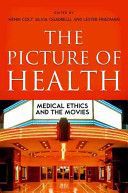
Film and literature have long been mined for interesting examples and case studies in order to teach biomedical ethics to students. This volume presents a collection of about 80 very brief, accessible essays written by international experts from medicine, social sciences, and the humanities, all of whom have experience using film in their teaching of medical ethics. Each essay focuses on a single scene and the ethical issues it raises, and the volume editors have provided strict guidelines for what each essay must do, while also allowing for some creative freedom. While some of the films are obvious candidates with medical themes — “Million Dollar Baby”, “The Diving Bell and the Butterfly” — some are novel choices, such as “Pan’s Labyrinth” or “As Good as it Gets”. The book will contain several general introductory chapters to major sections, and a complete filmography and cross-index at the end of the book where readers can look up individual films or ethical issues.
Philosophy of Right remains among the most influential works in Western political theory. It introduces a notion of civil society that has proven of inestimable importance to diverse philosophical and social agendas. In this transcription of the lectures that formed the initial version of Hegel’s text, the philosopher presents his thought with a clarity and directness seldom matched in his later writings. Nowhere does Hegel make clearer the difference between his concept of objective spirit and traditional concepts of natural law. Nowhere does he offer a more prominent treatment of the key notion of recognition. The long-awaited appearance of this first English-language translation of these lectures is a major event for Hegel scholars, philosophers, and political theorists. Philosophy of Right remains among the most influential works in Western political theory. It introduces a notion of civil society that has proven of inestimable importance to diverse philosophical and social agendas. In this transcription of the lectures that formed the initial version of Hegel’s text, the philosopher presents his thought with a clarity and directness seldom matched in his later writings. Nowhere does Hegel make clearer the difference between his concept of objective spirit and traditional concepts of natural law. Nowhere does he offer a more prominent treatment of the key notion of recognition. The long-awaited appearance of this first English-language translation of these lectures is a major event for Hegel scholars, philosophers, and political theorists.
“By explicitly addressing moral knowledge from a particularists perspective, this book can engage with an established and vibrant area of moral philosophy whilst making a distinctive and productive contribution to a relatively neglected dimension of it”–
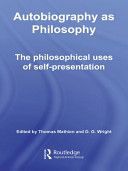
Since Plato a surprisingly large number of philosophers have chosen to write in the first person about their own lives either in works that were primarily autobiographical or in the context of other more conventionally written texts. These texts stand in marked contrast to the bulk of philosophical writing, particularly in the past century during which the discipline has become ever more professionalized and specialized. Instead of the common impersonal and argumentative forms of ordinary philosophic discussion, these autobiographical texts are deeply personal and largely narrative or explanatory. The contributors to this book examine the philosophical significance of philosophers’ autobiographies and whether or not there are broadly philosophical tasks for which this sort of writing is particularly suited. Autobiography as Philosophy contains a general discussion about the relation between philosophical and autobiographical writing, and essays on the specific writings of Augustine, Abelard, Montaigne,Descartes, Vico, Hume, Rousseau, Newman, Mill, Nietzsche, Collingwood and Russell by specialists on the works of these individuals. The book is original and distinctive in its efforts to think about the writings of historically recognized philosophers as communicative acts governed by their own distinctive interests and purposes. It is, therefore as much about the texts and the authors as about their doctrines and arguments. As a result the book steps back from many of the issues of substantive philosophical discussion to reflect on certain forms of writing as means to philosophical ends, to consider what those ends have included.
ما از اخلاق چه انتظاری داریم؟ این سوال شاید تاحدودی برای عموم مردم و یا متخصصان این رشته قابل پاسخ باشد؛ اینکه خوب بودن را به ما بیاموزد و در تنظیم روابط فردی م...

جشن کتاب تهران به ایستگاه سی و یکم رسیده است. حال و احوال نشر کتاب خوب نیست و باید فرهنگدوستان را به خرید و هدیه دادن کتاب ترغیب نمود. خانه اخلاقپژوهان جوان ب...

بنیاد کتابهای اخلاق اسلامی عمدتا پالایش جان از آلودگیها و آراستن آن به زیباییها است. اندیشه محوری این قبیل کتابها آن است که انسان فعلی آنی نیست که باید باشد...

-
0 Comments