Notice: تابع WP_Block_Type_Registry::register به طورنادرست فراخوانی شد. نامهای نوع بلوک نباید حروف بزرگ داشته باشند. لطفاً برای اطلاعات بیشتر، اشکال زدایی در وردپرس را مشاهده کنید. (این پیام در نگارش 5.0.0 افزوده شده است.) in /home/ethicsho/public_html/wp-includes/functions.php on line 5313
Warning: Use of undefined constant TDC_PATH_LEGACY - assumed 'TDC_PATH_LEGACY' (this will throw an Error in a future version of PHP) in /home/ethicsho/public_html/wp-content/plugins/td-composer/td-composer.php on line 109
Warning: Use of undefined constant TDSP_THEME_PATH - assumed 'TDSP_THEME_PATH' (this will throw an Error in a future version of PHP) in /home/ethicsho/public_html/wp-content/plugins/td-composer/td-composer.php on line 113 بایگانیهای Continuum International Publishing Group - خانه اخلاق پژوهان جوان Notice: Trying to access array offset on value of type bool in /home/ethicsho/public_html/wp-content/plugins/wp-ulike/inc/general-functions.php on line 807
Moral Animals offers a brand new approach to moral theory. Drawing on anthropology, sociology, and evolutionary theory, as well as philosophy of language and philosophy of science, Catherine Wilson shows how to understand and reconcile our moral aspirations for a just world with the constraints human nature places on us. This ambitious book will spark fresh debates within philosophy and across the social sciences.
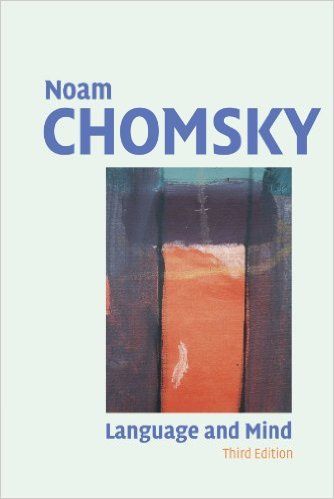
This is the long-awaited third edition of Chomsky’s outstanding collection of essays on language and mind. The first six chapters, originally published in the 1960s, made a groundbreaking contribution to linguistic theory. This new edition complements them with an additional chapter and a new preface, bringing Chomsky’s influential approach into the twenty-first century. Chapters 1-6 present Chomsky’s early work on the nature and acquisition of language as a genetically endowed, biological system (Universal Grammar), through the rules and principles of which we acquire an internalized knowledge (I-language). Over the past fifty years, this framework has sparked an explosion of inquiry into a wide range of languages, and has yielded some major theoretical questions. The final chapter revisits the key issues, reviewing the ‘biolinguistic’ approach that has guided Chomsky’s work from its origins to the present day, and raising some novel and exciting challenges for the study of language and mind.
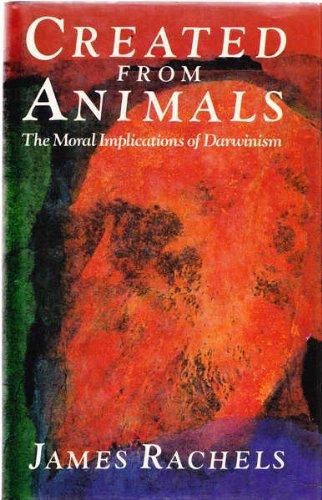
From Bishop Wilberforce in the 1860s to the advocates of “creation science” today, defenders of traditional mores have condemned Darwin’s theory of evolution as a threat to society’s values. Darwin’s defenders, like Stephen Jay Gould, have usually replied that there is no conflict between science and religion–that values and biological facts occupy separate realms. But as James Rachels points out in this thought-provoking study, Darwin himself would disagree with Gould. Darwin, who had once planned on being a clergyman, was convinced that natural selection overthrew our age-old religious beliefs. Created from Animals offers a provocative look at how Darwinian evolution undermines many tenets of traditional philosophy and religion. James Rachels begins by examining Darwin’s own life and work, presenting an astonishingly vivid and compressed biography. We see Darwin’s studies of the psychological links in evolution (such as emotions in dogs, and the “mental powers” of worms), and how he addressed the moral implications of his work, especially in his concern for the welfare of animals. Rachels goes on to present a lively and accessible survey of the controversies that followed in Darwin’s wake, ranging from Herbert Spencer’s Social Darwinism to Edward O. Wilson’s sociobiology, and discusses how the work of such influential intellects as Descartes, Hume, Kant, T.H. Huxley, Henri Bergson, B.F. Skinner, and Stephen Jay Gould has contributed to–or been overthrown by–evolutionary science. Western philosophy and religion, Rachels argues, have been shaken by the implications of Darwin’s work, most notably the controversial idea that humans are simply a more complex kind of animal. Rachels assesses a number of studies that suggest how closely humans are linked to other primates in behavior, and then goes on to show how this idea undercuts the work of many prominent philosophers. Kant’s famous argument that suicide reduces one to the level of an animal, for instance, is meaningless if humans are, in fact, animals. Indeed, humanity’s membership in the animal kingdom calls into question the classic notions of human dignity and the sacredness of human life. What we need now, Rachels contends, is a philosophy that does not discriminate between different species, one that addresses each being on an individual basis. With this sweeping survey of the arguments, the philosophers, and the deep implications surrounding Darwinism, Rachels lays the foundations for a new view of morality. Vibrantly written and provocatively argued, Created from Animals offers a new perspective on issues ranging from suicide to euthanasia to animal rights.
Germain Grisez has been a leading voice in moral philosophy and theology since the second Vatican Council. In this book, such major thinkers as John Finnis, Ralph McInerny, and William E. May consider issues in ethics, metaphysics, and politics that have been central to Grisez’s work.Grisez’s reconsideration of the philosophical foundations of Christian moral teaching, seeking to eliminate both legalistic interpretation and theological dissent, has won the support of a number of leading Catholic moralists. In the past decade, moreover, many philosophers outside of Catholicism have weighed carefully Grisez’s alternatives to theories that have long dominated secular moral philosophy.This book presents a broad spectrum of viewpoints on subjects ranging from contraception to capital punishment and considers such controversies as the scriptural basis of Grisez’s work, his interpretations of Aquinas, and his new natural law theory. The collection includes not only contributions from Grisez’s supporters but also from critics of his thought, from proportionalist Edward Collins Vacek, S.J., to the neo-Thomist Ralph McInerny. A reply by Grisez, written with Joseph M. Boyle, Jr., addresses the issues and viewpoints expressed, while an afterword by Russell Shaw reviews Grisez’s pioneering work and conveys a vivid sense of the philosopher’s personality.As Grisez’s influence grows, this volume will serve as an important touchstone on his contributions to moral and political philosophy and theology.
Kant’s third Critique, the Critique of Judgement,is regarded as one of the most influential books in the history of aesthetics. This book is designed as a reader’s guide for students trying to work their way, step-by-step, through Kant’s text. This is one of the first comprehensive introductions to Kant’s Critique of Judgement.Not only does it include a detailed and full account of Kant’s aesthetic theory, it incorporates an extended discussion of the “Critique of Teleological Judgement,” a treatment of Kant’s overall conception of the text, and its place in the wider critical system. Designed as an introduction, suitable for undergraduate and first-year postgraduate use, the book assumes no prior knowledge of Kant or any other particular philosophy. The choice of text is the Pluhar translation in the Hackett edition. However, throughout, Douglas Burnham provides alternative translations of key terms and phrases, making the book independent of any particular translation of Kant’s text.
ما از اخلاق چه انتظاری داریم؟ این سوال شاید تاحدودی برای عموم مردم و یا متخصصان این رشته قابل پاسخ باشد؛ اینکه خوب بودن را به ما بیاموزد و در تنظیم روابط فردی م...

جشن کتاب تهران به ایستگاه سی و یکم رسیده است. حال و احوال نشر کتاب خوب نیست و باید فرهنگدوستان را به خرید و هدیه دادن کتاب ترغیب نمود. خانه اخلاقپژوهان جوان ب...

بنیاد کتابهای اخلاق اسلامی عمدتا پالایش جان از آلودگیها و آراستن آن به زیباییها است. اندیشه محوری این قبیل کتابها آن است که انسان فعلی آنی نیست که باید باشد...

-
0 Comments