
Notice: تابع WP_Block_Type_Registry::register به طورنادرست فراخوانی شد. نامهای نوع بلوک نباید حروف بزرگ داشته باشند. لطفاً برای اطلاعات بیشتر، اشکال زدایی در وردپرس را مشاهده کنید. (این پیام در نگارش 5.0.0 افزوده شده است.) in /home/ethicsho/public_html/wp-includes/functions.php on line 5313
Warning: Use of undefined constant TDC_PATH_LEGACY - assumed 'TDC_PATH_LEGACY' (this will throw an Error in a future version of PHP) in /home/ethicsho/public_html/wp-content/plugins/td-composer/td-composer.php on line 109
Warning: Use of undefined constant TDSP_THEME_PATH - assumed 'TDSP_THEME_PATH' (this will throw an Error in a future version of PHP) in /home/ethicsho/public_html/wp-content/plugins/td-composer/td-composer.php on line 113 بایگانیهای Cambridge University Press - صفحه 3 از 31 - خانه اخلاق پژوهان جوان Notice: Trying to access array offset on value of type bool in /home/ethicsho/public_html/wp-content/plugins/wp-ulike/inc/general-functions.php on line 807
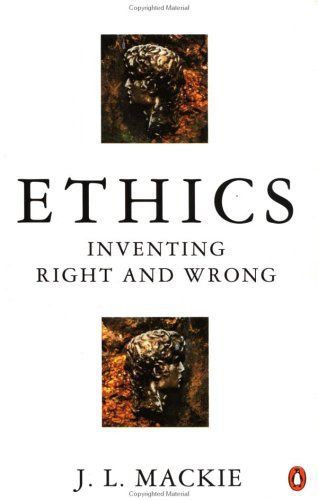
John Mackie’s stimulating book is a complete and clear treatise on moral theory. His writings on normative ethics-the moral principles he recommends-offer a fresh approach on a much neglected subject, and the work as a whole is undoubtedly a major contribution to modern philosophy.The author deals first with the status of ethics, arguing that there are not objective values, that morality cannot be discovered but must be made. He examines next the content of ethics, seeing morality as a functional device, basically the same at all times but changing significantly in response to changes in the human condition. He sketches a practical moral system, criticizing but also borrowing from both utilitarian and absolutist views. Thirdly, the frontiers of ethics, areas of contact with psychology, metaphysics, theology, law and politcs, are explored.Throughout, his aim is to discuss a wide range of questions that are both philosophical and practical, working within a distinctive version of subjectivism-an “error” theory of the apparent objectivity of values. John Mackie has drawn on the contributions of such classic thinkers as Plato, Aristotle, Hobbes, Hume, Kant and Sidgwick, and on more recent discussions, to produce a thought-provoking account that will inspire both the general reader and the student of philosophy.
Since Plato a surprisingly large number of philosophers have chosen to write in the first person about their own lives either in works that were primarily autobiographical or in the context of other more conventionally written texts. These texts stand in marked contrast to the bulk of philosophical writing, particularly in the past century during which the discipline has become ever more professionalized and specialized. Instead of the common impersonal and argumentative forms of ordinary philosophic discussion, these autobiographical texts are deeply personal and largely narrative or explanatory. The contributors to this book examine the philosophical significance of philosophers’ autobiographies and whether or not there are broadly philosophical tasks for which this sort of writing is particularly suited. Autobiography as Philosophy contains a general discussion about the relation between philosophical and autobiographical writing, and essays on the specific writings of Augustine, Abelard, Montaigne,Descartes, Vico, Hume, Rousseau, Newman, Mill, Nietzsche, Collingwood and Russell by specialists on the works of these individuals. The book is original and distinctive in its efforts to think about the writings of historically recognized philosophers as communicative acts governed by their own distinctive interests and purposes. It is, therefore as much about the texts and the authors as about their doctrines and arguments. As a result the book steps back from many of the issues of substantive philosophical discussion to reflect on certain forms of writing as means to philosophical ends, to consider what those ends have included.
Alongside the recent cultural turn in the humanities, there has been a noticeable return to ethical considerations. With regard to literature as well as other media, this has rekindled awareness of a tension, antagonism, or even disparity between ethics and aesthetics. This volume of articles takes a more systematic and cross-disciplinary approach to the widely mooted ethical turn in literature and other media than has been pursued so far. It brings together a wide range of critical perspectives from literary studies, media and cultural memory studies, and philosophy, tracing the complex and sometimes conflicting relationship between ethics and aesthetics in theoretical contexts and individual case studies as diverse as colonial architecture, nineteenth-century literary histories, and postmodern writing and art.
This Companion provides a fresh and comprehensive account of this outstanding work, which remains among the most frequently read works of Greek philosophy, indeed of Classical antiquity in general. The sixteen essays, by authors who represent various academic disciplines, bring a spectrum of interpretive approaches to bear in order to aid the understanding of a wide-ranging audience, from first-time readers of the Republic who require guidance, to more experienced readers who wish to explore contemporary currents in the work’s interpretation. The three initial chapters address aspects of the work as a whole. They are followed by essays that match closely the sequence in which topics are presented in the ten books of the Republic. Since the Republic returns frequently to the same topics by different routes, so do the authors of this volume, who provide the readers with divergent yet complementary perspectives by which to appreciate the Republic’s principal concerns.
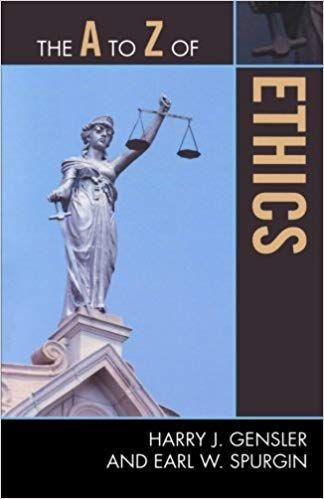
The A to Z of Ethics covers a broad range of topics, including theories, issues, and concepts; historical periods and historical figures; applied ethics; non-Western approaches; and related disciplines. Harry J. Gensler and Earl W. Spurgin tackle such issues as abortion, capital punishment, stem-cell research, and terrorism and explain such key theories as utilitarianism, natural law, social contract, and virtue ethics. This reference provides a complete overview of ethics through a detailed chronology, an introductory essay, a bibliography, and more than 200 cross-referenced dictionary entries, including bioethics, business ethics, Aristotle, Hobbes, autonomy, confidentiality, Confucius, and psychology.
ما از اخلاق چه انتظاری داریم؟ این سوال شاید تاحدودی برای عموم مردم و یا متخصصان این رشته قابل پاسخ باشد؛ اینکه خوب بودن را به ما بیاموزد و در تنظیم روابط فردی م...

جشن کتاب تهران به ایستگاه سی و یکم رسیده است. حال و احوال نشر کتاب خوب نیست و باید فرهنگدوستان را به خرید و هدیه دادن کتاب ترغیب نمود. خانه اخلاقپژوهان جوان ب...

بنیاد کتابهای اخلاق اسلامی عمدتا پالایش جان از آلودگیها و آراستن آن به زیباییها است. اندیشه محوری این قبیل کتابها آن است که انسان فعلی آنی نیست که باید باشد...

-
0 Comments