Notice: تابع WP_Block_Type_Registry::register به طورنادرست فراخوانی شد. نامهای نوع بلوک نباید حروف بزرگ داشته باشند. لطفاً برای اطلاعات بیشتر، اشکال زدایی در وردپرس را مشاهده کنید. (این پیام در نگارش 5.0.0 افزوده شده است.) in /home/ethicsho/public_html/wp-includes/functions.php on line 5313
Warning: Use of undefined constant TDC_PATH_LEGACY - assumed 'TDC_PATH_LEGACY' (this will throw an Error in a future version of PHP) in /home/ethicsho/public_html/wp-content/plugins/td-composer/td-composer.php on line 109
Warning: Use of undefined constant TDSP_THEME_PATH - assumed 'TDSP_THEME_PATH' (this will throw an Error in a future version of PHP) in /home/ethicsho/public_html/wp-content/plugins/td-composer/td-composer.php on line 113 بایگانیهای Axios Press - خانه اخلاق پژوهان جوان Notice: Trying to access array offset on value of type bool in /home/ethicsho/public_html/wp-content/plugins/wp-ulike/inc/general-functions.php on line 807
The substance of these chapters was delivered as a course of lectures at Harvard University, Dartmouth and Wellesley Colleges, Western reserve University, the University of California, and the Twentieth Century Club of Boston. Contents: double aspect of goodness; misconceptions of goodness; self-consciousness; self-direction; self-development; self-sacrifice; nature and spirit; three stages of goodness.
Like nature itself, modern economic life is driven by relentless competition and unbridled selfishness. Or is it? Drawing on converging evidence from neuroscience, social science, biology, law, and philosophy,Moral Marketsmakes the case that modern market exchange works only because most people, most of the time, act virtuously. Competition and greed are certainly part of economics, butMoral Marketsshows how the rules of market exchange have evolved to promote moral behavior and how exchange itself may make us more virtuous. Examining the biological basis of economic morality, tracing the connections between morality and markets, and exploring the profound implications of both,Moral Marketsprovides a surprising and fundamentally new view of economics–one that also reconnects the field to Adam Smith’s position that morality has a biological basis.Moral Markets, the result of an extensive collaboration between leading social and natural scientists, includes contributions by neuroeconomist Paul Zak; economists Robert H. Frank, Herbert Gintis, Vernon Smith (winner of the 2002 Nobel Prize in economics), and Bart Wilson; law professors Oliver Goodenough, Erin O’Hara, and Lynn Stout; philosophers William Casebeer and Robert Solomon; primatologists Sarah Brosnan and Frans de Waal; biologists Carl Bergstrom, Ben Kerr, and Peter Richerson; anthropologists Robert Boyd and Michael Lachmann; political scientists Elinor Ostrom and David Schwab; management professor Rakesh Khurana; computational science and informatics doctoral candidate Erik Kimbrough; and business writer Charles Handy.
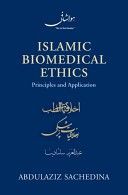
Biomedical ethics is a burgeoning academic field with complex and far-reaching consequences. Whereas in Western secular bioethics this subject falls within larger ethical theories and applications (utilitarianism, deontology, teleology, and the like), Islamic biomedical ethics has yet to find its natural academic home in Islamic studies. In this pioneering work, Abdulaziz Sachedina – a scholar with life-long academic training in Islamic law – relates classic Muslim religious values to the new ethical challenges that arise from medical research and practice. He depends on Muslim legal theory, but then looks deeper than juridical practice to search for the underlying reasons that determine the rightness or wrongness of a particular action. Drawing on the work of diverse Muslim theologians, he outlines a form of moral reasoning that can derive and produce decisions that underscore the spirit of the Shari’a. These decisions, he argues, still leave room to revisit earlier decisions and formulate new ones, which in turn need not be understood as absolute or final. After laying out this methodology, he applies it to a series of ethical questions surrounding the human life-cycle from birth to death, including such issues as abortion, euthanasia, and organ donation. The implications of Sachedina’s work are broad. His writing is unique in that it aims at conversing with Jewish and Christian ethics, moving beyond the Islamic fatwa literature to search for a common language of moral justification and legitimization among the followers of the Abrahamic traditions. He argues that Islamic theological ethics be organically connected with the legal tradition of Islam to enable it to sit in dialogue with secular and scripture-based bioethics in other faith communities. A breakthrough in Islamic bioethical studies, this volume is welcome and long-overdue reading for anyone interested in facing the difficult questions posed by modern medicine not only to the Muslim faithful but to the ethically-minded at large.
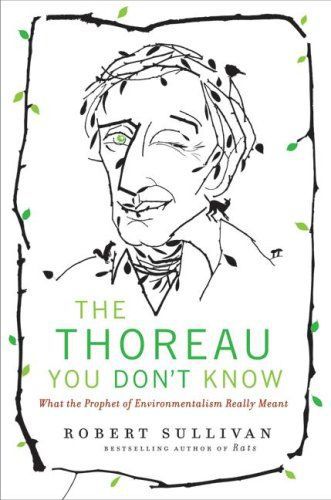
“Thoreau is one of those authors that readers think they know, even if they don’t. He’s the solitary curmudgeon with the shack out in the woods, the mystic worshipping solemnly in the quiet church of nature. He’s our national Natural Man, the prophet of environmentalism. But here Robert Sullivan–who himself has been called an ‘urban Thoreau’ (New York Times Book Review) –presents the Thoreau you don’t know: the activist, the organizer, the gregarious adventurer, the guy who likes to go camping with friends (even if they sometimes accidentally burn the woods down). Sullivan shows us not a lonely eccentric but a man in his growing village, and argues that Walden was a book intended to revive America, a communal work forever pigeonholed as a reclusive one–and that this misreading is at the heart of our troubled relationship with the environment today.”–From publisher description.
ما از اخلاق چه انتظاری داریم؟ این سوال شاید تاحدودی برای عموم مردم و یا متخصصان این رشته قابل پاسخ باشد؛ اینکه خوب بودن را به ما بیاموزد و در تنظیم روابط فردی م...

جشن کتاب تهران به ایستگاه سی و یکم رسیده است. حال و احوال نشر کتاب خوب نیست و باید فرهنگدوستان را به خرید و هدیه دادن کتاب ترغیب نمود. خانه اخلاقپژوهان جوان ب...

بنیاد کتابهای اخلاق اسلامی عمدتا پالایش جان از آلودگیها و آراستن آن به زیباییها است. اندیشه محوری این قبیل کتابها آن است که انسان فعلی آنی نیست که باید باشد...

-
0 Comments