Notice: تابع WP_Block_Type_Registry::register به طورنادرست فراخوانی شد. نامهای نوع بلوک نباید حروف بزرگ داشته باشند. لطفاً برای اطلاعات بیشتر، اشکال زدایی در وردپرس را مشاهده کنید. (این پیام در نگارش 5.0.0 افزوده شده است.) in /home/ethicsho/public_html/wp-includes/functions.php on line 5313
Warning: Use of undefined constant TDC_PATH_LEGACY - assumed 'TDC_PATH_LEGACY' (this will throw an Error in a future version of PHP) in /home/ethicsho/public_html/wp-content/plugins/td-composer/td-composer.php on line 109
Warning: Use of undefined constant TDSP_THEME_PATH - assumed 'TDSP_THEME_PATH' (this will throw an Error in a future version of PHP) in /home/ethicsho/public_html/wp-content/plugins/td-composer/td-composer.php on line 113 بایگانیهای American Bar Association, Section of Law Practice - خانه اخلاق پژوهان جوان Notice: Trying to access array offset on value of type bool in /home/ethicsho/public_html/wp-content/plugins/wp-ulike/inc/general-functions.php on line 807
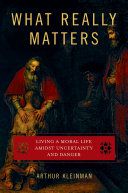
Life can sometimes thrust us into troubling circumstances that threaten to undo our thin mastery over those things that matter most. In this moving and thought-provoking volume, Arthur Kleinman tells the unsettling stories of a handful of men and women, some of whom have lived through some of the most fundamental transitions of the turbulent twentieth century. Here we meet an American veteran of World War II, tortured by the memory of the atrocities he committed while a soldier in the Pacific. A French-American woman aiding refugees in sub-Saharan Africa, facing the utter chaos of a society where life has become meaningless. A Chinese doctor trying to stay alive during Mao’s cultural revolution, discovering that the only values that matter are those that get you beyond the next threat. These individuals have found themselves caught in circumstances where those things that matter most to them–their desires, status, relationships, resources, political and religious commitments, life itself–have been challenged by the society around them. Each is caught up in existential moral experiences that define what it means to be human, with an intensity that makes their life narratives arresting. Their stories reveal just how malleable moral life is, and just how central danger is to our worlds and our livelihood. Indeed, Kleinman offers in this book a groundbreaking approach to ethics, examining “who we are” through some of the most disturbing issues of our time–war, globalization, poverty, social injustice, sex, and religion–all in the context of actual lived moral life. Here then are riveting stories of ordinary men and women, in extraordinary times and threatening situations, making sense of their worlds and facing profound challenges to what matters most in their lives.
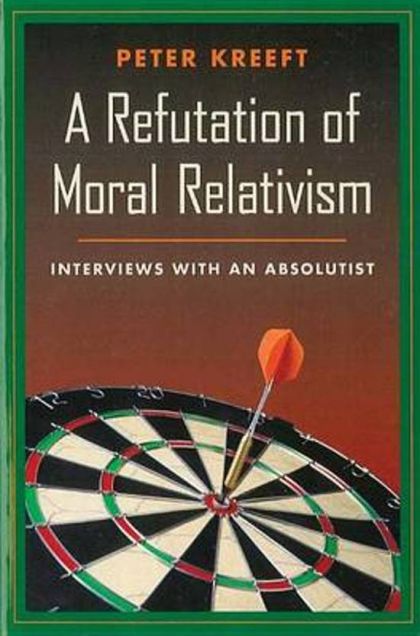
No issue is more fateful for civilization than moral relativism. History knows not one example of a successful society which repudiated moral absolutes. Yet most attacks on relativism have been either pragmatic (looking at its social consequences) or exhorting (preaching rather than proving), and philosophers’ arguments against it have been specialized, technical, and scholarly.In his typical unique writing style, Peter Kreeft lets an attractive, honest, and funny relativist interview a “Muslim fundamentalist” absolutist so as not to stack the dice personally for absolutism. In an engaging series of personal interviews, every conceivable argument the “sassy Black feminist” reporter Libby gives against absolutism is simply and clearly refuted, and none of the many arguments for moral absolutism is refuted.
Undermining the fundamental place of freedom, equality and universal reason, Nietzsche’s philosophy recognises that we occupy multiple and contradictory subject positions within social life. With no metaphysical realm of reason, no divine inspiration for morality, and no transcendental basis for human essence, we are left with the embodied, reflective and creative self as a source of ethics. From this perspective arises Nietzsche’s bermensch, a continuous process of overcoming and becoming, interpreted as a metaphor for education that honours difference and incorporates otherness. The book explores the development of Nietzsche’s philosophy and its application to the problems of education, disturbing traditional liberal and democratic accounts of the relationship between individual and society. Threaded throughout is the author’s critique of the way educational institutions are driven by political and economic considerations, explored through notions of autonomy and subjectivity. The book is suitable for graduate students and academics wanting to engage either with postmodern interpretations of ethics in education, or with political philosophy in relation to development of self and community.
With more than a billion people living on less than one dollar per day, human well-being is a core issue for both researchers and policymakers. The Millennium Development Goals are a powerful reminder of this point. We now know more about human well-being and the related concepts of poverty and inequality than ever before, as a result of many conceptual and methodological advances and better data. Yet despite this progress, the vitality of underlying concepts and the quality of data are repeatedly challenged and still leave much to be desired, particularly with regard to the worlds poorest countries. This book looks at advances in underlying well-being, poverty, and inequality concepts and corresponding empirical measures and case studies. Traditional monetary concepts and measurements are examined as well as educational achievement, longevity, health, and subjective well-being. Among the measures examined is the Human Development Index, which has done much to refocus attention on the importance of nonmonetary measures of human wellbeing. Chapters review pre-existing concepts and measures, with a view of future developments, while others propose new concepts or measures.
ما از اخلاق چه انتظاری داریم؟ این سوال شاید تاحدودی برای عموم مردم و یا متخصصان این رشته قابل پاسخ باشد؛ اینکه خوب بودن را به ما بیاموزد و در تنظیم روابط فردی م...

جشن کتاب تهران به ایستگاه سی و یکم رسیده است. حال و احوال نشر کتاب خوب نیست و باید فرهنگدوستان را به خرید و هدیه دادن کتاب ترغیب نمود. خانه اخلاقپژوهان جوان ب...

بنیاد کتابهای اخلاق اسلامی عمدتا پالایش جان از آلودگیها و آراستن آن به زیباییها است. اندیشه محوری این قبیل کتابها آن است که انسان فعلی آنی نیست که باید باشد...

-
0 Comments