
Notice: تابع WP_Block_Type_Registry::register به طورنادرست فراخوانی شد. نامهای نوع بلوک نباید حروف بزرگ داشته باشند. لطفاً برای اطلاعات بیشتر، اشکال زدایی در وردپرس را مشاهده کنید. (این پیام در نگارش 5.0.0 افزوده شده است.) in /home/ethicsho/public_html/wp-includes/functions.php on line 5313
Warning: Use of undefined constant TDC_PATH_LEGACY - assumed 'TDC_PATH_LEGACY' (this will throw an Error in a future version of PHP) in /home/ethicsho/public_html/wp-content/plugins/td-composer/td-composer.php on line 109
Warning: Use of undefined constant TDSP_THEME_PATH - assumed 'TDSP_THEME_PATH' (this will throw an Error in a future version of PHP) in /home/ethicsho/public_html/wp-content/plugins/td-composer/td-composer.php on line 113 بایگانیهای Allen & Unwin - خانه اخلاق پژوهان جوان Notice: Trying to access array offset on value of type bool in /home/ethicsho/public_html/wp-content/plugins/wp-ulike/inc/general-functions.php on line 807
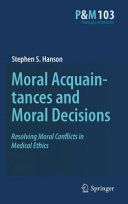
The potential of modern medicine in a pluralistic world leads to the potential for moral conflict. The most prevalent bioethical theories often either overestimate or underestimate the amount of shared moral belief that can be used to address those conflicts. This work presents a means for taking seriously the pluralism in the modern world while recognizing the likelihood of moral acquaintance between persons with differing views. It criticizes moral theories that overstate the extent of the problem of pluralism as well as those that imply too much agreement between reasonable moral persons, yet it locates a means for the resolution of many moral conflicts in moral acquaintanceship. Drawing from the work of H. Tristram Engelhardt, Jr., casuists and principle-based theorists, and Erich Loewy and Kevin W. Wildes s initial development of the concept of moral acquaintanceship, Moral Acquaintances and Moral Decisions is philosophically indepth work with direct applications for decisionmaking in real medical settings. A work in moral theory as well as a source of real world guidance, clinically oriented bioethics professionals as well as students of bioethical theory should find the theory of moral acquaintanceship provided here important to their work.
Through a collection of new, previously unpublished essays, The Blackwell Guide to Kant’s Ethics addresses diverse topics crucial to our understanding of Kant’s moral philosophy and its implications for the modern age. Provides a fresh perspective on themes in Kant’s moral philosophy Addresses systematically Kant’s foundational work, Groundwork for the Metaphysics of Morals and his more specific treatment of justice and virtue in The Metaphysics of Morals Includes essays by both established scholars and rising stars Identifies common misperceptions of Kant’s thought and challenges some prevailing interpretations Shows how Kant developed and supplemented his earlier ethical thought with specific discussions of practical issues in law, international relations, personal relations, and self-regarding virtues and vices
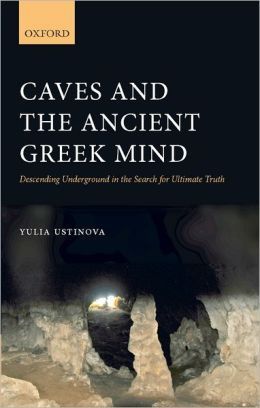
Caves and the Ancient Greek Mind analyses techniques of searching for ultimate wisdom in ancient Greece. The Greeks perceived mental experiences of exceptional intensity as resulting from divine intervention. They believed that to share in the immortals’ knowledge, one had to liberate the soul from the burden of the mortal body by attaining an altered state of consciousness, that is, by merging with a superhuman being or through possession by a deity. These states were often attained by inspired mediums, `impresarios of the gods’ – prophets, poets, and sages – who descended into caves or underground chambers. Yulia Ustinova juxtaposes ancient testimonies with the results of modern neuropsychological research. This novel approach enables an examination of religious phenomena not only from the outside, but also from the inside: it penetrates the consciousness of people who were engaged in the vision quest, and demonstrates that the darkness of the caves provided conditions vital for their activities.
The seventeenth century saw a major revolution in our ways of thinking about such issues as the method appropriate to philosophy and science, the relation between mind and body, the nature of substance, and the place of humanity in nature. While not neglecting the lesser but still influential figures, such as Arnauld and Malebranche, John Cottingham focuses primarily on the three great “rationalists”: Descartes, Spinoza, and Leibniz. He examines how they approached central problems of philosophy, and shows how closely their ideas are related, despite the radically different philosophical systems they produced. He not only places the major thinkers in their historical and philosophical contexts, but engages their ideas in a vigorously critical way, revealing their capacity to throw light on major philosophical topics that are still very much alive today.
ما از اخلاق چه انتظاری داریم؟ این سوال شاید تاحدودی برای عموم مردم و یا متخصصان این رشته قابل پاسخ باشد؛ اینکه خوب بودن را به ما بیاموزد و در تنظیم روابط فردی م...

جشن کتاب تهران به ایستگاه سی و یکم رسیده است. حال و احوال نشر کتاب خوب نیست و باید فرهنگدوستان را به خرید و هدیه دادن کتاب ترغیب نمود. خانه اخلاقپژوهان جوان ب...

بنیاد کتابهای اخلاق اسلامی عمدتا پالایش جان از آلودگیها و آراستن آن به زیباییها است. اندیشه محوری این قبیل کتابها آن است که انسان فعلی آنی نیست که باید باشد...

-
0 Comments