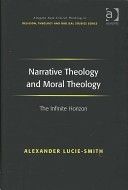



Moral thinking today finds itself stranded between the particular and the universal. Alasdair MacIntyre’s work on narrative, discussed here along with that of Stanley Hauerwas and H. T. Engelhardt, aims to undo the perceived damage done by the Enlightenment by returning to narrative and abandoning the illusion of a disembodied reason that claims to be able give a coherent explanation for everything. It is precisely this – a theory that holds good for all cases – that John Rawls proposed, drawing on the heritage of Emmanuel Kant. Who is right? Must universality be abandoned? Must we only think about morality in terms that are relative, bound by space and time? Alexander Lucie-Smith attempts to answer these questions by examining the nature of narrative itself as well as the particular narratives of Rawls and St Augustine. Bound and rooted as they are in history and personal experience, narratives nevertheless strain at the limits imposed on them. It is Lucie-Smith’s contention that each narrative that points to a lived morality exists against the background of an infinite horizon; and thus it is that the particular and the rooted can also make us aware of the universal and unchanging.
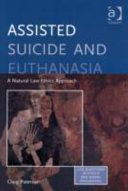
Craig Paterson discusses assisted suicide and euthanasia from a secular natural law perspective. He analyses important issues that shape the moral quality of an action: intention/foresight, action/omission, action/consequences, killing/letting die, innocence/non-innocence, person/non-person.
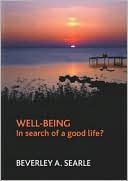
We are often told that ‘money can’t buy happiness’. But if money is not the answer then what is? This book considers this question by examining empirical data stretching back almost 10 years. Whereas previous concerns of individual well-being have been drawn towards the negative outcomes of life experiences, this book provides a new approach by directly addressing the circumstances under which high subjective well-being is experienced, often with surprising results. Drawing on nine years of panel data, the book examines demographic, social, spatial, health, domain satisfaction and socio-economic circumstances in a rich and complex longitudinal study, providing previously unknown information on factors associated with improved and sustained high well-being.It shows that subjective assessments of our circumstances are more important to well-being than our objective conditions and suggests that high well-being may be the key to improvements in people’s subjective experience of a wide range of adverse (and other) life events. It also highlights that high levels of well-being are more likely to be associated with our social relationships and health status than with income or personal status, and that affluence is no guarantee to high subjective well-being and indeed may have negative consequences. The 21st Century is seeing the emergence of a positive science, with a new focus on subjective well-being.This research adds new knowledge to the issues and debates which support the move towards a better understanding of the factors which promote subjective well-being. Such findings will be important to the international academic field as well as the national political arena where improving national well-being has become a part of the government’s agenda.
John Pollock aims to construct a theory of rational decision making for real agents–not ideal agents. Real agents have limited cognitive powers, but traditional theories of rationality have applied only to idealized agents that lack such constraints. Pollock argues that theories of ideal rationality are largely irrelevant to the decision making of real agents. Thinking about Acting aims to provide a theory of “real rationality.”
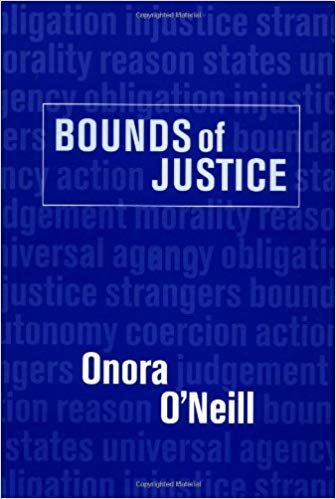
In this collection of essays Onora O’Neill explores and argues for an account of justice that is fundamentally cosmopolitan rather than civic, yet takes serious account of institutions and boundaries, and of human diversity and vulnerability. Starting from conceptions that are central to any account of justice – those of reason, action, judgement, coercion, obligations and rights – she discusses whether and how culturally or politically specific concepts and views, which limit the claims and scope of justice, can be avoided. She then examines the demands and scope of just institutions, arguing that there are good reasons for taking the claims of distant strangers seriously, but that doing so points not to a world without boundaries but to one of porous boundaries and dispersed power. Bounds of Justice will be of interest to a wide range of readers in philosophy, politics and international relations.
ما از اخلاق چه انتظاری داریم؟ این سوال شاید تاحدودی برای عموم مردم و یا متخصصان این رشته قابل پاسخ باشد؛ اینکه خوب بودن را به ما بیاموزد و در تنظیم روابط فردی م...

جشن کتاب تهران به ایستگاه سی و یکم رسیده است. حال و احوال نشر کتاب خوب نیست و باید فرهنگدوستان را به خرید و هدیه دادن کتاب ترغیب نمود. خانه اخلاقپژوهان جوان ب...

بنیاد کتابهای اخلاق اسلامی عمدتا پالایش جان از آلودگیها و آراستن آن به زیباییها است. اندیشه محوری این قبیل کتابها آن است که انسان فعلی آنی نیست که باید باشد...

-
0 Comments