
Notice: تابع WP_Block_Type_Registry::register به طورنادرست فراخوانی شد. نامهای نوع بلوک نباید حروف بزرگ داشته باشند. لطفاً برای اطلاعات بیشتر، اشکال زدایی در وردپرس را مشاهده کنید. (این پیام در نگارش 5.0.0 افزوده شده است.) in /home/ethicsho/public_html/wp-includes/functions.php on line 5313
Warning: Use of undefined constant TDC_PATH_LEGACY - assumed 'TDC_PATH_LEGACY' (this will throw an Error in a future version of PHP) in /home/ethicsho/public_html/wp-content/plugins/td-composer/td-composer.php on line 109
Warning: Use of undefined constant TDSP_THEME_PATH - assumed 'TDSP_THEME_PATH' (this will throw an Error in a future version of PHP) in /home/ethicsho/public_html/wp-content/plugins/td-composer/td-composer.php on line 113 بایگانیهای 2004 - صفحه 4 از 16 - خانه اخلاق پژوهان جوان Notice: Trying to access array offset on value of type bool in /home/ethicsho/public_html/wp-content/plugins/wp-ulike/inc/general-functions.php on line 807
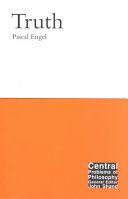
After a brief presentation of the classical conceptions of truth – correspondence, coherence, verificationist, and pragmatist theories – the book focuses on the debate between those who favour “substantive” conceptions of this classical kind and those who advocate so-called “minimalist” and “deflationist” conceptions and deny that truth can be any more than a thin concept, carrying no metaphysical weight.
At first sight, Karl Marx and Ludwig Wittgenstein may well seem to be as different from each other as it is possible for the ideas of two major intellectuals to be. Despite this standard conception, however, a small number of scholars have long suggested that there are deeper philosophical commonalities between Marx and Wittgenstein. They have argued that, once grasped, these commonalities can radically change and enrich understanding both of Marxism and of Wittgensteinian philosophy. This book develops and extends this unorthodox view, emphasizing the mutual enrichment that comes from bringing Marx’s and Wittgenstein’s ideas into dialogue with one another.
Dealing with a diverse set of problems in practical and theoretical ethics, these fourteen essays, three of them previously unpublished, reconfirm Joel Feinberg’s leading position in the field of legal philosophy. With a clarity and humor that will be familiar to readers of his other works, Feinberg writes on topics including “wrongful life” suits in the law of torts, or whether there is any sense in the remark that a person is so badly off that he would be better off not existing at all; the morality of abortion; educational options; free expression; civil disobedience; and the duty of easy rescue in criminal law. He continues with a three-part defense of moral rights in the abstract, a discussion of voluntary euthanasia, and an inquiry into arguments of various kinds for not granting legal rights in enforcement of a person’s acknowledged moral rights. This collection concludes with two essays dealing with concepts used in appraising the whole of a person’s life: absurdity and self-fulfillment, and their interplay.Dealing with a diverse set of problems in practical and theoretical ethics, these fourteen essays, three of them previously unpublished, reconfirm Joel Feinberg’s leading position in the field of legal philosophy. With a clarity and humor that will be familiar to readers of his other works, Feinberg writes on topics including “wrongful life” suits in the law of torts, or whether there is any sense in the remark that a person is so badly off that he would be better off not existing at all; the morality of abortion; educational options; free expression; civil disobedience; and the duty of easy rescue in criminal law. He continues with a three-part defense of moral rights in theabstract, a discussion of voluntary euthanasia, and an inquiry into arguments of various kinds for not granting legal rights in enforcement of a person’s acknowledged moral rights. This collection concludes with two essays dealing with concepts used in appraising the whole of a person’s life: absurdity and self-fulfillment, and their interplay.
“Information Ethics: Privacy and Intellectual Property provides an up-to-date discussion of the main ethical issues that face today’s information-intensive society, including the areas of intellectual property rights, privacy, accessibility and censorship. Through chapters written by some of today’s leading Information Ethics researchers, this book provides the reader with a thorough overview of the current state of Information Ethics, the dangers and opportunities presented by information technology, and potential solutions to the risks currently faced by today’s information society.”–BOOK JACKET.
Most recent texts in moral philosophy have either concentrated on practical moral issues or else, if theoretical, have tended toward one-sided presentations of recent, fashionable views. Discussions of applied ethics cannot go very far without revealing underlying philosophical assumptions about how deeper, more general issues are treated. Similarly, recent approaches to ethics are difficult to understand without a knowledge of the context of the historical views against which these approaches are reacting. The Nature of Moral Thinkingwill satisfy the intellectually curious student, providing a solid and fair discussion of the classical philosophical questions about our moral thinking, surveying the main types of meta-ethical and normative ethical theories, while not excluding the more recent discussions of moral realism, of anti-realism, and of virtue morality. Francis Snare demonstrates that glib intellectualistic thinking about morality, especially in regard to relativism andsubjectivism, is seriously flawed. He also focuses attention on the question of whether particular theories of the origins of morality (for example, those of Nietzsche and Marx) undermine morality. All students and teachers of ethics and philosophy will find this book one of the most complete and detailed introductory-level surveys of the foundations of ethics with emphasis on the problems of the subjectivity, the relativity, and the origins of morality.
ما از اخلاق چه انتظاری داریم؟ این سوال شاید تاحدودی برای عموم مردم و یا متخصصان این رشته قابل پاسخ باشد؛ اینکه خوب بودن را به ما بیاموزد و در تنظیم روابط فردی م...

جشن کتاب تهران به ایستگاه سی و یکم رسیده است. حال و احوال نشر کتاب خوب نیست و باید فرهنگدوستان را به خرید و هدیه دادن کتاب ترغیب نمود. خانه اخلاقپژوهان جوان ب...

بنیاد کتابهای اخلاق اسلامی عمدتا پالایش جان از آلودگیها و آراستن آن به زیباییها است. اندیشه محوری این قبیل کتابها آن است که انسان فعلی آنی نیست که باید باشد...

-
0 Comments