Notice: تابع WP_Block_Type_Registry::register به طورنادرست فراخوانی شد. نامهای نوع بلوک نباید حروف بزرگ داشته باشند. لطفاً برای اطلاعات بیشتر، اشکال زدایی در وردپرس را مشاهده کنید. (این پیام در نگارش 5.0.0 افزوده شده است.) in /home/ethicsho/public_html/wp-includes/functions.php on line 5313
Warning: Use of undefined constant TDC_PATH_LEGACY - assumed 'TDC_PATH_LEGACY' (this will throw an Error in a future version of PHP) in /home/ethicsho/public_html/wp-content/plugins/td-composer/td-composer.php on line 109
Warning: Use of undefined constant TDSP_THEME_PATH - assumed 'TDSP_THEME_PATH' (this will throw an Error in a future version of PHP) in /home/ethicsho/public_html/wp-content/plugins/td-composer/td-composer.php on line 113 بایگانیهای 1916 - خانه اخلاق پژوهان جوان Notice: Trying to access array offset on value of type bool in /home/ethicsho/public_html/wp-content/plugins/wp-ulike/inc/general-functions.php on line 807
By contributing a few hundred dollars to a charity like UNICEF, a prosperous person can ensure that fewer poor children die, and that more will live reasonably long, worthwhile lives. Even when knowing this, however, most people send nothing, and almost all of the rest send little. What is the moral status of this behavior? To such common cases of letting die, our untutored response is that, while it is not very good, neither is the conduct wrong. What is the source of this lenient assessment? In this contentious new book, one of our leading philosophers argues that our intuitions about ethical cases are generated not by basic moral values, but by certain distracting psychological dispositions that all too often prevent us from reacting in accord with our commitments. Through a detailed look at how these tendencies operate, Unger shows that, on the good morality that we already accept, the fatally unhelpful behavior is monstrously wrong. By uncovering the eminently sensible ethics that we’ve already embraced fully, and by confronting us with empirical facts and with easily followed instructions for lessening serious suffering appropriately and effectively, Unger’s book points the way to a compassionate new moral philosophy.
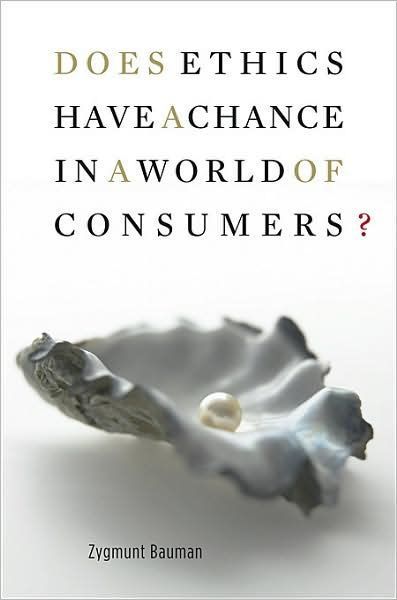
Zygmunt Bauman is one of the most admired social thinkers of our time. Once a Marxist sociologist, he has surrendered the narrowness of both Marxism and sociology, and dares to write in language that ordinary people can understand—about problems they feel ill equipped to solve. This book is no dry treatise but is instead what Bauman calls “a report from a battlefield,” part of the struggle to find new and adequate ways of thinking about the world in which we live. Rather than searching for solutions to what are perhaps the insoluble problems of the modern world, Bauman proposes that we reframe the way we think about these problems. In an era of routine travel, where most people circulate widely, the inherited beliefs that aid our thinking about the world have become an obstacle. Bauman seeks to liberate us from the thinking that renders us hopeless in the face of our own domineering governments and threats from unknown forces abroad. He shows us we can give up belief in a hierarchical arrangement of states and powers. He challenges members of the “knowledge class” to overcome their estrangement from the rest of society. Gracefully, provocatively, Bauman urges us to think in new ways about a newly flexible, newly challenging modern world. As Bauman notes, quoting Vaclav Havel, “hope is not a prognostication.” It is, rather, alongside courage and will, a mundane, common weapon that is too seldom used.
Book Summary of Aiming At Virtue In PlatoThis innovative study of Plato’s ethics focuses on the concept of virtue. Based on detailed readings of the most prominent Platonic dialogues on virtue, it argues that there is a central yet previously unnoticed conceptual distinction in Plato between the idea of virtue as the supreme aim of one’s actions and the determination of which action-tokens or -types are virtuous. Appreciating the ‘aiming/determining distinction’ provides detailed and mutually consistent readings of the most well-known Platonic dialogues on virtue as well as original interpretations of central Platonic questions. Unlike most examinations of Plato’s ethics, this study does not take as its centrepiece the ‘eudaimonist framework’, which focusses on the relationship between virtue and happiness. Instead Aiming at Virtue in Plato argues that the dialogues themselves begin with the idea of the supremacy of virtue, examine how that claim can be defended, and address how to determine what constitutes the virtuous action..
Rethinking Virtue Ethics offers a model of Aristotelian virtue ethics based on a deductive paradigm. This book argues that, contrary to what many contemporary thinkers are inclined to believe, Aristotelian virtue ethics is consistent with at least some action-guiding moral principles being true unconditionally, and that a justification for general moral principles can be grounded in fundamental concepts within Aristotle’s theory. An analysis of ethical propositions that hold for the most part is proposed that fits well within the deductive paradigm developed. This unique interpretation of virtue ethics has implications for recent discussions of the virtues in social psychology, issues about how fundamental moral principles are known, questions about the justification of inalienable rights, debates about moral particularism and generalism, and discussions of moral realism and anti-realism.
The Medical Biobank of UmeÃ¥ in Sweden, deCODE’s Health Sector Database in Iceland, the Estonian Genome Project and the UK Biobank contain health data and genetic data from large populations. Some include genealogical or lifestyle information. They are resources for research in human genetics and medicine, exploring interaction between genes, lifestyle, environmental factors and health and diseases. The collection, storage and use of this data raise ethical, legal and social issues. In this book, bioethics scholars examine whether existing ethical frameworks and social policies reflect people’s concerns, and how they may need to change in light of new scientific and technological developments. The ethical issues of social justice, genetic discrimination, informational privacy, trust in science and consent to participation in database research are analyzed, whilst an empirical survey, conducted in the four countries, demonstrates public views of privacy and related moral values in the context of human genetic databases.
ما از اخلاق چه انتظاری داریم؟ این سوال شاید تاحدودی برای عموم مردم و یا متخصصان این رشته قابل پاسخ باشد؛ اینکه خوب بودن را به ما بیاموزد و در تنظیم روابط فردی م...

جشن کتاب تهران به ایستگاه سی و یکم رسیده است. حال و احوال نشر کتاب خوب نیست و باید فرهنگدوستان را به خرید و هدیه دادن کتاب ترغیب نمود. خانه اخلاقپژوهان جوان ب...

بنیاد کتابهای اخلاق اسلامی عمدتا پالایش جان از آلودگیها و آراستن آن به زیباییها است. اندیشه محوری این قبیل کتابها آن است که انسان فعلی آنی نیست که باید باشد...

-
0 Comments