Notice: تابع WP_Block_Type_Registry::register به طورنادرست فراخوانی شد. نامهای نوع بلوک نباید حروف بزرگ داشته باشند. لطفاً برای اطلاعات بیشتر، اشکال زدایی در وردپرس را مشاهده کنید. (این پیام در نگارش 5.0.0 افزوده شده است.) in /home/ethicsho/public_html/wp-includes/functions.php on line 5313
Warning: Use of undefined constant TDC_PATH_LEGACY - assumed 'TDC_PATH_LEGACY' (this will throw an Error in a future version of PHP) in /home/ethicsho/public_html/wp-content/plugins/td-composer/td-composer.php on line 109
Warning: Use of undefined constant TDSP_THEME_PATH - assumed 'TDSP_THEME_PATH' (this will throw an Error in a future version of PHP) in /home/ethicsho/public_html/wp-content/plugins/td-composer/td-composer.php on line 113 بایگانیهای 1909 - خانه اخلاق پژوهان جوان Notice: Trying to access array offset on value of type bool in /home/ethicsho/public_html/wp-content/plugins/wp-ulike/inc/general-functions.php on line 807
This book comes against the unchallenged methods in medicine, such as “evidence-based medicine,” which claim to be, but often are not, scientific. It completes medical care by adding the comprehensive humanistic perspectives and philosophy of medicine.No specific or absolute recommendations are given regarding medical treatment, moral approaches, or legal advice. Given rather is discussion about each issue involved and the strongest arguments indicated. Each argument is subject to further critical analysis. This is the same position as with any philosophical, medical or scientific view.The argument that decision-making in medicine is inadequate unless grounded on a philosophy of medicine is not meant to include all of philosophy and every philosopher. On the contrary, it includes only sound, practical and humanistic philosophy and philosophers who are creative and critical thinkers and who have concerned themselves with the topics relevant to medicine. These would be those philosophers who engage in practical philosophy, such as the pragmatists, humanists, naturalists, and ordinary-language philosophers.A new definition of our own philosophy of life emerges and it is necessary to have one. Good lifestyle no longer means just abstaining from cigarettes, alcohol and getting exercise. It also means living a holistic life, which includes all of one’s thinking, personality and actions.This book also includes new ways of thinking. In this regard the “Metaphorical Method” is explained, used, and exemplified in depth, for example in the chapters on care, egoism and altruism, letting die, etc.
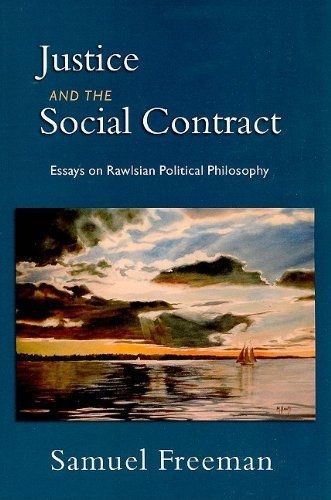
John Rawls (1921-2002) was one of the 20th century’s most important philosophers and continues to be among the most widely discussed of contemporary thinkers. His work, particularly A Theory of Justice, is integral to discussions of social and international justice, democracy, liberalism, welfare economics, and constitutional law, in departments of philosophy, politics, economics, law, public policy, and others. Samuel Freeman is one of Rawls’s foremost interpreters. This volume contains nine of his essays on Rawls and Rawlsian justice, two of which are previously unpublished. Freeman places Rawls within historical context in the social contract tradition, addresses criticisms of his positions, and discusses the implications of his views on issues of distributive justice, liberalism and democracy, international justice, and other subjects. This collection will be useful to the wide range of scholars interested in Rawls and theories of justice.
Economic Principles of Law applies economics to the doctrines, rules and remedies of the common law. In plain English and using non-technical analysis, it offers an introduction and exposition of the ‘economic approach’ to law – one of the most exciting and vibrant fields of legal scholarship and applied economics. Beginning with a brief history of the field, it sets out the basic economic concepts useful to lawyers, and applies these to assess the core areas of the common law – property, contract, tort and crime – with particular emphasis on their doctrinal structure and remedies. This is done using leading cases drawn from the birthplace of the common law (England & Wales) and other common law jurisdictions. The book serves as a primer to the wider use of economics which has become increasingly important for law students, lawyers, legislators, regulators and those concerned with our legal system generally.
Philosophers typically see the issue of free will and determinism in terms of a debate between two standard positions. Incompatibilism holds that freedom and responsibility require causal and metaphysical independence from the impersonal forces of nature. According to compatibilism, people are free and responsible as long as their actions are governed by their desires. In Freedom Within Reason, Susan Wolf charts a path between these traditional positions: We are not free and responsible, she argues, for actions that are governed by desires that we cannot help having. But the wish to form our own desires from nothing is both futile and arbitrary. Some of the forces beyond our control are friends to freedom rather than enemies of it: they endow us with faculties of reason, perception, and imagination, and provide us with the data by which we come to see and appreciate the world for what it is. The independence we want, Wolf argues, is not independence from the world, but independence from forces that prevent or preclude us from choosing how to live in light of a sufficient appreciation of the world. The freedom we want is a freedom within reason and the world.
ما از اخلاق چه انتظاری داریم؟ این سوال شاید تاحدودی برای عموم مردم و یا متخصصان این رشته قابل پاسخ باشد؛ اینکه خوب بودن را به ما بیاموزد و در تنظیم روابط فردی م...

جشن کتاب تهران به ایستگاه سی و یکم رسیده است. حال و احوال نشر کتاب خوب نیست و باید فرهنگدوستان را به خرید و هدیه دادن کتاب ترغیب نمود. خانه اخلاقپژوهان جوان ب...

بنیاد کتابهای اخلاق اسلامی عمدتا پالایش جان از آلودگیها و آراستن آن به زیباییها است. اندیشه محوری این قبیل کتابها آن است که انسان فعلی آنی نیست که باید باشد...

-
0 Comments