
Notice: تابع WP_Block_Type_Registry::register به طورنادرست فراخوانی شد. نامهای نوع بلوک نباید حروف بزرگ داشته باشند. لطفاً برای اطلاعات بیشتر، اشکال زدایی در وردپرس را مشاهده کنید. (این پیام در نگارش 5.0.0 افزوده شده است.) in /home/ethicsho/public_html/wp-includes/functions.php on line 5313
Warning: Use of undefined constant TDC_PATH_LEGACY - assumed 'TDC_PATH_LEGACY' (this will throw an Error in a future version of PHP) in /home/ethicsho/public_html/wp-content/plugins/td-composer/td-composer.php on line 109
Warning: Use of undefined constant TDSP_THEME_PATH - assumed 'TDSP_THEME_PATH' (this will throw an Error in a future version of PHP) in /home/ethicsho/public_html/wp-content/plugins/td-composer/td-composer.php on line 113 بایگانیهای 1896 - خانه اخلاق پژوهان جوان Notice: Trying to access array offset on value of type bool in /home/ethicsho/public_html/wp-content/plugins/wp-ulike/inc/general-functions.php on line 807
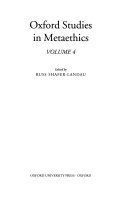
Oxford Studies in Metaethics is the only publication devoted exclusively to original philosophical work in the foundations of ethics. It provides an annual selection of much of the best new scholarship being done in the field. Its broad purview includes work being done at the intersection of ethical theory and metaphysics, epistemology, philosophy of language, and philosophy of mind. The essays included in the series provide an excellent basis for understanding recent developments in the field; those who would like to acquaint themselves with the current state of play in metaethics would do well to start here.
Emile Durkheim is best known in this country as a great sociologist and methodologist. Yet it was Durkheim’s reflections on morality and society that spoke most deeply of his vital concerns. In his informative introduction to this work, Robert N. Bellah describes Durkheim as moralist, philosopher, theologian, and prophet, as well as sociologist, and the selections in this volume are representative of these aspects of Durkheim’s many-faceted scholarship. The first two selections of the volume set the context for the development of Durkheim’s sociology of morality. Section I, “The French Tradition of Social Thought,” gives Durkheim’s picture of how his sociology is to be situated relative to the general French tradition. Section II, “Sociology and Social Action,” shows Durkheim grappling with moral and political issues in his society and indicates the immediate social context of his thinking. The remaining selections indicate some of the major substantive areas of Durkheim’s sociology of morality. Section III, taken from The Division of Labor in Society, demonstrates his basically evolutionary approach to the development of moral norms in society. Section IV, “The Learning of Morality,” gives examples of Durkheim’s work on socialization. Section V, “Social Creativity,” deals with the important question of how new moral norms arise in society.
The author’s purpose is to understand the philosophical foundations of Hegel’s social theory by articulating the normative standards at work in his claim that the three central social institutions of the modern era–the nuclear family, civil society, and the constitutional state–are rational or good. Its central question is: what, for Hegel, makes a rational social order rational? In addressing this question the book aspires to be faithful to Hegel’s texts and to articulate a compelling theory of rational social institutions; its aim is not only to interpret Hegel correctly but also to demonstrate the richness and power that his vision of the rational social order possesses.Frederick Neuhouser’s task is to understand the conceptions of freedom on which Hegel’s theory rests and to show how they ground his arguments in defense of the modern social world. In doing so, the author focuses on Hegel’s most important and least understood contribution to social philosophy, the idea of “social freedom.”Neuhouser’s strategy for making sense of social freedom is to show its affinities with Rousseau’s conception of the general will. The main idea that Hegel appropriates from Rousseau is that rational social institutions must satisfy two conditions: first, they must furnish the basic social preconditions of their members’ freedom; and, second, all social members must be able subjectively to affirm their freedom-conditioning institutions as good and thus to regard the principles that govern their social participation as coming from their own wills.
ما از اخلاق چه انتظاری داریم؟ این سوال شاید تاحدودی برای عموم مردم و یا متخصصان این رشته قابل پاسخ باشد؛ اینکه خوب بودن را به ما بیاموزد و در تنظیم روابط فردی م...

جشن کتاب تهران به ایستگاه سی و یکم رسیده است. حال و احوال نشر کتاب خوب نیست و باید فرهنگدوستان را به خرید و هدیه دادن کتاب ترغیب نمود. خانه اخلاقپژوهان جوان ب...

بنیاد کتابهای اخلاق اسلامی عمدتا پالایش جان از آلودگیها و آراستن آن به زیباییها است. اندیشه محوری این قبیل کتابها آن است که انسان فعلی آنی نیست که باید باشد...

-
0 Comments