Notice: تابع WP_Block_Type_Registry::register به طورنادرست فراخوانی شد. نامهای نوع بلوک نباید حروف بزرگ داشته باشند. لطفاً برای اطلاعات بیشتر، اشکال زدایی در وردپرس را مشاهده کنید. (این پیام در نگارش 5.0.0 افزوده شده است.) in /home/ethicsho/public_html/wp-includes/functions.php on line 5313
Warning: Use of undefined constant TDC_PATH_LEGACY - assumed 'TDC_PATH_LEGACY' (this will throw an Error in a future version of PHP) in /home/ethicsho/public_html/wp-content/plugins/td-composer/td-composer.php on line 109
Warning: Use of undefined constant TDSP_THEME_PATH - assumed 'TDSP_THEME_PATH' (this will throw an Error in a future version of PHP) in /home/ethicsho/public_html/wp-content/plugins/td-composer/td-composer.php on line 113 بایگانیهای ZA4228 .R43 2004 - خانه اخلاق پژوهان جوان Notice: Trying to access array offset on value of type bool in /home/ethicsho/public_html/wp-content/plugins/wp-ulike/inc/general-functions.php on line 807
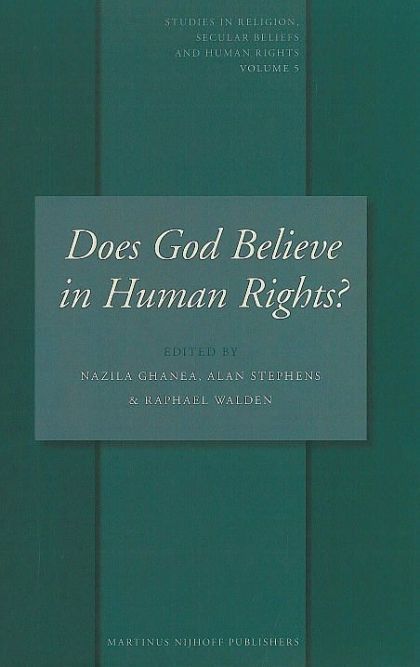
Where can religions find sources of legitimacy for human rights? How do, and how should, religious leaders and communities respond to human rights as defined in modern International Law? When religious precepts contradict human rights standards – for example in relation to freedom of expression or in relation to punishments – which should trump the other, and why? Can human rights and religious teachings be interpreted in a manner which brings reconciliation closer? Do the modern concept and system of human rights undermine the very vision of society that religions aim to impart? Is a reference to God in the discussion of human rights misplaced? Do human fallibilities with respect to interpretation, judicial reasoning and the understanding of human oneness and dignity provide the key to the undeniable and sometimes devastating conflicts that have arisen between, and within, religions and the human rights movement? In this volume, academics and lawyers tackle these most difficult questions head-on, with candour and creativity, and the collection is rendered unique by the further contributions of a remarkable range of other professionals, including senior religious leaders and representatives, journalists, diplomats and civil servants, both national and international. Most notably, the contributors do not shy away from the boldest question of all – summed up in the book’s title. The thoroughly edited and revised papers which make up this collection were originally prepared for a ground-breaking conference organised by the Clemens Nathan Research Centre, the University of London Institute of Commonwealth Studies and Martinus Nijhoff/Brill.
This scarce antiquarian book is a selection from Kessinger Publishings Legacy Reprint Series. Due to its age, it may contain imperfections such as marks, notations, marginalia and flawed pages. Because we believe this work is culturally important, we have made it available as part of our commitment to protecting, preserving, and promoting the worlds literature. Kessinger Publishing is the place to find hundreds of thousands of rare and hard-to-find books with something of interest for everyone!
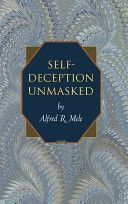
Self-deception raises complex questions about the nature of belief and the structure of the human mind. In this book, Alfred Mele addresses four of the most critical of these questions: What is it to deceive oneself? How do we deceive ourselves? Why do we deceive ourselves? Is self-deception really possible?Drawing on cutting-edge empirical research on everyday reasoning and biases, Mele takes issue with commonplace attempts to equate the processes of self-deception with those of stereotypical interpersonal deception. Such attempts, he demonstrates, are fundamentally misguided, particularly in the assumption that self-deception is intentional. In their place, Mele proposes a compelling, empirically informed account of the motivational causes of biased beliefs. At the heart of this theory is an appreciation of how emotion and motivation may, without our knowing it, bias our assessment of evidence for beliefs. Highlighting motivation and emotion, Mele develops a pair of approaches for explaining the two forms of self-deception: the “straight” form, in which we believe what we want to be true, and the “twisted” form, in which we believe what we wish to be false.Underlying Mele’s work is an abiding interest in understanding and explaining the behavior of real human beings. The result is a comprehensive, elegant, empirically grounded theory of everyday self-deception that should engage philosophers and social scientists alike.
ما از اخلاق چه انتظاری داریم؟ این سوال شاید تاحدودی برای عموم مردم و یا متخصصان این رشته قابل پاسخ باشد؛ اینکه خوب بودن را به ما بیاموزد و در تنظیم روابط فردی م...

جشن کتاب تهران به ایستگاه سی و یکم رسیده است. حال و احوال نشر کتاب خوب نیست و باید فرهنگدوستان را به خرید و هدیه دادن کتاب ترغیب نمود. خانه اخلاقپژوهان جوان ب...

بنیاد کتابهای اخلاق اسلامی عمدتا پالایش جان از آلودگیها و آراستن آن به زیباییها است. اندیشه محوری این قبیل کتابها آن است که انسان فعلی آنی نیست که باید باشد...

-
0 Comments