Notice: تابع WP_Block_Type_Registry::register به طورنادرست فراخوانی شد. نامهای نوع بلوک نباید حروف بزرگ داشته باشند. لطفاً برای اطلاعات بیشتر، اشکال زدایی در وردپرس را مشاهده کنید. (این پیام در نگارش 5.0.0 افزوده شده است.) in /home/ethicsho/public_html/wp-includes/functions.php on line 5313
Warning: Use of undefined constant TDC_PATH_LEGACY - assumed 'TDC_PATH_LEGACY' (this will throw an Error in a future version of PHP) in /home/ethicsho/public_html/wp-content/plugins/td-composer/td-composer.php on line 109
Warning: Use of undefined constant TDSP_THEME_PATH - assumed 'TDSP_THEME_PATH' (this will throw an Error in a future version of PHP) in /home/ethicsho/public_html/wp-content/plugins/td-composer/td-composer.php on line 113 بایگانیهای U22 .K36 2011 - خانه اخلاق پژوهان جوان Notice: Trying to access array offset on value of type bool in /home/ethicsho/public_html/wp-content/plugins/wp-ulike/inc/general-functions.php on line 807
How do our feelings for others shape our attitudes and conduct towards them? Is morality primarily a matter of rational choice, or instinctual feeling? Joseph Duke Filonowicz takes the reader on an engaging, informative tour of some of the main issues in philosophical ethics, explaining and defending the ideas of the early-modern British sentimentalists. These philosophers – Shaftesbury, Hutcheson, Hume, and Smith – argued that it is our feelings, and not our ‘reason’, which ultimately determine how we judge what is good or bad, right or wrong, and how we choose to act towards our fellow human beings. Filonowicz draws on contemporary sociology and evolutionary biology as well as present-day moral theory to examine and defend the sentimentalist view and to challenge the rationalistic character of contemporary ethics. His book will appeal to readers interested in both history of philosophy and current ethical debates.
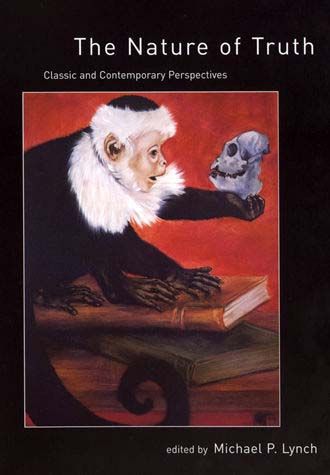
“What is truth?” has long been the philosophical question par excellence. The Nature of Truth collects in one volume the twentieth century’s most influential philosophical work on the subject. The coverage strikes a balance between classic works and the leading edge of current philosophical research.The essays center around two questions: Does truth have an underlying nature? And if so, what sort of nature does it have? Thus the book discusses both traditional and deflationary theories of truth, as well as phenomenological, postmodern, and pluralist approaches to the problem. The essays are organized by theory. Each of the seven sections opens with a detailed introduction that not only discusses the essays in that section but relates them to other relevant essays in the book. Eleven of the essays are previously unpublished or substantially revised. The book also includes suggestions for further reading.Contributors:Linda Martin Alcoff, William P. Alston, J. L. Austin, Brand Blanshard, Marian David, Donald Davidson, Michael Devitt, Michael Dummett, Hartry Field, Michel Foucault, Dorothy Grover, Anil Gupta, Martin Heidegger, Terence Horgan, Jennifer Hornsby, Paul Horwich, William James, Michael P. Lynch, Charles Sanders Pierce, Hilary Putnam, W. V. O. Quine, F. P. Ramsey, Richard Rorty, Bertrand Russell, Scott Soames, Ernest Sosa, P. F. Strawson, Alfred Tarski, Ralph C. Walker, Crispin Wright.
This book reflects philosophically about the socio-political dimension of economics.Part I provides normative reflections on the economy: Section I reflects on the interconnections between the multiple discourses on the economy, section II presents Hegel’s claim that the economic order is an ethical institution and defends his ontological view of the economy against the one of Adam Smith. Section III dialogues with economists about their concepts of public and merit goods. This section defends a Hegelian ontology of the economy through an analysis of technical concepts used by economists. Part II provides applications derived from the normative analysis: Section I presents the views of authors in different academic disciplines pointing to failures in late capitalism, in particular failures of American capitalism and section II asks the question: ” What must one pay attention to in a transition from a command economy to a free market?”Section III draws attention to an overlap of ideas found in Catholic Social Thought and in the publications of some recent Nobel prize winners in economics (Buchanan, Sen, Stiglitz).
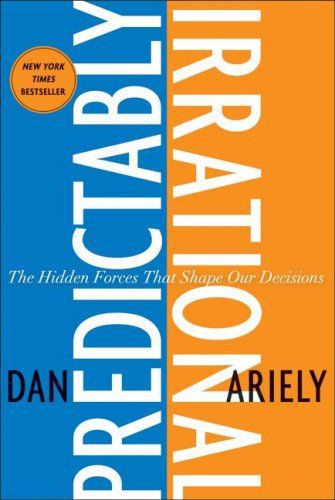
An evaluation of the sources of illogical decisions explores the reasons why irrational thought often overcomes level-headed practices, offering insight into the structural patterns that cause people to make the same mistakes repeatedly.
‘…well written, clear and informative. It contains many references that demonstrate the deep knowledge of the field that the author has acquired through her own research and her remarkable work at the head of the Journal of Cultural Economics. She especially provides a very clear review of the literature on the economics of copyright…. this review will become a reference that can’t be ignored by researchers interested in copyright…Towse opens avenues for further research and also stresses those questions that can help professionals better understand cultural regulations.’ – Françoise Benhamou, Journal of Cultural Economics ‘Ruth Towse’s book provides an easily accessible introduction to this field and contains much useful argument. It also stands as testament to the productive and continuing scholarly career of one of the best known figures in contemporary cultural economics.’ – David Throsby, Journal of Economic Literature ‘This is a most interesting treatise on a very topical subject of economic and legal policy …this book offers a wealth of intriguing research ideas and some interesting, if not highly rigorous, analyses of an important area of public policy.’ – Mary Kokoski, Monthly Labor Review ‘Ruth Towse’s excellent book, Creativity, Incentive and Reward is a beacon in this confused theoretical and policy mish-mash. The book, which brings together Towse’s work in copyright and cultural economics over the last decade, is thoroughly researched, analytically satisfying and beautifully written…copyright scholars owe a debt of gratitude to Towse.’ – Fiona Macmillan, Copyright World ‘This is an important work on compensation of the artist and the incentives for artistic activity. The explosive evolution of the technology of communications raises particularly pressing issues in this arena and poses new threats to remuneration of the artist. The discussion of copyright in this book provides vital information for analysis of this issue. The book is informative, intelligent and well written – precisely what is needed for understanding of its subject.’ – William J. Baumol, New York University and Princeton University, US Creativity is crucial to the Information Age economy. It is the basis of production in the cultural industries. In this excellent book, Ruth Towse provides an analysis of the interaction between creativity, the law, and markets for cultural goods and services. Copyright law establishes property rights that create economic incentives to cultural production and Ruth Towse uses her analysis to draw conclusions about policy on copyright. This unique study is of interest to a range of disciplines in economics, law, cultural studies and management.
ما از اخلاق چه انتظاری داریم؟ این سوال شاید تاحدودی برای عموم مردم و یا متخصصان این رشته قابل پاسخ باشد؛ اینکه خوب بودن را به ما بیاموزد و در تنظیم روابط فردی م...

جشن کتاب تهران به ایستگاه سی و یکم رسیده است. حال و احوال نشر کتاب خوب نیست و باید فرهنگدوستان را به خرید و هدیه دادن کتاب ترغیب نمود. خانه اخلاقپژوهان جوان ب...

بنیاد کتابهای اخلاق اسلامی عمدتا پالایش جان از آلودگیها و آراستن آن به زیباییها است. اندیشه محوری این قبیل کتابها آن است که انسان فعلی آنی نیست که باید باشد...

-
0 Comments