Notice: تابع WP_Block_Type_Registry::register به طورنادرست فراخوانی شد. نامهای نوع بلوک نباید حروف بزرگ داشته باشند. لطفاً برای اطلاعات بیشتر، اشکال زدایی در وردپرس را مشاهده کنید. (این پیام در نگارش 5.0.0 افزوده شده است.) in /home/ethicsho/public_html/wp-includes/functions.php on line 5313
Warning: Use of undefined constant TDC_PATH_LEGACY - assumed 'TDC_PATH_LEGACY' (this will throw an Error in a future version of PHP) in /home/ethicsho/public_html/wp-content/plugins/td-composer/td-composer.php on line 109
Warning: Use of undefined constant TDSP_THEME_PATH - assumed 'TDSP_THEME_PATH' (this will throw an Error in a future version of PHP) in /home/ethicsho/public_html/wp-content/plugins/td-composer/td-composer.php on line 113 بایگانیهای RG135 .E877 2007 - خانه اخلاق پژوهان جوان Notice: Trying to access array offset on value of type bool in /home/ethicsho/public_html/wp-content/plugins/wp-ulike/inc/general-functions.php on line 807
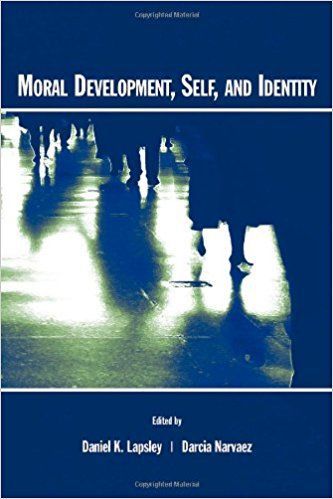
This volume examines the psychological, social-relational, and cultural foundations of the most basic moral commitments. It begins by looking at the seminal writings of Augusto Blasi, whose writings on moral cognition, the development of self-identity, and moral personality have transformed the research agenda in moral psychology. This work is now the starting point of all discussion about the relationship between self and morality; the developmental grounding of the moral personality; and the moral integration of cognition, emotion, and behavior. Indeed, it is now widely believed that organizing self-understanding around basic moral commitments is crucial to the formation of a moral identity which, in turn, underwrites moral conduct. Using Blasi’s work as a point of departure, a distinguished interdisciplinary and international group of scholars have contributed essays summarizing their own theoretical and empirical research on these topics. This book features new theories of moral functioning that range across several psychological literatures, including social cognition, cognitive science, and personality development. Examining the social-relational, communitarian, and cultural aspects of moral self-identity, it provides a comprehensive account of moral personality. Uniformly integrative, field-expanding, and on the cutting edge of research on moral development and personality, the book appeals to scholars, developmental theorists and graduate students interested in issues of moral development, education, and behavior, as well as cognitive development theory.
“In this book, Michael Lynch argues that truth does matter, in both our personal and political lives. Lynch explains that the growing cynicism over truth stems in large part from our confusion over what truth is.” “True to Life defends four simple claims : that truth is objective; that it is good to believe what is true; that truth is a goal worthy of inquiry; and that truth can be worth caring about for its own sake – not just because it gets us other things we want. In defense of these “truisms about truth,” Lynch diagnoses the sources of our cynicism and argues that many contemporary theories of truth cannot adequately account for its value. He explains why we should care about truth, arguing that truth and its pursuit are part of living a happy life, important in our personal relationships and for our political values.”–BOOK JACKET.
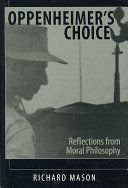
In 1942, J. Robert Oppenheimer accepted the leadership of the Manhattan Project at the Los Alamos Laboratory, which produced the first atomic bomb three years later. This book examines the ethics of Oppenheimer’s choice to take that job and our judgment of his acceptance, leading to the larger question of the meaning of moral judgment itself. Through an analysis of Oppenheimer’s choice, Richard Mason explores questions of responsibility, the justification for the pursuit of scientific curiosity, the purity of research, and many other topics of interest in scientific ethics. This unique look at one man’s choice brings out the necessary step from personal detail to abstract reflection–“it may be easy to praise or condemn Oppenheimer’s choice, but less easy to justify our praise or condemnation.
Being Apart from Reasons deals with the question of how we should go about using reasons to decide what to do. More particularly, the book presents objections to the most common response given by contemporary legal and political theorists to the moral complexity of decision-making in modern societies, namely: the attempt to release public agents from their argumentative burden by insulating a particular set of reasons from the general pool of reasons and assigning the former systematic priority over all other reasons. If those attempts succeed, public agents should not reason comprehensively, taking into account all reasons and weighing them against one another. Some reasons would be excluded from decision-making by kind. That strategy is apparent both in Rawls’ claim that reasons concerning the right are systematically prior to reasons concerning the good and in Raz’s claim that pre-emptive reasons are systematically prior to first-order reasons. The same strategy is also instantiated by certain arguments for the procedural value of law, such as Jeremy Waldron’s. In the book, each of those arguments for the insulation of reasons is objected to in order to defend the thesis the reasoning by public agents must always be as comprehensive as possible.In order to reach that conclusion a particular picture of public decision-making in needed. That picture in provided by the comparison between the use of reasons in public and private decision-making which is carried out in the first two chapters of the book. That comparison brings to light peculiar features of public decision-making that imply the need for public agents to reason comprehensively before deciding. The remaining chapters object to those arguments mentioned above which aim at justifying the exclusion of certain reasons from public agent’s decision-making.
ما از اخلاق چه انتظاری داریم؟ این سوال شاید تاحدودی برای عموم مردم و یا متخصصان این رشته قابل پاسخ باشد؛ اینکه خوب بودن را به ما بیاموزد و در تنظیم روابط فردی م...

جشن کتاب تهران به ایستگاه سی و یکم رسیده است. حال و احوال نشر کتاب خوب نیست و باید فرهنگدوستان را به خرید و هدیه دادن کتاب ترغیب نمود. خانه اخلاقپژوهان جوان ب...

بنیاد کتابهای اخلاق اسلامی عمدتا پالایش جان از آلودگیها و آراستن آن به زیباییها است. اندیشه محوری این قبیل کتابها آن است که انسان فعلی آنی نیست که باید باشد...

-
0 Comments