Notice: تابع WP_Block_Type_Registry::register به طورنادرست فراخوانی شد. نامهای نوع بلوک نباید حروف بزرگ داشته باشند. لطفاً برای اطلاعات بیشتر، اشکال زدایی در وردپرس را مشاهده کنید. (این پیام در نگارش 5.0.0 افزوده شده است.) in /home/ethicsho/public_html/wp-includes/functions.php on line 5313
Warning: Use of undefined constant TDC_PATH_LEGACY - assumed 'TDC_PATH_LEGACY' (this will throw an Error in a future version of PHP) in /home/ethicsho/public_html/wp-content/plugins/td-composer/td-composer.php on line 109
Warning: Use of undefined constant TDSP_THEME_PATH - assumed 'TDSP_THEME_PATH' (this will throw an Error in a future version of PHP) in /home/ethicsho/public_html/wp-content/plugins/td-composer/td-composer.php on line 113 بایگانیهای RC553.C64 .C6277 2010 - خانه اخلاق پژوهان جوان Notice: Trying to access array offset on value of type bool in /home/ethicsho/public_html/wp-content/plugins/wp-ulike/inc/general-functions.php on line 807
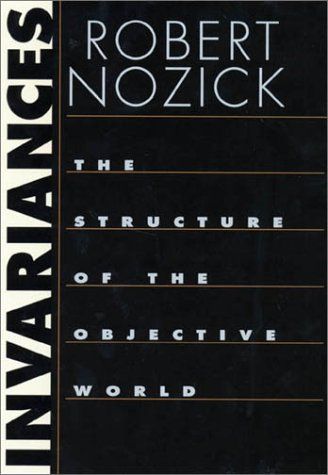
Excerpts from Robert Nozick’s “Invariances” Necessary truths are invariant across all possible worlds, contingent ones across only some. No wonder necessity lures philosophers. It is the flame, the philosopher the moth. Our intuitions that certain statements are necessary do not powerfully support this claim when natural selection would produce strong intuitions of their self-evidence, even were these statements (only) contingently true. Contemporary philosophers who give great weight to intuitions need to offer some account of why such intuitions are reliable and are to be trusted. Of course, if the purpose of such philosophy is merely to codify and systematize the intuitions that (for whatever reason) are held, then a philosophy built upon intuitions will need no further basis. And it will have no further validity. You might think that an insight into metaphysical impossibility could save the physicists much useless work by thereby excluding something as physically possible. Things seem to have worked in the opposite direction, though. Driven by a need to explain strange data, physicists formulate theories that countenance what previously was held to be metaphysically impossible. . . The physical tail wags the metaphysical dog. Why is there an objective world? Within evolutionary cosmology scientific laws might be viewed as the heritable structure of a universe, akin to what in biology would be an organism’s genetic endowment. . . Suppose that the reproductive process of a universe produces transformed offspring universes that differ from their parent. The greater the transformations that a law is invariant under, and the wider their number, the greater is that law’s heritability. The vast majority of the universes that exist through the processes of evolutionary cosmology, therefore, will exhibit laws that are invariant under a wide range of significant transformations. Such invariance, we have seen, is exactly what constitutes objectiveness. Evolutionary cosmology gives us objective worlds.
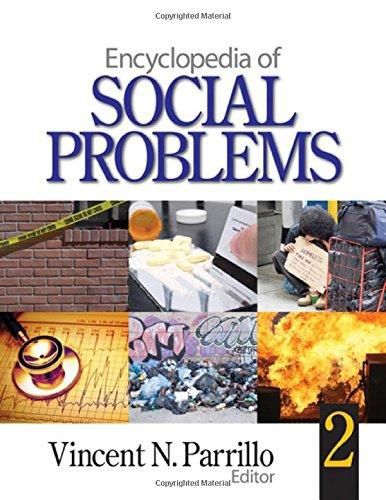
Social problems affect everyone. Because so many actual and potential problems confront us, it is often difficult to decide which ones affect us most severely. Is it the threat of death or injury during a terrorist attack? Is it the threat caused by industrial pollution that may poison us or destroy our physical environment? Or does quiet but viciously damaging gender, age, class, racial, or ethnic discrimination have the most far-reaching effect? Do the problems of cities affect us if we live in the suburbs? Do poorer nations’ problems with overpopulation affect our quality of life? The Encyclopedia of Social Problems offers an interdisciplinary perspective into many social issues that are a continuing concern in our lives, whether we confront them on a personal, local, regional, national, or global level. With more than 600 entries, these two volumes cover all of the major theories, approaches, and contemporary issues in social problems and also provide insight into how social conditions get defined as social problems, and the ways different people and organizations view and try to solve them.Key Features· Provides as comprehensive an approach as possible to this multifaceted field by using experts and scholars from 19 disciplines: anthropology, biology, business, chemistry, communications, criminal justice, demography, economics, education, environmental studies, geography, health, history, languages, political science, psychology, social work, sociology, and women’s studies· Presents a truly international effort with contributors from 17 countries: Argentina, Australia, Canada, England, France, Germany, Greece, Hong Kong, India, Ireland, Italy, Kenya, New Zealand, Romania, Scotland, Turkey, and the United States· Addresses social problems that are fairly new, such as computer crimes and identity theft, and others that are centuries old, such as poverty and prostitution· Examines social problems differently from place to place and from one era to another· Explains the perspectives and foundations of various social theories and offers different lenses to view the same realityKey Themes· Aging and the Life Course· Community, Culture, and Change · Crime and Deviance · Economics and Work · Education· Family · Gender Inequality and Sexual Orientation · Health · Housing and Urbanization · Politics, Power, and War · Population and Environment · Poverty and Social Class · Race and Ethnic Relations · Social Movements · Social Theory · Substance Abuse Readers investigating virtually any social problem will find a rich treasure of information and insights in this reference work, making it a must-have resource for any academic library.
John Rawls is the preeminent political philosopher of our time. His 1971 masterpiece, A Theory of Justice, permanently changed the landscape of moral political theory, revitalizing the normative study of social issues and taking stands about justice, ethics, rationality and philosophical method that continue to draw followers and critics today.In these five volumes, Henry S. Richardson and Paul Weithman draw together almost 90 of the most incisive and influential articles in that body of literature. The reprinted articles, many of them drawn from difficult-to-find sources, cover the gamut of controversies and conversations sparked by Rawls’s work and represent a wide range of philosophical points of view. The selection also includes articles that reflect Rawls’s reception in economics, law, and the social science more broadly.The publication of these five volumes will be welcomed by students and scholars of contemporary political philosophy, and by anyone interested in the most probing reactions to the premier political philosopher of our time.
ما از اخلاق چه انتظاری داریم؟ این سوال شاید تاحدودی برای عموم مردم و یا متخصصان این رشته قابل پاسخ باشد؛ اینکه خوب بودن را به ما بیاموزد و در تنظیم روابط فردی م...

جشن کتاب تهران به ایستگاه سی و یکم رسیده است. حال و احوال نشر کتاب خوب نیست و باید فرهنگدوستان را به خرید و هدیه دادن کتاب ترغیب نمود. خانه اخلاقپژوهان جوان ب...

بنیاد کتابهای اخلاق اسلامی عمدتا پالایش جان از آلودگیها و آراستن آن به زیباییها است. اندیشه محوری این قبیل کتابها آن است که انسان فعلی آنی نیست که باید باشد...

-
0 Comments