Notice: تابع WP_Block_Type_Registry::register به طورنادرست فراخوانی شد. نامهای نوع بلوک نباید حروف بزرگ داشته باشند. لطفاً برای اطلاعات بیشتر، اشکال زدایی در وردپرس را مشاهده کنید. (این پیام در نگارش 5.0.0 افزوده شده است.) in /home/ethicsho/public_html/wp-includes/functions.php on line 5313
Warning: Use of undefined constant TDC_PATH_LEGACY - assumed 'TDC_PATH_LEGACY' (this will throw an Error in a future version of PHP) in /home/ethicsho/public_html/wp-content/plugins/td-composer/td-composer.php on line 109
Warning: Use of undefined constant TDSP_THEME_PATH - assumed 'TDSP_THEME_PATH' (this will throw an Error in a future version of PHP) in /home/ethicsho/public_html/wp-content/plugins/td-composer/td-composer.php on line 113 بایگانیهای R726 .R64 2004 - خانه اخلاق پژوهان جوان Notice: Trying to access array offset on value of type bool in /home/ethicsho/public_html/wp-content/plugins/wp-ulike/inc/general-functions.php on line 807
The Right and the Good, a classic of twentieth-century philosophy by the eminent scholar Sir David Ross, is now presented in a new edition with a substantial introduction by Philip Stratton-Lake, a leading expert on Ross. Ross’s book is the pinnacle of ethical intuitionism, which was the dominant moral theory in British philosophy for much of the nineteenth and early twentieth century. Intuitionism is now enjoying a considerable revival, and Stratton-Lake provides the context for a proper understanding of Ross’s great work today.
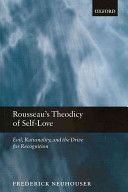
This book is the first comprehensive study of Rousseau’s rich and complex theory of the type of self-love (amour propre ) that, for him, marks the central difference between humans and the beasts. Amour propre is the passion that drives human individuals to seek the esteem, approval, admiration, or love–the recognition –of their fellow beings. Neuhouser reconstructs Rousseau’s understanding of what the drive for recognition is, why it is so problematic, and how its presence opens up far-reaching developmental possibilities for creatures that possess it. One of Rousseau’s central theses is that amour propre in its corrupted, manifestations–pride or vanity–is the principal source of an array of evils so widespread that they can easily appear to be necessary features of the human condition: enslavement, conflict, vice, misery, and self-estrangement. Yet Rousseau also argues that solving these problems depends not on suppressing or overcoming the drive for recognition but on cultivating it so that it contributes positively to the achievement of freedom, peace, virtue, happiness, and unalienated selfhood. Indeed, Rousseau goes so far as to claim that, despite its many dangers, the need for recognition is a condition of nearly everything that makes human life valuable and that elevates it above mere animal existence: rationality, morality, freedom–subjectivity itself–would be impossible for humans if it were not for amour propre and the relations to others it impels us to establish.
Bernard Williams is remembered as one of the most brilliant and original philosophers of the past fifty years. Widely respected as a moral philosopher, Williams began to write about politics in a sustained way in the early 1980s. There followed a stream of articles, lectures, and other major contributions to issues of public concern–all complemented by his many works on ethics, which have important implications for political theory.This new collection of essays, most of them previously unpublished, addresses many of the core subjects of political philosophy: justice, liberty, and equality; the nature and meaning of liberalism; toleration; power and the fear of power; democracy; and the nature of political philosophy itself. A central theme throughout is that political philosophers need to engage more directly with the realities of political life, not simply with the theories of other philosophers. Williams makes this argument in part through a searching examination of where political thinking should originate, to whom it might be addressed, and what it should deliver.Williams had intended to weave these essays into a connected narrative on political philosophy with reflections on his own experience of postwar politics. Sadly he did not live to complete it, but this book brings together many of its components. Geoffrey Hawthorn has arranged the material to resemble as closely as possible Williams’s original design and vision. He has provided both an introduction to Williams’s political philosophy and a bibliography of his formal and informal writings on politics.Those who know the work of Bernard Williams will find here the familiar hallmarks of his writing–originality, clarity, erudition, and wit. Those who are unfamiliar with, or unconvinced by, a philosophical approach to politics, will find this an engaging introduction. Both will encounter a thoroughly original voice in modern political theory and a searching approach to the shape and direction of liberal political thought in the past thirty-five years.
Cristina Bicchieri examines social norms, such as fairness, cooperation, and reciprocity, in an effort to understand their nature and dynamics, generated expectations and evolution and change. Drawing on intellectual traditions and methods, including those of social psychology, experimental economics and evolutionary game theory, Bicchieri provides an integrated account of how social norms emerge and why and when we follow them. Examining the existence and survival of inefficient norms, she demonstrates how norms evolve in ways that depend upon the psychological dispositions of the individual and how such dispositions may impair social efficiency.
ما از اخلاق چه انتظاری داریم؟ این سوال شاید تاحدودی برای عموم مردم و یا متخصصان این رشته قابل پاسخ باشد؛ اینکه خوب بودن را به ما بیاموزد و در تنظیم روابط فردی م...

جشن کتاب تهران به ایستگاه سی و یکم رسیده است. حال و احوال نشر کتاب خوب نیست و باید فرهنگدوستان را به خرید و هدیه دادن کتاب ترغیب نمود. خانه اخلاقپژوهان جوان ب...

بنیاد کتابهای اخلاق اسلامی عمدتا پالایش جان از آلودگیها و آراستن آن به زیباییها است. اندیشه محوری این قبیل کتابها آن است که انسان فعلی آنی نیست که باید باشد...

-
0 Comments