Notice: تابع WP_Block_Type_Registry::register به طورنادرست فراخوانی شد. نامهای نوع بلوک نباید حروف بزرگ داشته باشند. لطفاً برای اطلاعات بیشتر، اشکال زدایی در وردپرس را مشاهده کنید. (این پیام در نگارش 5.0.0 افزوده شده است.) in /home/ethicsho/public_html/wp-includes/functions.php on line 5313
Warning: Use of undefined constant TDC_PATH_LEGACY - assumed 'TDC_PATH_LEGACY' (this will throw an Error in a future version of PHP) in /home/ethicsho/public_html/wp-content/plugins/td-composer/td-composer.php on line 109
Warning: Use of undefined constant TDSP_THEME_PATH - assumed 'TDSP_THEME_PATH' (this will throw an Error in a future version of PHP) in /home/ethicsho/public_html/wp-content/plugins/td-composer/td-composer.php on line 113 بایگانیهای R724 .R93 2009 - خانه اخلاق پژوهان جوان Notice: Trying to access array offset on value of type bool in /home/ethicsho/public_html/wp-content/plugins/wp-ulike/inc/general-functions.php on line 807
Much of the intense current interest in collective memory concerns the politics of memory. In a book that asks, “Is there an ethics of memory?” Avishai Margalit addresses a separate, perhaps more pressing, set of concerns. The idea he pursues is that the past, connecting people to each other, makes possible the kinds of “thick” relations we can call truly ethical. Thick relations, he argues, are those that we have with family and friends, lovers and neighbors, our tribe and our nation–and they are all dependent on shared memories. But we also have “thin” relations with total strangers, people with whom we have nothing in common except our common humanity. A central idea of the ethics of memory is that when radical evil attacks our shared humanity, we ought as human beings to remember the victims. Margalit’s work offers a philosophy for our time, when, in the wake of overwhelming atrocities, memory can seem more crippling than liberating, a force more for revenge than for reconciliation. Morally powerful, deeply learned, and elegantly written, The Ethics of Memory draws on the resources of millennia of Western philosophy and religion to provide us with healing ideas that will engage all of us who care about the nature of our relations to others.
This volume is the first English-language book-length text to trace the development of bioethics in the Ibero-American context. Coverage is given to many particular countries within Latin America with an aim to present the historical development of bioethics therein. This history takes place against the backdrop of a tumultuous period of time in the history of Latin America. The volume also discusses the relationship of bioethics in Latin America to questions and issues in Roman Catholic moral theology and philosophy. Moreover, it specifically touches on how these issues affect women in the region.”Ibero-American Bioethics: History and Perspectives” is a landmark work, collecting the voices of those who participated in the founding and development of bioethics in Latin America, the Caribbean, and the Iberian Peninsula. The volume offers the reader a cluster of perspectives on the various births of bioethics in this region. The essays in part are irreplaceable first-person voices that give an account of how bioethics took shape within the Spanish and Portuguese cultures both in Europe and in the Americas. As such, the volume is a collection of primary sources, otherwise not available in English, that presents historical panoramas and explores the new perspectives born of the different phases of bioethics in Ibero-America – from its assimilation of bioethics to its creation of its own authentic voices. The volume also encompasses critical reflections from this region on the quite different ways in which its local bioethics have taken shape. As such, this volume also offers an introduction into the quite different concerns that frame and direct bioethics in the cultural context of Ibero-America.The book gives a rich, deep, broad, and pluralist presentation of Ibero-American bioethics and its contribution to the international phenomenon of bioethics. It is a volume for all readers interested in bioethics, Ibero-American studies, and international approaches to health care policy.
The fundamental question of the ethics of belief is “What ought one to believe?” According to the traditional view of evidentialism, the strength of one’s beliefs should be proportionate to the evidence. Conventional ways of defending and challenging evidentialism rely on the idea that what one ought to believe is a matter of what it is rational, prudent, ethical, or personally fulfilling to believe. Common to all these approaches is that they look outside of belief itself to determine what one ought to believe. In this book Jonathan Adler offers a strengthened version of evidentialism, arguing that the ethics of belief should be rooted in the concept of belief—that evidentialism is belief’s own ethics. A key observation is that it is not merely that one ought not, but that one cannot, believe, for example, that the number of stars is even. The “cannot” represents a conceptual barrier, not just an inability. Therefore belief in defiance of one’s evidence (or evidentialism) is impossible. Adler addresses such questions as irrational beliefs, reasonableness, control over beliefs, and whether justifying beliefs requires a foundation. Although he treats the ethics of belief as a central topic in epistemology, his ideas also bear on rationality, argument and pragmatics, philosophy of religion, ethics, and social cognitive psychology.
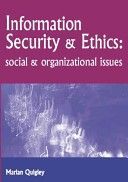
Information Security and Ethics: Social and Organizational Issues brings together examples of the latest research from a number of international scholars addressing a wide range of issues significant to this important and growing field of study. These issues are relevant to the wider society, as well as to the individual, citizen, educator, student and industry professional. With individual chapters focusing on areas including: web accessibility, the digital divide, youth protection and surveillance, this book provides an invaluable resource for students, scholars and professionals currently working in Information Technology related areas.
ما از اخلاق چه انتظاری داریم؟ این سوال شاید تاحدودی برای عموم مردم و یا متخصصان این رشته قابل پاسخ باشد؛ اینکه خوب بودن را به ما بیاموزد و در تنظیم روابط فردی م...

جشن کتاب تهران به ایستگاه سی و یکم رسیده است. حال و احوال نشر کتاب خوب نیست و باید فرهنگدوستان را به خرید و هدیه دادن کتاب ترغیب نمود. خانه اخلاقپژوهان جوان ب...

بنیاد کتابهای اخلاق اسلامی عمدتا پالایش جان از آلودگیها و آراستن آن به زیباییها است. اندیشه محوری این قبیل کتابها آن است که انسان فعلی آنی نیست که باید باشد...

-
0 Comments