
Notice: تابع WP_Block_Type_Registry::register به طورنادرست فراخوانی شد. نامهای نوع بلوک نباید حروف بزرگ داشته باشند. لطفاً برای اطلاعات بیشتر، اشکال زدایی در وردپرس را مشاهده کنید. (این پیام در نگارش 5.0.0 افزوده شده است.) in /home/ethicsho/public_html/wp-includes/functions.php on line 5313
Warning: Use of undefined constant TDC_PATH_LEGACY - assumed 'TDC_PATH_LEGACY' (this will throw an Error in a future version of PHP) in /home/ethicsho/public_html/wp-content/plugins/td-composer/td-composer.php on line 109
Warning: Use of undefined constant TDSP_THEME_PATH - assumed 'TDSP_THEME_PATH' (this will throw an Error in a future version of PHP) in /home/ethicsho/public_html/wp-content/plugins/td-composer/td-composer.php on line 113 بایگانیهای R724 .G76 2006 - خانه اخلاق پژوهان جوان Notice: Trying to access array offset on value of type bool in /home/ethicsho/public_html/wp-content/plugins/wp-ulike/inc/general-functions.php on line 807
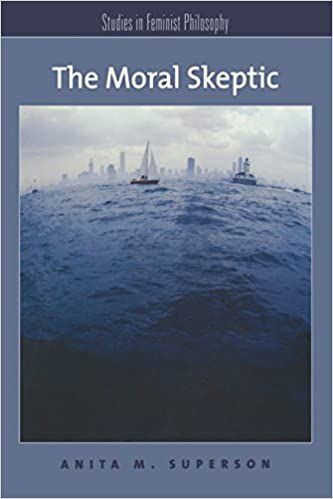
Anita Superson challenges the traditional picture of the skeptic who asks, “Why be moral?” While holding that the skeptic’s position is important, she builds an argument against it by understanding it more deeply, and then shows what it would take to successfully defeat it. Superson argues that we must defeat not only the action skeptic, but the disposition skeptic, who denies that being morally disposed is rationally required, and the motive skeptic, who believes that merely going through the motions in acting morally is rationally permissible. We also have to address the amoralist, who is not moved by moral reasons he recognizes. Superson argues for expanding the skeptic’s position from self-interest to privilege to include morally unjustified behavior targeting disenfranchised social groups, as well as revising the traditional expected utility model to exclude desires deformed by patriarchy as irrational. Lastly she argues that the challenge can be answered if it can be shown that it is, in an important way, inconsistent and therefore irrational to privilege oneself over others. The Moral Skeptic makes an important contribution to both metaethics/moral theory and feminist philosophy, and brings feminist thinking into the larger discussion of the skeptical challenge.
“For Michael Sandel, justice is not a spectator sport,” “The Nation”‘s reviewer of “Justice “remarked. In his acclaimed book–based on his legendary Harvard course–Sandel offers a rare education in thinking through the complicated issues and controversies we face in public life today. It has emerged as a most lucid and engaging guide for those who yearn for a more robust and thoughtful public discourse. “In terms we can all understand,” wrote Jonathan Rauch in “The New York Times,” “Justice “”confronts us with the concepts that lurk . . . beneath our conflicts.” Affirmative action, same-sex marriage, physician-assisted suicide, abortion, national service, the moral limits of markets–Sandel relates the big questions of political philosophy to the most vexing issues of the day, and shows how a surer grasp of philosophy can help us make sense of politics, morality, and our own convictions as well. “Justice “is lively, thought-provoking, and wise–an essential new addition to the small shelf of books that speak convincingly to the hard questions of our civic life. Michael J. Sandel is the Anne T. and Robert M. Bass Professor of Government at Harvard University, where he has taught since 1980, and the author of many books. He lives in Brookline, Massachusetts. Affirmative action, same-sex marriage, physician-assisted suicide, abortion, national service, patriotism and dissent, the moral limits of markets–Sandel dramatizes the challenge of thinking through these conflicts, and shows how a surer grasp of philosophy can help us make sense of politics, morality, and our own convictions as well. Michael J. Sandel’s “Justice” course is one of the most popular and influential at Harvard. Up to a thousand students pack the campus theater to hear Sandel relate the big questions of political philosophy to the most vexing issues of the day. “Justice “offers readers the same journey that captivates Harvard students. This book is an exploration of the meaning of justice, one that invites readers of all political persuasions to consider familiar controversies in fresh and illuminating ways. What are our obligations to others as people in a free society? Should government tax the rich to help the poor? Is the free market fair? Is it sometimes wrong to tell the truth? Is killing sometimes morally required? Is it possible, or desirable, to legislate morality? Do individual rights and the common good conflict? “Justice “is thought-provoking and wise–an essential work that speaks convincingly to the hard questions of our civic life. “Michael J. Sandel is one of this generation’s most important philosophers because he combines a relentlessly inquiring spirit with a profound commitment to the idea of a common good. “Justice “is Sandel at his finest: no matter what your views are, his delightful style will draw you in, and he’ll then force you to rethink your assumptions and challenge you to question accepted ways of thinking. But Sandel does not leave you marooned on an island of skepticism. He calls us to a better way of doing politics, and a more enriching way of living our lives.”–E. J. Dionne, Jr. “This book is absolutely indispensable for anyone who wants to be a good citizen. It shows how to balance competing values, a talent our nation desperately needs nowadays.”–Walter Isaacson, author of “Benjamin Franklin: An American Life” “Michael J. Sandel is one of this generation’s most important philosophers because he combines a relentlessly inquiring spirit with a profound commitment to the idea of a common good. “Justice “is Sandel at his finest: no matter what your views are, his delightful style will draw you in, and he’ll then force you to rethink your assumptions and challenge you to question accepted ways of thinking. But Sandel does not leave you marooned on an island of skepticism. He calls us to a better way of doing politics, and a more enriching way of living our lives.”–E. J. Dionne, Jr. “Michael J. Sandel, political philosopher and public intellectual, is a liberal, but not the annoying sort. His aim is not to boss people around but to bring them around to the pleasures of thinking clearly about large questions of social policy. Reading this lucid book is like taking his famous undergraduate course ‘Justice’ without the tiresome parts, such as term papers and exams.”–George F. Will “A Harvard law professor explores the meaning of justice and invites readers on a journey of moral and political reflection, ‘to figure out what they think, and why.’ Does a veteran suffering from post-traumatic stress disorder ‘deserve’ the Purple Heart? Should the U.S. government formally apologize and make reparations for slavery? Is it wrong to lie to a murderer? Following the taxpayer bailout of the company, are executives at insurance giant A.I.G. still entitled to their bonuses? Should a professional golfer afflicted with a severe circulatory condition be allowed to use a golf cart during tournaments? Are you obliged to surrender your criminal brother to the FBI? Although Sandel concedes that answering the many questions he poses, bound up ‘with competing notions of honor and virtue, pride and recognition, ‘ is never easy and inevitably contentious, it’s necessary for a healthy democracy. ‘Justice, ‘ he writes, ‘is inescapably judgmental.’ Using three approaches to justice–maximizing welfare, respecting freedom and promoting virtue–the author asks readers to ponder the meaning of the good life, the purpose of politics, how laws should be constructed and how society should be organized. Using a compelling, entertaining mix of hypotheticals, news stories, episodes from history, pop-culture tidbits, literary examples, legal cases and teachings from the great philosophers–principally, Aristotle, Kant, Bentham, Mill and Rawls–Sandel takes on a variety of controversial issues-abortion, same-sex marriage, affirmative action-and forces us to confront our own assumptions, biases and lazy thought. The author has a talent for making the difficult–Kant’s ‘categorical imperative’ or Rawls’s ‘difference principle’–readily comprehensible, and his relentless, though never oppressive, reason shines throughout the narrative. Sparkling commentary from the professor we all wish we had.”–“Kirkus Review” “Harvard government professor Sandel dazzles in this sweeping survey of hot topics–the recent government bailouts, the draft, surrogate pregnancies, same-sex marriage, immigration reform and reparations for slavery–that situates various sides in the debates in the context of timeless philosophical questions and movements. Sandel takes utilitarianism, Kant’s categorical imperative and Rawls’s theory of justice out of the classroom, dusts them off and reveals how crucial these theories have been in the construction of Western societies–and how they inform almost every issue at the center of our modern-day polis. The content is dense but elegantly presented, and Sandel has a rare gift for making complex issues comprehensible, even entertaining (see his sections entitled ‘Shakespeare versus the Simpsons’ and ‘What Ethics Can Learn from Jack Benny and Miss Manners’), without compromising their gravity. With exegeses of Winnie the Pooh, transcripts of Bill Clinton’s impeachment hearing and the works of almost every major political philosopher, Sandel reveals how even our most knee-jerk responses bespeak our personal conceptions of the rights and obligations of the individual and society at large. Erudite, conversational and deeply humane, this is truly transformative reading.”–“Publishers Weekly”
Jason Stanley presents a startling and provocative claim about knowledge: that whether or not someone knows a proposition at a given time is in part determined by his or her practical interests, i.e. by how much is at stake for that person at that time. So whether a true belief is knowledge is not merely a matter of supporting beliefs or reliability; in the case of knowledge, practical rationality and theoretical rationality are intertwined. Stanley defends this thesis against alternative accounts of the phenomena that motivate it, such as the claim that knowledge attributions are linguistically context-sensitive (contextualism about knowledge attributions), and the claim that the truth of a knowledge claim is somehow relative to the person making the claim (relativism about knowledge). In the course of his argument Stanley introduces readers to a number of strategies for resolving philosophical paradox, making the book essential not just for specialists in epistemology but for all philosophers interested in philosophical methodology. Since a number of his strategies appeal to linguistic evidence, it will be of great interest to linguists as well.
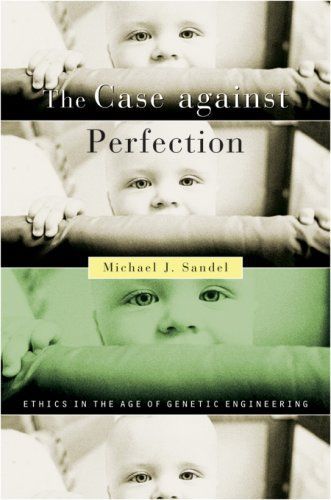
Producer: Heron & CraneBreakthroughs in genetics present us with a promise and a predicament. The promise is that we will soon be able to treat and prevent a host of debilitating diseases. The predicament is that our newfound genetic knowledge may enable us to manipulate our nature–to enhance our genetic traits and those of our children. Although most people find at least some forms of genetic engineering disquieting, it is not easy to articulate why. What is wrong with re-engineering our nature?The Case against Perfection explores these and other moral quandaries connected with the quest to perfect ourselves and our children. Michael Sandel argues that the pursuit of perfection is flawed for reasons that go beyond safety and fairness. The drive to enhance human nature through genetic technologies is objectionable because it represents a bid for mastery and dominion that fails to appreciate the gifted character of human powers and achievements. Carrying us beyond familiar terms of political discourse, this book contends that the genetic revolution will change the way philosophers discuss ethics and will force spiritual questions back onto the political agenda.In order to grapple with the ethics of enhancement, we need to confront questions largely lost from view in the modern world. Since these questions verge on theology, modern philosophers and political theorists tend to shrink from them. But our new powers of biotechnology make these questions unavoidable. Addressing them is the task of this book, by one of America’s preeminent moral and political thinkers.
ما از اخلاق چه انتظاری داریم؟ این سوال شاید تاحدودی برای عموم مردم و یا متخصصان این رشته قابل پاسخ باشد؛ اینکه خوب بودن را به ما بیاموزد و در تنظیم روابط فردی م...

جشن کتاب تهران به ایستگاه سی و یکم رسیده است. حال و احوال نشر کتاب خوب نیست و باید فرهنگدوستان را به خرید و هدیه دادن کتاب ترغیب نمود. خانه اخلاقپژوهان جوان ب...

بنیاد کتابهای اخلاق اسلامی عمدتا پالایش جان از آلودگیها و آراستن آن به زیباییها است. اندیشه محوری این قبیل کتابها آن است که انسان فعلی آنی نیست که باید باشد...

-
0 Comments