Notice: تابع WP_Block_Type_Registry::register به طورنادرست فراخوانی شد. نامهای نوع بلوک نباید حروف بزرگ داشته باشند. لطفاً برای اطلاعات بیشتر، اشکال زدایی در وردپرس را مشاهده کنید. (این پیام در نگارش 5.0.0 افزوده شده است.) in /home/ethicsho/public_html/wp-includes/functions.php on line 5313
Warning: Use of undefined constant TDC_PATH_LEGACY - assumed 'TDC_PATH_LEGACY' (this will throw an Error in a future version of PHP) in /home/ethicsho/public_html/wp-content/plugins/td-composer/td-composer.php on line 109
Warning: Use of undefined constant TDSP_THEME_PATH - assumed 'TDSP_THEME_PATH' (this will throw an Error in a future version of PHP) in /home/ethicsho/public_html/wp-content/plugins/td-composer/td-composer.php on line 113 بایگانیهای R724 .C8236 2007 - خانه اخلاق پژوهان جوان Notice: Trying to access array offset on value of type bool in /home/ethicsho/public_html/wp-content/plugins/wp-ulike/inc/general-functions.php on line 807
A new investigation into how the advent of precision-guided munitions affects the likelihood of US policy makers to use force. As such, this is an inquiry into the impact of ethics, strategy and military technology on the decision calculus of national leaders. Following the first Gulf War in 1991, this new study shows how US Presidents increasingly used stand-off precision guided munitions (or “PGMs,” especially the Tomahawk cruise missile) either to influence foreign adversaries to make specific policy choices or to signal displeasure with their actions. Such uses of force are attractive because they can lead to desirable policy outcomes where conventional diplomacy has failed but without the large cost of lives, economic resources, or political capital that result from large-scale military operations. In a post-9/11 world, understanding alternative uses of force under significant policy constraints is still of supreme importance.
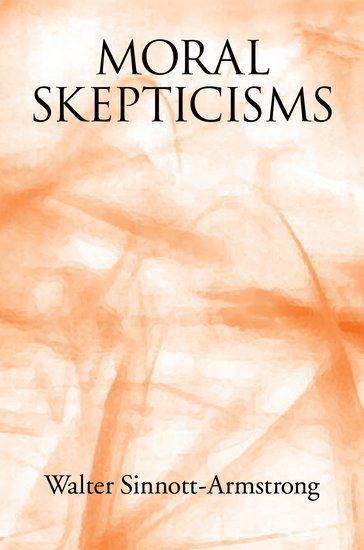
All contentious moral issues–from gay marriage to abortion and affirmative action–raise difficult questions about the justification of moral beliefs. How can we be justified in holding on to our own moral beliefs while recognizing that other intelligent people feel quite differently and that many moral beliefs are distorted by self-interest and by corrupt cultures? Even when almost everyone agrees–e.g. that experimental surgery without consent is immoral–can we know that such beliefs are true? If so, how? These profound questions lead to fundamental issues about the nature of morality, language, metaphysics, justification, and knowledge. They also have tremendous practical importance in handling controversial moral questions in health care ethics, politics, law, and education. Sinnott-Armstrong here provides an extensive overview of these difficult subjects, looking at a wide variety of questions, including: Are any moral beliefs true? Are any justified? What is justified belief? The second half of the book explores various moral theories that have grappled with these issues, such as naturalism, normativism, intuitionism, and coherentism, all of which are attempts to answer moral skepticism. Sinnott-Armstrong argues that all these approaches fail to rule out moral nihilism–the view that nothing is really morally wrong or right, bad or good. Then he develops his own novel theory,–“moderate Pyrrhonian moral skepticism”–which concludes that some moral beliefs can be justified out of a modest contrast class but no moral beliefs can be justified out of an extreme contrast class. While explaining this original position and criticizing alternatives, Sinnott-Armstrong provides a wide-ranging survey of the epistemology of moral beliefs.
The discussion of Kant’s Practical Philosophy has been marred by viewing it as purely formalist and centered only on the categorical imperative. This important new study sets out a much more vivid account of the nature and range of Kant’s concerns demonstrating his commitment to the notion of rational religion and including extensive discussion of his treatment of evil. Culminating with accounts of property, the nature of right and virtue, this work presents Kant as a vital revolutionary thinker.
Now in a thoroughly revised and expanded third edition, this authoritative Handbook reviews current knowledge about all aspects of emotion and its role in human behavior. The field’s foremost researchers explore how emotion intersects with biology, developmental processes, social behavior, personality, cognition, and physical and mental health. Also presented are state-of-the-science perspectives on specific emotions, such as fear, anger, shame, disgust, positive emotions, and sadness. Extensively rewritten to reflect major scientific, theoretical, and clinical advances, the third edition features many new chapters and authors. New topics include emotion regulation, neuroimaging approaches, emotions in psychotherapy, the social functions of emotion, emotional complexity, emotion across the lifespan, transdiagnostic emotional disturbances in psychopathology, and much more.
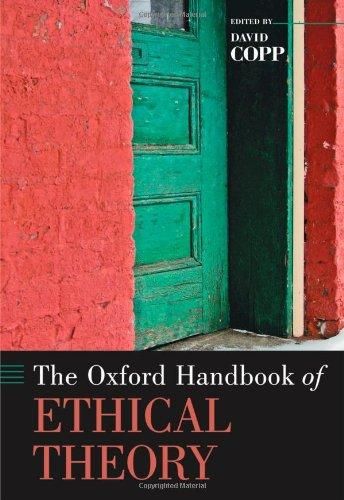
The Oxford Handbook of Ethical Theory is a major new reference work in ethical theory consisting of commissioned essays by leading moral philosophers. Ethical theories have always been of central importance to philosophy, and remain so; ethical theory is one of the most active areas of philosophical research and teaching today. Courses in ethics are taught in colleges and universities at all levels, and ethical theory is the organizing principle for all of them. The Handbook is divided into two parts, mirroring the field. The first part treats meta-ethical theory, which deals with theoretical questions about morality and moral judgment, including questions about moral language, the epistemology of moral belief, the truth aptness of moral claims, and so forth. The second part addresses normative theory, which deals with general moral issues, including the plausibility of various ethical theories and abstract principles of behavior. Examples of such theories are consequentialism and virtue theory. As with other Oxford Handbooks, the twenty-five contributors cover the field in a comprehensive and highly accessible way, while achieving three goals: exposition of central ideas, criticism of other approaches, and putting forth a distinct viewpoint.
ما از اخلاق چه انتظاری داریم؟ این سوال شاید تاحدودی برای عموم مردم و یا متخصصان این رشته قابل پاسخ باشد؛ اینکه خوب بودن را به ما بیاموزد و در تنظیم روابط فردی م...

جشن کتاب تهران به ایستگاه سی و یکم رسیده است. حال و احوال نشر کتاب خوب نیست و باید فرهنگدوستان را به خرید و هدیه دادن کتاب ترغیب نمود. خانه اخلاقپژوهان جوان ب...

بنیاد کتابهای اخلاق اسلامی عمدتا پالایش جان از آلودگیها و آراستن آن به زیباییها است. اندیشه محوری این قبیل کتابها آن است که انسان فعلی آنی نیست که باید باشد...

-
0 Comments