Notice: تابع WP_Block_Type_Registry::register به طورنادرست فراخوانی شد. نامهای نوع بلوک نباید حروف بزرگ داشته باشند. لطفاً برای اطلاعات بیشتر، اشکال زدایی در وردپرس را مشاهده کنید. (این پیام در نگارش 5.0.0 افزوده شده است.) in /home/ethicsho/public_html/wp-includes/functions.php on line 5313
Warning: Use of undefined constant TDC_PATH_LEGACY - assumed 'TDC_PATH_LEGACY' (this will throw an Error in a future version of PHP) in /home/ethicsho/public_html/wp-content/plugins/td-composer/td-composer.php on line 109
Warning: Use of undefined constant TDSP_THEME_PATH - assumed 'TDSP_THEME_PATH' (this will throw an Error in a future version of PHP) in /home/ethicsho/public_html/wp-content/plugins/td-composer/td-composer.php on line 113 بایگانیهای PR6063.U7 .Z6295 2006 - خانه اخلاق پژوهان جوان Notice: Trying to access array offset on value of type bool in /home/ethicsho/public_html/wp-content/plugins/wp-ulike/inc/general-functions.php on line 807
Were the perpetrators of the 9/11 attacks courageous “freedom fighters” or despicable terrorist murderers? Eschewing the resort to universal moral principles favored by traditional Anglo-American analytic philosophy, Joseph Margolis sets out to sketch an alternative approach that accepts the lack of any neutral ground or privileged normative perspective for deciding moral disputes.
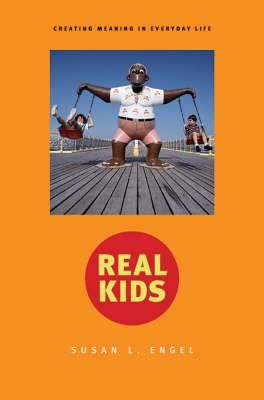
Decades of work in psychology labs have vastly enhanced our knowledge about how children perceive, think, and reason. But it has also encouraged a distorted view of children, argues psychologist Susan Engel in this provocative and passionate book–a view that has affected every parent who has tried to debate with a six-year-old. By focusing on the thinking processes prized by adults, too many expert opinions have rendered children as little adults. What has been lost is what is truly unique and mysterious–the childlike quality of a child’s mind. Engel draws on keen observations and descriptive research to take us into the nearly forgotten, untidy, phantasmagorical world of children’s inner lives. She reminds us that children fuse thought and emotion, play and reality; they swing wildly between different ways of interpreting and acting in the world. But just as a gawky child may grow into a beauty, illogical and sometimes maddening childishness can foreshadow great adult ability. Engel argues that the “scientist in a crib” view encourages parents and teachers to expect more logical reasoning and emotional self-control from children than they possess. She provides a concise and valuable overview of what modern developmental psychologists have learned about children’s developing powers of perception and capacity for reasoning, but also suggests new ways of studying children that better capture the truth about their young minds.
No matter what we do, however kind or generous our deeds may seem, a hidden motive of selfishness lurks–or so science has claimed for years. This book, whose publication promises to be a major scientific event, tells us differently. In Unto Others philosopher Elliott Sober and biologist David Sloan Wilson demonstrate once and for all that unselfish behavior is in fact an important feature of both biological and human nature. Their book provides a panoramic view of altruism throughout the animal kingdom–from self-sacrificing parasites to insects that subsume themselves in the superorganism of a colony to the human capacity for selflessness–even as it explains the evolutionary sense of such behavior. Explaining how altruistic behavior can evolve by natural selection, this book finally gives credence to the idea of group selection that was originally proposed by Darwin but denounced as heretical in the 1960s. With their account of this controversy, Sober and Wilson offer a detailed case study of scientific change as well as an indisputable argument for group selection as a legitimate theory in evolutionary biology. Unto Others also takes a novel evolutionary approach in explaining the ultimate psychological motives behind unselfish human behavior. Developing a theory of the proximate mechanisms that most likely evolved to motivate adaptive helping behavior, Sober and Wilson show how people and perhaps other species evolved the capacity to care for others as a goal in itself. A truly interdisciplinary work that blends biology, philosophy, psychology, and anthropology, this book will permanently change not just our view of selfless behavior but also our understanding of many issues in evolutionary biology and the social sciences.
ما از اخلاق چه انتظاری داریم؟ این سوال شاید تاحدودی برای عموم مردم و یا متخصصان این رشته قابل پاسخ باشد؛ اینکه خوب بودن را به ما بیاموزد و در تنظیم روابط فردی م...

جشن کتاب تهران به ایستگاه سی و یکم رسیده است. حال و احوال نشر کتاب خوب نیست و باید فرهنگدوستان را به خرید و هدیه دادن کتاب ترغیب نمود. خانه اخلاقپژوهان جوان ب...

بنیاد کتابهای اخلاق اسلامی عمدتا پالایش جان از آلودگیها و آراستن آن به زیباییها است. اندیشه محوری این قبیل کتابها آن است که انسان فعلی آنی نیست که باید باشد...

-
0 Comments