Notice: تابع WP_Block_Type_Registry::register به طورنادرست فراخوانی شد. نامهای نوع بلوک نباید حروف بزرگ داشته باشند. لطفاً برای اطلاعات بیشتر، اشکال زدایی در وردپرس را مشاهده کنید. (این پیام در نگارش 5.0.0 افزوده شده است.) in /home/ethicsho/public_html/wp-includes/functions.php on line 5313
Warning: Use of undefined constant TDC_PATH_LEGACY - assumed 'TDC_PATH_LEGACY' (this will throw an Error in a future version of PHP) in /home/ethicsho/public_html/wp-content/plugins/td-composer/td-composer.php on line 109
Warning: Use of undefined constant TDSP_THEME_PATH - assumed 'TDSP_THEME_PATH' (this will throw an Error in a future version of PHP) in /home/ethicsho/public_html/wp-content/plugins/td-composer/td-composer.php on line 113 بایگانیهای PQ2625.A755 .A2 2007 - خانه اخلاق پژوهان جوان Notice: Trying to access array offset on value of type bool in /home/ethicsho/public_html/wp-content/plugins/wp-ulike/inc/general-functions.php on line 807
One of the world’s most famous philosophers, Jacques Derrida, explores difficult questions in this important and engaging book. Is it still possible to uphold international hospitality and justice in the face of increasing nationalism and civil strife in so many countries? Drawing on examples of treatment of minority groups in Europe, he skillfully and accessibly probes the thinking that underlies much of the practice, and rhetoric, that informs cosmopolitanism. What have duties and rights to do with hospitality? Should hospitality be grounded in a private or public ethic, or even a religious one? This fascinating book will be illuminating reading for all.
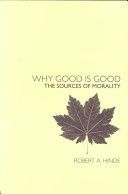
Where do our moral beliefs come from? Theologians and scientists provide often conflicting answers. Robert Hinde resolves these conflicts in offering a groundbreaking, multidisciplinary response, drawing on psychology, philosophy, evolutionary biology and social anthropology. Hinde argues that understanding the origins of our morality can clarify the debates surrounding contemporary ethical dilemmas such as genetic modification, increasing consumerism and globalization.
Distributed networks such as the Internet have altered the fundamental way a record is created, captured, accessed and managed over time. Law and ethics provide the major sources of regulatory controls over participants in such networks. This book analyses the interrelationship of recordkeeping, ethics and law in terms of existing regulatory models and their application to the Internet environment. It proposes an Internet model based on the notion of a legal and social relationship as a means of identifying the legal and ethical rights and obligations of recordkeeping participants in networked transactions. Medical, business and governmental relationships within communities of common interest based on trust illustrate the practical application of the model. As legal relationships have their basis in the law of obligations found in common and civil law systems, as well as archival science, the model has a broad-based application. The relationship model also provides a unique ethical and legal approach to property, access, privacy and evidence. Most importantly, the book provides an interdisciplinary approach to Internet regulation, which contributes to closer ties between those who research, teach and work in fields of ethics, law and archival science.
How do our feelings for others shape our attitudes and conduct towards them? Is morality primarily a matter of rational choice, or instinctual feeling? Joseph Duke Filonowicz takes the reader on an engaging, informative tour of some of the main issues in philosophical ethics, explaining and defending the ideas of the early-modern British sentimentalists. These philosophers – Shaftesbury, Hutcheson, Hume, and Smith – argued that it is our feelings, and not our ‘reason’, which ultimately determine how we judge what is good or bad, right or wrong, and how we choose to act towards our fellow human beings. Filonowicz draws on contemporary sociology and evolutionary biology as well as present-day moral theory to examine and defend the sentimentalist view and to challenge the rationalistic character of contemporary ethics. His book will appeal to readers interested in both history of philosophy and current ethical debates.
Is it possible to apply a theoretical approach to ethics? The French philosopher Catherine Chalier addresses this question with an unusual combination of traditional ethics and continental philosophy. In a powerful argument for the necessity of moral reflection, Chalier counters the notion that morality can be derived from theoretical knowledge.Chalier analyzes the positions of two great moral philosophers, Kant and Levinas. While both are critical of an ethics founded on knowledge, their criticisms spring from distinctly different points of view. Chalier reexamines their conclusions, pitting Levinas against (and with) Kant, to interrogate the very foundations of moral philosophy and moral imperatives. She provides a clear, systematic comparison of their positions on essential ideas such as free will, happiness, freedom, and evil. Although based on a close and elegant presentation of Kant and Levinas, Chalier’s book serves as a context for the development of the author’s own reflections on the question “What am I supposed to do?” and its continued importance for contemporary philosophy.
ما از اخلاق چه انتظاری داریم؟ این سوال شاید تاحدودی برای عموم مردم و یا متخصصان این رشته قابل پاسخ باشد؛ اینکه خوب بودن را به ما بیاموزد و در تنظیم روابط فردی م...

جشن کتاب تهران به ایستگاه سی و یکم رسیده است. حال و احوال نشر کتاب خوب نیست و باید فرهنگدوستان را به خرید و هدیه دادن کتاب ترغیب نمود. خانه اخلاقپژوهان جوان ب...

بنیاد کتابهای اخلاق اسلامی عمدتا پالایش جان از آلودگیها و آراستن آن به زیباییها است. اندیشه محوری این قبیل کتابها آن است که انسان فعلی آنی نیست که باید باشد...

-
0 Comments