Notice: تابع WP_Block_Type_Registry::register به طورنادرست فراخوانی شد. نامهای نوع بلوک نباید حروف بزرگ داشته باشند. لطفاً برای اطلاعات بیشتر، اشکال زدایی در وردپرس را مشاهده کنید. (این پیام در نگارش 5.0.0 افزوده شده است.) in /home/ethicsho/public_html/wp-includes/functions.php on line 5313
Warning: Use of undefined constant TDC_PATH_LEGACY - assumed 'TDC_PATH_LEGACY' (this will throw an Error in a future version of PHP) in /home/ethicsho/public_html/wp-content/plugins/td-composer/td-composer.php on line 109
Warning: Use of undefined constant TDSP_THEME_PATH - assumed 'TDSP_THEME_PATH' (this will throw an Error in a future version of PHP) in /home/ethicsho/public_html/wp-content/plugins/td-composer/td-composer.php on line 113 بایگانیهای PN1995.9.M44 .P53 2011 - خانه اخلاق پژوهان جوان Notice: Trying to access array offset on value of type bool in /home/ethicsho/public_html/wp-content/plugins/wp-ulike/inc/general-functions.php on line 807
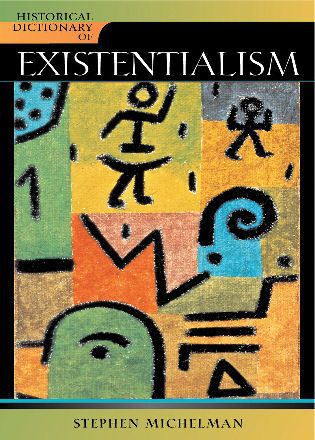
Existentialism is the philosophy of human existence, which flourished first in Germany in the 1920s and 1930s and then in France in the decade following the end of World War II. The operative meaning of existentialism here is thus broader than it was circa 1945 when the term first gained currency in France as a label for the philosophy of Jean-Paul Sartre. However, it is considerably less broad than the view proposed by commentators in the 1950s and 1960s who, in an attempt to overcome Sartre’s hegemony, discovered the seeds of existentialism far and wide: in Shakespeare, Saint Augustine, and the Old Testament prophets. In this dictionary, existentialism is understood as a decidedly 20th-century phenomenon, though with roots in the 19th century. Effort has been made to understand the philosophy of existentialism, as all philosophies should be understood, as part of an ongoing intellectual tradition: an evolving history of problems, concepts, and arguments. The A to Z of Existentialism explains the central claims of existentialist philosophy and the contexts in which it developed into one of the most influential intellectual trends of the 20th century. This is done through a chronology, an introductory essay, a bibliography, and more than 300 cross-referenced dictionary entries offering clear, accessible accounts of the life and thought of major existentialists like Jean-Paul Sartre, Martin Heidegger, Martin Buber, Karl Jaspers, Gabriel Marcel, Simone de Beauvoir, Albert Camus, and Maurice Merleau-Ponty, as well as thinkers influential to its development such as Wilhelm Dilthey, Henri Bergson, Edmund Husserl, and Max Scheler. This book affords readers an integrated, critical, and historically-sensitive understanding of this important philosophical movement.
At the core of Kant’s ethics lies the claim that if there is a supreme principle of morality, then it is not a utilitarian or Aristotelian perfectionist principle, or even a principle resembling the Ten Commandments. The only viable candidate for the supreme principle of morality is the Categorial Imperative. This book is the most detailed investigation of thie claim. It constructs a new, criterial reading of Kant’s derivation of one version of the Categorial Imperative: The Formula of Universal Law. This reading shows this derivation to be far more compelling than contemporary philosophers tend to believe. It also reveals a novel approach to deriving another version of the Categorial Imperative, the Formula of Humanity, a principle widely considered to be the most attractive Kantian candidate for the supreme principle of morality. Lucidly written and dealing with a foundational topic in the history of ethics, this book will be important not just for Kant scholars but for a broad swath of students of philosophy. Samuel Kerstein is Associate Professor of Philosophy at the University of Maryland, College Park
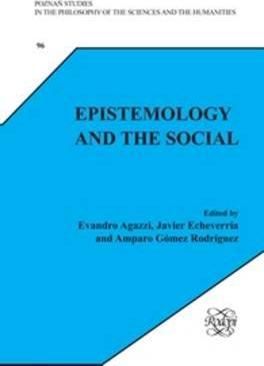
“Epistemology had to come to terms with “the social” on two different occasions. The first was represented by the dispute about the epistemological status of the “social” sciences, and in this case the already well established epistemology of the natural sciences seemed to have the right to dictate the conditions for a discipline to be a science. But the social sciences could successfully vindicate the legitimacy of their specific criteria for scientificity. More recently, the impact of social factors on the construction of our knowledge (including scientific knowledge) has reversed … the old position and promoted social inquiry to the role of a criterion for evaluating the purport of cognitive (including scientific) statements”–P. 4 of cover.
ما از اخلاق چه انتظاری داریم؟ این سوال شاید تاحدودی برای عموم مردم و یا متخصصان این رشته قابل پاسخ باشد؛ اینکه خوب بودن را به ما بیاموزد و در تنظیم روابط فردی م...

جشن کتاب تهران به ایستگاه سی و یکم رسیده است. حال و احوال نشر کتاب خوب نیست و باید فرهنگدوستان را به خرید و هدیه دادن کتاب ترغیب نمود. خانه اخلاقپژوهان جوان ب...

بنیاد کتابهای اخلاق اسلامی عمدتا پالایش جان از آلودگیها و آراستن آن به زیباییها است. اندیشه محوری این قبیل کتابها آن است که انسان فعلی آنی نیست که باید باشد...

-
0 Comments