Notice: تابع WP_Block_Type_Registry::register به طورنادرست فراخوانی شد. نامهای نوع بلوک نباید حروف بزرگ داشته باشند. لطفاً برای اطلاعات بیشتر، اشکال زدایی در وردپرس را مشاهده کنید. (این پیام در نگارش 5.0.0 افزوده شده است.) in /home/ethicsho/public_html/wp-includes/functions.php on line 5313
Warning: Use of undefined constant TDC_PATH_LEGACY - assumed 'TDC_PATH_LEGACY' (this will throw an Error in a future version of PHP) in /home/ethicsho/public_html/wp-content/plugins/td-composer/td-composer.php on line 109
Warning: Use of undefined constant TDSP_THEME_PATH - assumed 'TDSP_THEME_PATH' (this will throw an Error in a future version of PHP) in /home/ethicsho/public_html/wp-content/plugins/td-composer/td-composer.php on line 113 بایگانیهای P106 .L886 2008 - خانه اخلاق پژوهان جوان Notice: Trying to access array offset on value of type bool in /home/ethicsho/public_html/wp-content/plugins/wp-ulike/inc/general-functions.php on line 807
A new investigation into how the advent of precision-guided munitions affects the likelihood of US policy makers to use force. As such, this is an inquiry into the impact of ethics, strategy and military technology on the decision calculus of national leaders. Following the first Gulf War in 1991, this new study shows how US Presidents increasingly used stand-off precision guided munitions (or “PGMs,” especially the Tomahawk cruise missile) either to influence foreign adversaries to make specific policy choices or to signal displeasure with their actions. Such uses of force are attractive because they can lead to desirable policy outcomes where conventional diplomacy has failed but without the large cost of lives, economic resources, or political capital that result from large-scale military operations. In a post-9/11 world, understanding alternative uses of force under significant policy constraints is still of supreme importance.
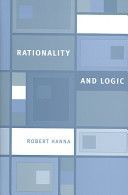
In Rationality and Logic, Robert Hanna argues that logic is intrinsically psychological and that human psychology is intrinsically logical. He claims that logic is cognitively constructed by rational animals (including humans) and that rational animals are essentially logical animals. In order to do so, he defends the broadly Kantian thesis that all (and only) rational animals possess an innate cognitive “logic faculty.” Hanna’s claims challenge the conventional philosophical wisdom that sees logic as a fully formal or “topic-neutral” science irreconcilably separate from the species- or individual-specific focus of empirical psychology. Logic and psychology went their separate ways after attacks by Frege and Husserl on logical psychologism—the explanatory reduction of logic to empirical psychology. Hanna argues, however, that—despite the fact that logical psychologism is false—there is an essential link between logic and psychology. Rational human animals constitute the basic class of cognizers or thinkers studied by cognitive psychology; given the connection between rationality and logic that Hanna claims, it follows that the nature of logic is significantly revealed to us by cognitive psychology. Hanna’s proposed “logical cognitivism” has two important consequences: the recognition by logically oriented philosophers that psychologists are their colleagues in the metadiscipline of cognitive science; and radical changes in cognitive science itself. Cognitive science, Hanna argues, is not at bottom a natural science; it is both an objective or truth-oriented science and a normative human science, as is logic itself.
This work returns to the 19th century tradition of a moral or ethical criticism in the context of important new thinking in the field of ethics and moral philosophy. “Shakespeare and Moral Agency” presents a collection of new essays by literary and philosophy scholars considering character and action in Shakespeare’s plays as heuristic models for the exploration of some salient problems in the field of moral inquiry. Together they offer a unified presentation of an emerging orientation in Shakespeare studies, drawing on recent work in ethics, philosophy of mind, and analytic aesthetics to construct a powerful framework for the critical analysis of Shakespeare’s works. Contributors suggest new possibilities for the interpretation of Shakespearean drama by engaging with the rich body of contemporary work in the field of moral philosophy, offering significant insights for literary criticism, for pedagogy, and also for theatrical performance. This title is part of major scholarly research monographs in “Shakespeare Studies from Continuum”.
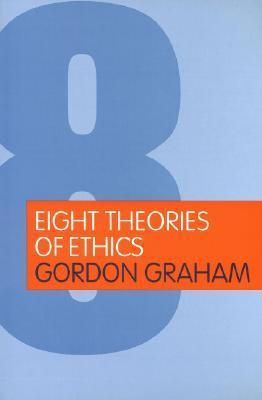
Eight Theories of Ethicsis a comprehensive introduction to the fundamental theories of ethics . Gordon Graham begins by introducing fundamental issues that underpin the concept of ethics, such as relativism and objectivity, before introducing eight major theories: * Egoism * Hedonism * Naturalism and Virtue Theory * Existentialism * Kantianism * Utilitarianism * Contractualism * Religion The author brings often abstract issues to life by drawing on examples from the great moral philosophers, including Plato, Aristotle, Hume, Mill, Nietzsche, Kant and Sartre. Contemporary examples, such as Darwinism, debates over human nature, the environment and citizenship are given.
ما از اخلاق چه انتظاری داریم؟ این سوال شاید تاحدودی برای عموم مردم و یا متخصصان این رشته قابل پاسخ باشد؛ اینکه خوب بودن را به ما بیاموزد و در تنظیم روابط فردی م...

جشن کتاب تهران به ایستگاه سی و یکم رسیده است. حال و احوال نشر کتاب خوب نیست و باید فرهنگدوستان را به خرید و هدیه دادن کتاب ترغیب نمود. خانه اخلاقپژوهان جوان ب...

بنیاد کتابهای اخلاق اسلامی عمدتا پالایش جان از آلودگیها و آراستن آن به زیباییها است. اندیشه محوری این قبیل کتابها آن است که انسان فعلی آنی نیست که باید باشد...

-
0 Comments