Notice: تابع WP_Block_Type_Registry::register به طورنادرست فراخوانی شد. نامهای نوع بلوک نباید حروف بزرگ داشته باشند. لطفاً برای اطلاعات بیشتر، اشکال زدایی در وردپرس را مشاهده کنید. (این پیام در نگارش 5.0.0 افزوده شده است.) in /home/ethicsho/public_html/wp-includes/functions.php on line 5313
Warning: Use of undefined constant TDC_PATH_LEGACY - assumed 'TDC_PATH_LEGACY' (this will throw an Error in a future version of PHP) in /home/ethicsho/public_html/wp-content/plugins/td-composer/td-composer.php on line 109
Warning: Use of undefined constant TDSP_THEME_PATH - assumed 'TDSP_THEME_PATH' (this will throw an Error in a future version of PHP) in /home/ethicsho/public_html/wp-content/plugins/td-composer/td-composer.php on line 113 بایگانیهای KF5130 .D46 2009 - خانه اخلاق پژوهان جوان Notice: Trying to access array offset on value of type bool in /home/ethicsho/public_html/wp-content/plugins/wp-ulike/inc/general-functions.php on line 807
“By explicitly addressing moral knowledge from a particularists perspective, this book can engage with an established and vibrant area of moral philosophy whilst making a distinctive and productive contribution to a relatively neglected dimension of it”–
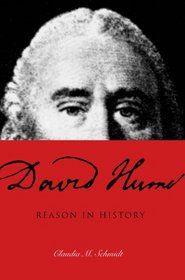
In his seminal Philosophy of David Hume (1941), Norman Kemp Smith called for a study of Hume “in all his manifold activities: as philosopher, as political theorist, as economist, as historian, and as man of letters, ” indicating that “Hume’s philosophy, as the attitude of mind which found for itself these various forms of expression, will then have been presented, adequately and in due perspective, for the first time.” Claudia Schmidt seeks to address this long-standing need in Hume scholarship. Against the charges that Hume holds no consistent philosophical position, offers no constructive account of rationality, and sees no positive relation between philosophy and other areas of inquiry, Schmidt argues for the overall coherence of Hume’s thought as a study of “reason in history.” She develops this interpretation by tracing Hume’s constructive account of human cognition and its historical dimension as a unifying theme across the full range of his writings. Hume, she shows, provides a positive account of the ways in which our concepts, beliefs, emotions, and standards of judgment in different areas of inquiry are shaped by experience, both in the personal history of the individual and in the life of a community. This book is valuable at many levels: for students, as an introduction to Hume’s writings and issues in their interpretation; for Hume specialists, as a unified and intriguing interpretation of his thought; for philosophers generally, as a synthesis of recent developments in Hume scholarship; and for scholars in other disciplines, as a guide to Hume’s contributions to their own fields.
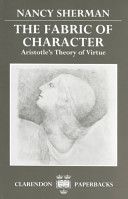
Most traditional accounts of Aristotle’s theory of ethical education neglect its cognitive aspects. This book asserts that, in Aristotle’s view, excellence of character comprises both the sentiments and practical reason. Sherman focuses particularly on four aspects of practical reason as they relate to character: moral perception, choicemaking, collaboration, and the development of those capacities in moral education. Throughout the book, she is sensitive to contemporary moral debates, and indicates the extent to which Aristotle’s account of practical reason provides an alternative to theories of impartial reason.
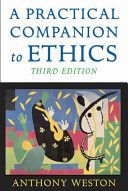
A Practical Companion to Ethics, Third Edition, is a concise and accessible introduction to the basic attitudes and skills that make ethics work, like thinking for oneself, creative and integrative problem-solving, and keeping an open mind. This unique volume illuminates the broad kinds of practical intelligence required in moral judgment, complementing the narrower theoretical considerations that often dominate ethics courses. It offers practical instruction in problem-solving by demonstrating how to frame an ethical problem and deal effectively with ethical disagreements. The book also presents ethics as an ongoing learning experience, helping students to deal with both the complexities of their individual lives and with the larger issues that exist in the world around them. The third edition retains the most popular features of the previous edition, including challenging and relevant end-of-chapter exercises; brief text boxes that define key terms and review core strategies; and short dialogues that illustrate ethical dilemmas. The optimistic tone and brisk pace of the narrative provide an entertaining and intelligent guide to “everyday” morality. The third edition includes a more extensive treatment of ethics and religion (Chapter 2), which provides the framework for a moral dialogue that reaches across sectarian divides. It also contains a revised final chapter on the continuously unfolding nature of ethical understanding and an expanded appendix that gives detailed advice on writing various types of ethics papers. Ideal for introductory courses in ethics and applied ethics, A Practical Companion to Ethics, Third Edition, can also be used in any course related to critical thinking.
ما از اخلاق چه انتظاری داریم؟ این سوال شاید تاحدودی برای عموم مردم و یا متخصصان این رشته قابل پاسخ باشد؛ اینکه خوب بودن را به ما بیاموزد و در تنظیم روابط فردی م...

جشن کتاب تهران به ایستگاه سی و یکم رسیده است. حال و احوال نشر کتاب خوب نیست و باید فرهنگدوستان را به خرید و هدیه دادن کتاب ترغیب نمود. خانه اخلاقپژوهان جوان ب...

بنیاد کتابهای اخلاق اسلامی عمدتا پالایش جان از آلودگیها و آراستن آن به زیباییها است. اندیشه محوری این قبیل کتابها آن است که انسان فعلی آنی نیست که باید باشد...

-
0 Comments