Notice: تابع WP_Block_Type_Registry::register به طورنادرست فراخوانی شد. نامهای نوع بلوک نباید حروف بزرگ داشته باشند. لطفاً برای اطلاعات بیشتر، اشکال زدایی در وردپرس را مشاهده کنید. (این پیام در نگارش 5.0.0 افزوده شده است.) in /home/ethicsho/public_html/wp-includes/functions.php on line 5313
Warning: Use of undefined constant TDC_PATH_LEGACY - assumed 'TDC_PATH_LEGACY' (this will throw an Error in a future version of PHP) in /home/ethicsho/public_html/wp-content/plugins/td-composer/td-composer.php on line 109
Warning: Use of undefined constant TDSP_THEME_PATH - assumed 'TDSP_THEME_PATH' (this will throw an Error in a future version of PHP) in /home/ethicsho/public_html/wp-content/plugins/td-composer/td-composer.php on line 113 بایگانیهای KF306.Z9 .R668 2003 - خانه اخلاق پژوهان جوان Notice: Trying to access array offset on value of type bool in /home/ethicsho/public_html/wp-content/plugins/wp-ulike/inc/general-functions.php on line 807
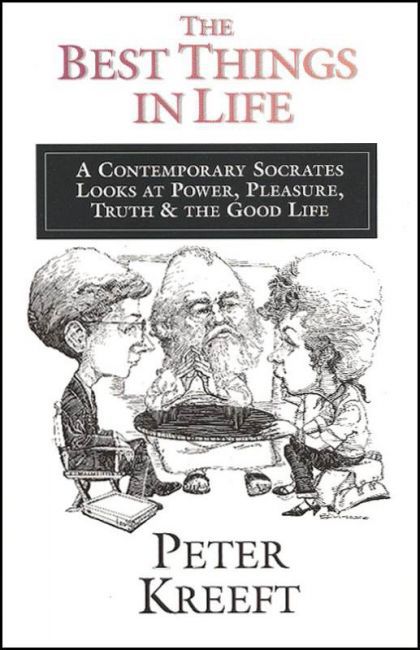
What are the best things in life? Questions like that may boggle your mind. But they don’t boggle Socrates. The indomitable old Greek brings his unending questions to Desperate State University. With him come the same mind-opening and spirit-stretching challenge that disrupted ancient Athens. What is the purpose of education? Why do we make love?What good is money? Can computers think like people? Is there a difference between Capitalism and Communism? What is the greatest good? Is belief in God like belief in Santa Claus?
In twelve short, Socratic dialogues Peter Kreeft explodes contemporary values like success, power and pleasure. And he bursts the modern bubbles of agnosticism and subjectivism. He leaves you richer, wiser and more able to discern what the best things in life actually are.
Malice that cannot speak its name, cold-blooded but secret hostility, impotent desire, hidden rancor and spite–all cluster at the center of envy. Envy clouds thought, writes Joseph Epstein, clobbers generosity, precludes any hope of serenity, and ends in shriveling the heart. Of the seven deadly sins, he concludes, only envy is no fun at all. Writing in a conversational, erudite, self-deprecating style that wears its learning lightly, Epstein takes us on a stimulating tour of the many faces of envy. He considers what great thinkers–such as John Rawls, Schopenhauer, and Nietzsche–have written about envy; distinguishes between envy, yearning, jealousy, resentment, and schadenfreude (“a hardy perennial in the weedy garden of sour emotions”); and catalogs the many things that are enviable, including wealth, beauty, power, talent, knowledge and wisdom, extraordinary good luck, and youth (or as the title of Epstein’s chapter on youth has it, “The Young, God Damn Them”). He looks at resentment in academia, where envy is mixed with snobbery, stirred by impotence, and played out against a background of cosmic injustice; and he offers a brilliant reading of Othello as a play more driven by Iago’s envy than Othello’s jealousy. He reveals that envy has a strong touch of malice behind it–the envious want to destroy the happiness of others. He suggests that envy of the astonishing success of Jews in Germany and Austria may have lurked behind the virulent anti-Semitism of the Nazis. As he proved in his best-selling Snobbery, Joseph Epstein has an unmatched ability to highlight our failings in a way that is thoughtful, provocative, and entertaining. If envy is no fun, Epstein’s Envy is truly a joy to read.
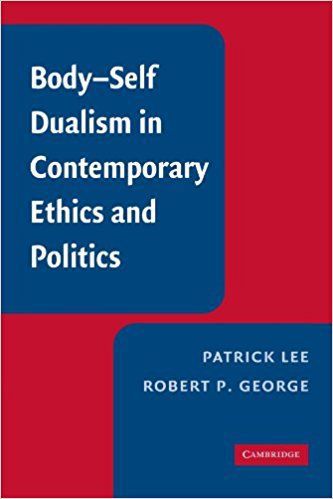
Book Summary of Body-Self Dualism In Contemporary Ethics And PoliticsProfoundly important ethical and political controversies turn on the question of whether biological life is an essential aspect of a human person, or only an extrinsic instrument. Lee and George argue that human beings are physical, animal organisms – albeit essentially rational and free – and examine the implications of this understanding of human beings for some of the most controversial issues in contemporary ethics and politics. The authors argue that human beings are animal organisms and that their personal identity across time consists in the persistence of the animal organisms they are; they also argue that human beings are essentially rational and free and that there is a radical difference between human beings and other animals; criticize hedonism and hedonistic drug-taking; present detailed defenses of the prolife positions on abortion and euthanasia; and defend the traditional moral position on marriage and sexual acts.
“Political institutions are or ought to be the main subject of political theory. The essays in this collection are works of political theory devoted specifically to the institutions and institutional principles of modern democracy. They illustrate the author’s contention in the opening chapter that the theory of politics needs to reorient itself so that it is not just the study of social justice. Institutions need to be taken seriously, by normative political theorists as much as by empirical political scientists. The collection includes studies of constitutionalism, the separation of powers, bicameralism, loyal opposition, representation, legislative due process, democratic accountability, and judicial review. It also includes critical essays on the political philosophies of Hannah Arendt and Isaiah Berlin”–Publisher’s information.
ما از اخلاق چه انتظاری داریم؟ این سوال شاید تاحدودی برای عموم مردم و یا متخصصان این رشته قابل پاسخ باشد؛ اینکه خوب بودن را به ما بیاموزد و در تنظیم روابط فردی م...

جشن کتاب تهران به ایستگاه سی و یکم رسیده است. حال و احوال نشر کتاب خوب نیست و باید فرهنگدوستان را به خرید و هدیه دادن کتاب ترغیب نمود. خانه اخلاقپژوهان جوان ب...

بنیاد کتابهای اخلاق اسلامی عمدتا پالایش جان از آلودگیها و آراستن آن به زیباییها است. اندیشه محوری این قبیل کتابها آن است که انسان فعلی آنی نیست که باید باشد...

-
0 Comments