Notice: تابع WP_Block_Type_Registry::register به طورنادرست فراخوانی شد. نامهای نوع بلوک نباید حروف بزرگ داشته باشند. لطفاً برای اطلاعات بیشتر، اشکال زدایی در وردپرس را مشاهده کنید. (این پیام در نگارش 5.0.0 افزوده شده است.) in /home/ethicsho/public_html/wp-includes/functions.php on line 5313
Warning: Use of undefined constant TDC_PATH_LEGACY - assumed 'TDC_PATH_LEGACY' (this will throw an Error in a future version of PHP) in /home/ethicsho/public_html/wp-content/plugins/td-composer/td-composer.php on line 109
Warning: Use of undefined constant TDSP_THEME_PATH - assumed 'TDSP_THEME_PATH' (this will throw an Error in a future version of PHP) in /home/ethicsho/public_html/wp-content/plugins/td-composer/td-composer.php on line 113 بایگانیهای K588 .C668 2007 - خانه اخلاق پژوهان جوان Notice: Trying to access array offset on value of type bool in /home/ethicsho/public_html/wp-content/plugins/wp-ulike/inc/general-functions.php on line 807
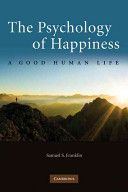
When Thomas Jefferson placed “the pursuit of happiness” along with life and liberty in The Declaration of Independence he was most likely referring to Aristotle’s concept of happiness, or eudaimonia. Eudaimonia is not about good feelings but rather the fulfillment of human potentials. Fulfillment is made possible by virtue; the moderation of desire and emotion by reason. The Psychology of Happiness is the first book to bring together psychological, philosophical, and physiological theory and research in support of Aristotle’s view. It examines the similarity between Aristotle’s concept of virtue and modern cognitive theories of emotion. It discusses the discovery of human potentials, the development of virtue and its neurological basis, the mistaken idea that fulfillment is selfish, and several other issues related to the pursuit of a good human life.
This must-have handbook for writers and artists provides every necessary form to protect written expression under U.S. and international copyright law. With step-by-step instructions, it illustrates how to: register a written work with the copyright office, determine what works can be protected, transfer copyright ownership, define and avoid infringement, maintain electronic publishing rights.
While we would like to believe that forensic science professionals are intrinsically ethical by nature, the reality is that these individuals have moral compasses as varied as those of any individual you may know. They confront ethical dilemmas every day, some with clear-cut protocols and others that frequently have no definitive answers. Ethics and the Practice of Forensic Science explores the range of ethical issues facing those who work in the field and highlights the complicated nature of ethical decision-making in this complex arena.Ethics in the courtroom and the labWritten by one of the leading researchers in forensic ethics, the book provides data-driven examples of the behaviors ‘ both good and bad ‘ that shape the forensic profession. It provides real examples of ethical behavior combined with research to demonstrate how ethics works (and sometimes does not) in this richly interesting scientific field. The book begins by exploring philosophical approaches related to ethical decision-making. It examines the ethics of the criminal justice culture, ethical issues in the courtroom, and ethics in science and research. Next, the book shifts to a discussion of unethical behavior, and provides actual case studies spotlighting ethical breaches, including the O.J. Simpson case and other reported examples.Ethics codes in various organizationsThe book concludes with a discussion of the code of ethics. Appendices discuss research data on ethics in forensic science and provide ethics codes from various forensic science organizations. Offering a lively source of debate for professionals and academics, this volume provides a window on a topic that is frequently fraught with uncertainty.
The fox knows many things, the Greeks said, but the hedgehog knows one big thing. In his most comprehensive work the author argues that value in all its forms is one big thing: that what truth is, life means, morality requires, and justice demands are different aspects of the same large question. He develops original theories on a great variety of issues very rarely considered in the same book: moral skepticism, literary, artistic, and historical interpretation, free will, ancient moral theory, being good and living well, liberty, equality, and law among many other topics. What we think about any one of these must stand up, eventually, to any argument we find compelling about the rest. Skepticism in all its forms, philosophical, cynical, or post-modern, threatens that unity. The Galilean revolution once made the theological world of value safe for science. But the new republic gradually became a new empire: the modern philosophers inflated the methods of physics into a totalitarian theory of everything. They invaded and occupied all the honorifics, reality, truth, fact, ground, meaning, knowledge, and being, and dictated the terms on which other bodies of thought might aspire to them, and skepticism has been the inevitable result. The author feels we need a new revolution, and that we must make the world of science safe for value.
ما از اخلاق چه انتظاری داریم؟ این سوال شاید تاحدودی برای عموم مردم و یا متخصصان این رشته قابل پاسخ باشد؛ اینکه خوب بودن را به ما بیاموزد و در تنظیم روابط فردی م...

جشن کتاب تهران به ایستگاه سی و یکم رسیده است. حال و احوال نشر کتاب خوب نیست و باید فرهنگدوستان را به خرید و هدیه دادن کتاب ترغیب نمود. خانه اخلاقپژوهان جوان ب...

بنیاد کتابهای اخلاق اسلامی عمدتا پالایش جان از آلودگیها و آراستن آن به زیباییها است. اندیشه محوری این قبیل کتابها آن است که انسان فعلی آنی نیست که باید باشد...

-
0 Comments