Notice: تابع WP_Block_Type_Registry::register به طورنادرست فراخوانی شد. نامهای نوع بلوک نباید حروف بزرگ داشته باشند. لطفاً برای اطلاعات بیشتر، اشکال زدایی در وردپرس را مشاهده کنید. (این پیام در نگارش 5.0.0 افزوده شده است.) in /home/ethicsho/public_html/wp-includes/functions.php on line 5313
Warning: Use of undefined constant TDC_PATH_LEGACY - assumed 'TDC_PATH_LEGACY' (this will throw an Error in a future version of PHP) in /home/ethicsho/public_html/wp-content/plugins/td-composer/td-composer.php on line 109
Warning: Use of undefined constant TDSP_THEME_PATH - assumed 'TDSP_THEME_PATH' (this will throw an Error in a future version of PHP) in /home/ethicsho/public_html/wp-content/plugins/td-composer/td-composer.php on line 113 بایگانیهای K103.L44 .P37 2007 - خانه اخلاق پژوهان جوان Notice: Trying to access array offset on value of type bool in /home/ethicsho/public_html/wp-content/plugins/wp-ulike/inc/general-functions.php on line 807
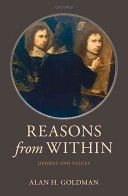
Do the reasons we have for acting as we do derive from our concerns and desires, or are there objective values in the world that we are rationally required to pursue and protect? Alan Goldman argues for the internalist or subjectivist view of practical reasons on the grounds that it is simpler, more unified, and more comprehensible than the rival objectivist position. He provides a naturalistic account of practical rationality in terms of coherence within sets of desires or motivational states, and between motivations, intentions, and actions. Coherence is defined as the avoidance of self-defeat, the defeat of one’s own deepest concerns. The demand for coherence underlies both practical and theoretical reason and derives from the natural aims of belief and action. In clarifying which desires create reasons, drawing on the literature of cognitive psychology, Goldman offers conceptual analyses of desires, emotions, and attitudes. Reasons are seen to derive ultimately from our deepest occurrent concerns. These concerns require no reasons themselves but provide reasons for many more superficial desires. In defense of this theory, Goldman argues that rational agents need not be morally motivated or concerned for their narrow self-interest. Objective values would demand such concern. They would be independent of our desires but would provide reasons for us to pursue and protect them. They would require rational agents to be motivated by them. But, Goldman argues, we are not motivated in that way, and it makes no sense to demand that our informed and coherent desires be generally other than they are. We need not appeal to such objective values in order to explain how our lives can be good and meaningful. Reasons from Within will appeal to anyone interested in the nature of values and reasons, particularly students of philosophy, psychology, and decision theory.
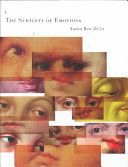
Why do we cry at the movies? What is the best way to manage destructive feelings such as jealousy? Although emotions pervade our lives, their nature, causes, and effects have only recently been studied by social scientists and philosophers. Despite growing scientific interest in the subject, empirical findings have not yet caught up with our intuitive knowledge. In this book Aaron Ben-Ze’ev carries out what he calls “a careful search for general patterns in the primeval jungle of emotions.” In an engaging, informal style he draws on a variety of theoretical approaches and popular sources to produce a coherent account of emotions in all their subtlety. All of the ideas are illustrated with examples drawn from everyday life.The book is organized into two parts. The first presents an overall conceptual framework for understanding emotions. It looks at the typical characteristics and components of emotions, distinguishes emotions from other affective phenomena, classifies the emotions, and covers such related issues as emotional intelligence, regulating emotions, and emotions and morality. The second part discusses individual emotions, including envy, jealousy, pleasure-in-others’-misfortune, pity, compassion, anger, hate, disgust, love, sexual desire, happiness, sadness, pride, regret, and shame. The text is laced with insightful and often amusing quotations from sources ranging from Mae West to Montesquieu.
ما از اخلاق چه انتظاری داریم؟ این سوال شاید تاحدودی برای عموم مردم و یا متخصصان این رشته قابل پاسخ باشد؛ اینکه خوب بودن را به ما بیاموزد و در تنظیم روابط فردی م...

جشن کتاب تهران به ایستگاه سی و یکم رسیده است. حال و احوال نشر کتاب خوب نیست و باید فرهنگدوستان را به خرید و هدیه دادن کتاب ترغیب نمود. خانه اخلاقپژوهان جوان ب...

بنیاد کتابهای اخلاق اسلامی عمدتا پالایش جان از آلودگیها و آراستن آن به زیباییها است. اندیشه محوری این قبیل کتابها آن است که انسان فعلی آنی نیست که باید باشد...

-
0 Comments