Notice: تابع WP_Block_Type_Registry::register به طورنادرست فراخوانی شد. نامهای نوع بلوک نباید حروف بزرگ داشته باشند. لطفاً برای اطلاعات بیشتر، اشکال زدایی در وردپرس را مشاهده کنید. (این پیام در نگارش 5.0.0 افزوده شده است.) in /home/ethicsho/public_html/wp-includes/functions.php on line 5313
Warning: Use of undefined constant TDC_PATH_LEGACY - assumed 'TDC_PATH_LEGACY' (this will throw an Error in a future version of PHP) in /home/ethicsho/public_html/wp-content/plugins/td-composer/td-composer.php on line 109
Warning: Use of undefined constant TDSP_THEME_PATH - assumed 'TDSP_THEME_PATH' (this will throw an Error in a future version of PHP) in /home/ethicsho/public_html/wp-content/plugins/td-composer/td-composer.php on line 113 بایگانیهای JZ1306 .S88 2001 - خانه اخلاق پژوهان جوان Notice: Trying to access array offset on value of type bool in /home/ethicsho/public_html/wp-content/plugins/wp-ulike/inc/general-functions.php on line 807
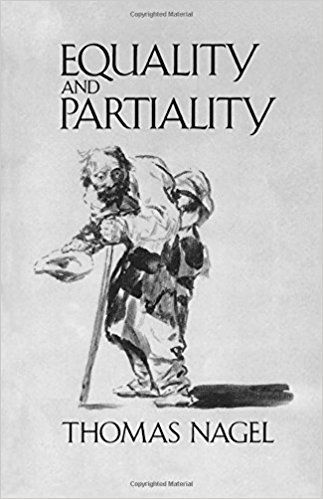
Derived from Thomas Nagel’s Locke Lectures, Equality and Partiality proposes a nonutopian account of political legitimacy, based on the need to accommodate both personal and impersonal motives in any credible moral theory, and therefore in any political theory with a moral foundation. Within each individual, Nagel believes, there is a division between two standpoints, the personal and the impersonal. Without the impersonal standpoint, there would be no morality, only the clash, compromise, and occasional convergence of individual perspectives. It is because a human being does not occupy only his own point of view that each of us is susceptible to the claims of others through private and public morality. Political systems, to be legitimate, must achieve an integration of these two standpoints within the individual. These ideas are applied to specific problems such as social and economic inequality, toleration, international justice, and the public support of culture. Nagel points to the problem of balancing equality and partiality as the most important issue with which political theorists are now faced.
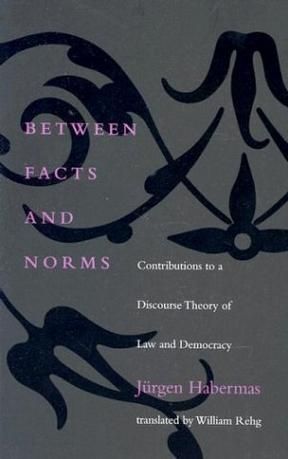
In Between Facts and Norms Jurgen Habermas works out the legal and political implications of his Theory of Communicative Action (1981), bringing to fruition the project announced with his publication of The Structural Transformation of the Public Sphere in 1962. This new work is a major contribution to recent debates on the rule of law and the possibilities of democracy in postindustrial societies, but it is much more.The introduction by William Rehg succinctly captures the special nature of the work, noting that it offers a sweeping, sociologically informed conceptualization of law and basic rights, a normative account of the rule of law and the constitutional state, an attempt to bridge normative and empirical approaches to democracy, and an account of the social context required for democracy. Finally, the work frames and caps these arguments with a bold proposal for a new paradigm of law that goes beyond the dichotomies that have afflicted modern political theory from its inception and that still underlie current controversies between so- called liberals and civic republicans.The book includes a postscript written in 1994, which restates the argument in light of its initial reception, and two appendixes, which cover key developments that preceded the book.Habermas himself was actively involved in the translation, adapting the text as necessary to make it more accessible to English-speaking readers.
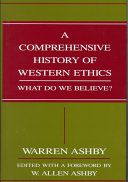
Our intellectual history spans more than 2,000 years, yet, surprisingly, we have had no adequate history of Western ethics. A Comprehensive History of Western Ethics fills this void by providing an engaging, thorough, and inclusive history that encompasses both classical and modern perspectives. Author Warren Ashby speaks both to students of history and ethics and to a needy public interested in but often perplexed by moral values in contemporary life — people who are looking for clearer personal and social bearings on what it means to be a person in today’s society. Ashby embraces all who are concerned with expanding human rights, finding new ways to think about moral experience, and discovering an ethical perspective appropriate for their lives. By exploring past ethical problems, we can prepare for the future’s challenges.Included with the commentary on the writings of great thinkers, are in-depth discussions of Greek, biblical, and Stoic ethics; Augustine, Aquinas, and medieval views; the Renaissance, the Reformation, and ethics in the age of science; as well as the Enlightenment, Romanticism, and the last Western century.
ما از اخلاق چه انتظاری داریم؟ این سوال شاید تاحدودی برای عموم مردم و یا متخصصان این رشته قابل پاسخ باشد؛ اینکه خوب بودن را به ما بیاموزد و در تنظیم روابط فردی م...

جشن کتاب تهران به ایستگاه سی و یکم رسیده است. حال و احوال نشر کتاب خوب نیست و باید فرهنگدوستان را به خرید و هدیه دادن کتاب ترغیب نمود. خانه اخلاقپژوهان جوان ب...

بنیاد کتابهای اخلاق اسلامی عمدتا پالایش جان از آلودگیها و آراستن آن به زیباییها است. اندیشه محوری این قبیل کتابها آن است که انسان فعلی آنی نیست که باید باشد...

-
0 Comments