Notice: تابع WP_Block_Type_Registry::register به طورنادرست فراخوانی شد. نامهای نوع بلوک نباید حروف بزرگ داشته باشند. لطفاً برای اطلاعات بیشتر، اشکال زدایی در وردپرس را مشاهده کنید. (این پیام در نگارش 5.0.0 افزوده شده است.) in /home/ethicsho/public_html/wp-includes/functions.php on line 5313
Warning: Use of undefined constant TDC_PATH_LEGACY - assumed 'TDC_PATH_LEGACY' (this will throw an Error in a future version of PHP) in /home/ethicsho/public_html/wp-content/plugins/td-composer/td-composer.php on line 109
Warning: Use of undefined constant TDSP_THEME_PATH - assumed 'TDSP_THEME_PATH' (this will throw an Error in a future version of PHP) in /home/ethicsho/public_html/wp-content/plugins/td-composer/td-composer.php on line 113 بایگانیهای JZ1306 .F76 2008 - خانه اخلاق پژوهان جوان Notice: Trying to access array offset on value of type bool in /home/ethicsho/public_html/wp-content/plugins/wp-ulike/inc/general-functions.php on line 807
At the Roots of Christian Bioethics explores Professor H. Tristram Engelhardt, Jr.s pursuit for the decisive ground of the meaning of human existence and knowledge of appropriate moral choice. Engelhardt has been the most influential, cogent, but critical voice within bioethics of the past several decades. The essays in this volume compass epistemological, methodological and topical contributions to bioethics, political theory, and Christian theology. Each explores Engelhardts diagnosis of the contemporary social and cultural crisis, seeking to make sense of the decidedly post-Christian and often openly anti-Christian ethics that dominates public morality and politic policy.Each author investigates Engelhardts personal and tireless enquiry to secure ultimate moral foundations as well as to recognize the full implications of the results of his investigations: that Christian bioethics does not originate in human reason but in the command of God.
Delineating implications for administrative ethics from other fields such as sociology, psychology, and philosophy, this reference provides a comprehensive review of administrative ethics in the public sector. Detailing the context within which contemporary ethics training has developed, the book examines the effectiveness of ethics training, legal and organizational devices for encouraging desired conduct, and other topics of particular relevance to the political and social contexts of public administration. Written by over 25 leading scholars in public administration ethics, the book creates a taxonomy for administrative ethics using the categories of modern philosophy.
The intellectual scope and courage to contend with the largest puzzles of human existence and organization distinguish great social thinkers. Barrington Moore’s Social Origins of Dictatorship and Democracy was a foundational work of historical sociology that influenced a generation of social scientists and, decades later, continues to be widely read and taught. Here, Moore takes up the same tools of historical comparison to investigate why groups of people kill and torture each other. His answer is arrestingly simple: people persecute those whom they perceive as polluting due to their “impure” religious, political, or economic ideas.Moore’s search begins with the Old Testament’s restrictions on sexual behavior, idolatry, diet, and handling unclean objects. He argues that religious authorities seeking to distinguish the ancient Hebrews from competing groups invented, along with monotheism, the association of impure things with moral failure and the violation of God’s will. This allowed people to view those holding competing ideas as contaminated and, more important, contaminating. Moore moves next to the French Wars of Religion, in which Protestants and Catholics massacred each other over the control of purity, and the French Revolution, which perfected terror and secularized purity. He then combs the major Asian religions and finds–to his surprise–that violent efforts to eradicate the “impure” were largely absent before substantial Western influence.Moore’s provocative conclusion is that monotheism–with its monopoly on virtue and failure to provide supernatural scapegoats–is responsible for some of the most virulent forms of intolerance and is a major cause of human nastiness and suffering. Moore does not say that the monotheist tradition was the primary source of Nazism, Stalinism, Maoism, violent Hindu fundamentalism, or ethnic cleansing in Rwanda and the former Yugoslavia, but he does identify it as an indispensable cause because it justified, encouraged, and spread vindictive persecution throughout the world.Once again, Moore has drawn on his comprehensive understanding of history and talent for speaking directly to readers to address one of the most crucial questions about human past and future. This book is for anyone who has ever heard the word genocide and asked why.
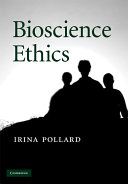
Bioscience ethics facilitates free and accurate information transfer from applied science to applied bioethics. Its major elements are: increased understanding of biological systems, responsible use of technology, and attuning ethnocentric debates to new scientific insights. Pioneered by Irina Pollard in 1994, bioscience ethics has become an internationally recognized discipline, interfacing science and bioethics within professional perspectives such as medical, legal, bio-engineering, and economics. Written for students and professionals alike, the fundamental feature of this book is its breadth, important because bioscience ethics interweaves many diverse subjects in the process of gathering specialist scientific knowledge for bioethical review. It contains chapters which embrace topics affecting human reproduction, end-of-life care and euthanasia, challenge human-dominated ecosystems, and review population growth, economic activity and warfare. A background section describes the evolution of ethical consciousness, explores the future, and proposes that the reworking of ethical boundaries can enhance mature decision-making in harmony with changing technology.
ما از اخلاق چه انتظاری داریم؟ این سوال شاید تاحدودی برای عموم مردم و یا متخصصان این رشته قابل پاسخ باشد؛ اینکه خوب بودن را به ما بیاموزد و در تنظیم روابط فردی م...

جشن کتاب تهران به ایستگاه سی و یکم رسیده است. حال و احوال نشر کتاب خوب نیست و باید فرهنگدوستان را به خرید و هدیه دادن کتاب ترغیب نمود. خانه اخلاقپژوهان جوان ب...

بنیاد کتابهای اخلاق اسلامی عمدتا پالایش جان از آلودگیها و آراستن آن به زیباییها است. اندیشه محوری این قبیل کتابها آن است که انسان فعلی آنی نیست که باید باشد...

-
0 Comments