Notice: تابع WP_Block_Type_Registry::register به طورنادرست فراخوانی شد. نامهای نوع بلوک نباید حروف بزرگ داشته باشند. لطفاً برای اطلاعات بیشتر، اشکال زدایی در وردپرس را مشاهده کنید. (این پیام در نگارش 5.0.0 افزوده شده است.) in /home/ethicsho/public_html/wp-includes/functions.php on line 5313
Warning: Use of undefined constant TDC_PATH_LEGACY - assumed 'TDC_PATH_LEGACY' (this will throw an Error in a future version of PHP) in /home/ethicsho/public_html/wp-content/plugins/td-composer/td-composer.php on line 109
Warning: Use of undefined constant TDSP_THEME_PATH - assumed 'TDSP_THEME_PATH' (this will throw an Error in a future version of PHP) in /home/ethicsho/public_html/wp-content/plugins/td-composer/td-composer.php on line 113 بایگانیهای JC571 .K865 2007 - خانه اخلاق پژوهان جوان Notice: Trying to access array offset on value of type bool in /home/ethicsho/public_html/wp-content/plugins/wp-ulike/inc/general-functions.php on line 807
Schopenhauer’s treatise on ethics is presented here in E. F. J. Payne’s definitive translation, based on the Hubscher edition). This edition includes an Introduction by David Cartwright, a translator’s preface, biographical note, selected bibliography, and an index. For convenient reference to passages in Kant’s work discussed by Schopenhauer, Academy edition numbers have been added.
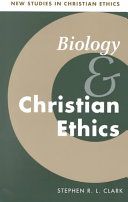
This stimulating and wide-ranging book mounts a profound enquiry into some of the most pressing questions of our age, by examining the relationship between biological science and Christianity. The history of biological discovery is explored from the point of view of a leading philosopher and ethicist. What effect should modern biological theory and practice have on Christian understanding of ethics? How much of that theory and practice should Christians endorse? To what extent can “nature” set our standards? Professor Clark takes a reasoned look at biological theory since Darwin and argues that an orthodox Christian philosophy is better able to accommodate the truth of such theory than is the sort of progressive, meliorist interpretation of Christian doctrine that is usually offered as the properly “modern” option.
Bonnie Steinbock presents The Oxford Handbook of Bioethics –an authoritative, state-of-the-art guide to current issues in bioethics. Thirty-four contributors reflect the interdisciplinarity that is characteristic of bioethics, and its increasingly international character. Thirty topics are covered in original essays written by some of the world’s leading figures in the field, as well as by some newer “up-and-comers.” The essays address both perennial issues, such as the methodology of bioethics, autonomy, justice, death, and moral status, and newer issues, such as biobanking, stem cell research, cloning, pharmacogenomics, and bioterrorism. Other topics concern mental illness and moral agency, the rule of double effect, justice and the elderly, the definition of death, organ transplantation, feminist approaches to commodification of the body, life extension, advance directives, physician-assisted death, abortion, genetic research, population screening, enhancement, research ethics, and the implications of public and global health for bioethics. Anyone who wants to know how the central debates in bioethics have developed in recent years, and where the debates are going, will want to consult this book. It will be an invaluable resource not only for scholars and graduate students in bioethics, but also for those in philosophy, medicine, law, theology, social science, public policy, and public health who wish to keep abreast of developments in bioethics.
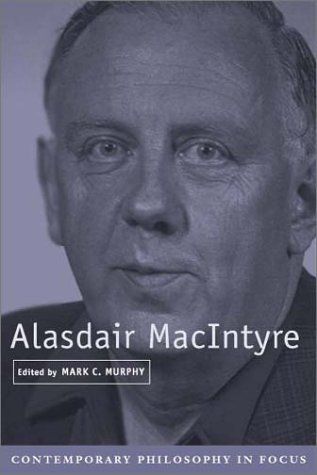
Alasdair MacIntyre’s writings on ethics, political philosophy, philosophy of religion, philosophy of the social sciences and the history of philosophy have established him as one of the philosophical giants of the last fifty years. His best-known book, After Virtue (1981), spurred the profound revival of virtue ethics. Moreover, MacIntyre, unlike so many of his contemporaries, has exerted a deep influence beyond the bounds of academic philosophy. This volume focuses on the major themes of MacIntyre’s work with critical expositions of MacIntyre’s views on the history of philosophy, the role of tradition in philosophical inquiry, the philosophy of the social sciences, moral philosophy, political theory, and his critique of the assumptions and institutions of modernity. Written by a distinguished roster of philosophers, this volume will have a wide appeal outside philosophy to students in the social sciences, law, theology, and political theory. Mark C. Murphy is Associate Professor of Philosophy at Georgetown University. He is author of Natural Law and Practical Rationality (Cambridge, 2001) and An Essay on Divine Authority (Cornell, 2002), as well as of a number of articles on natural law theory, political obligation, and Hobbes’ moral, political, and legal philosophy. His papers have appeared in Ethics, Philosophy and Public Affairs, Nous, Faith and Philosophy, Law and Philosophy, American Philosophical Quarterly, the Thomist, and elsewhere.
ما از اخلاق چه انتظاری داریم؟ این سوال شاید تاحدودی برای عموم مردم و یا متخصصان این رشته قابل پاسخ باشد؛ اینکه خوب بودن را به ما بیاموزد و در تنظیم روابط فردی م...

جشن کتاب تهران به ایستگاه سی و یکم رسیده است. حال و احوال نشر کتاب خوب نیست و باید فرهنگدوستان را به خرید و هدیه دادن کتاب ترغیب نمود. خانه اخلاقپژوهان جوان ب...

بنیاد کتابهای اخلاق اسلامی عمدتا پالایش جان از آلودگیها و آراستن آن به زیباییها است. اندیشه محوری این قبیل کتابها آن است که انسان فعلی آنی نیست که باید باشد...

-
0 Comments