Notice: تابع WP_Block_Type_Registry::register به طورنادرست فراخوانی شد. نامهای نوع بلوک نباید حروف بزرگ داشته باشند. لطفاً برای اطلاعات بیشتر، اشکال زدایی در وردپرس را مشاهده کنید. (این پیام در نگارش 5.0.0 افزوده شده است.) in /home/ethicsho/public_html/wp-includes/functions.php on line 5313
Warning: Use of undefined constant TDC_PATH_LEGACY - assumed 'TDC_PATH_LEGACY' (this will throw an Error in a future version of PHP) in /home/ethicsho/public_html/wp-content/plugins/td-composer/td-composer.php on line 109
Warning: Use of undefined constant TDSP_THEME_PATH - assumed 'TDSP_THEME_PATH' (this will throw an Error in a future version of PHP) in /home/ethicsho/public_html/wp-content/plugins/td-composer/td-composer.php on line 113 بایگانیهای JC329.5 .S55 2001 - خانه اخلاق پژوهان جوان Notice: Trying to access array offset on value of type bool in /home/ethicsho/public_html/wp-content/plugins/wp-ulike/inc/general-functions.php on line 807
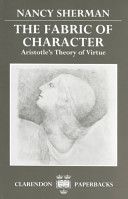
Most traditional accounts of Aristotle’s theory of ethical education neglect its cognitive aspects. This book asserts that, in Aristotle’s view, excellence of character comprises both the sentiments and practical reason. Sherman focuses particularly on four aspects of practical reason as they relate to character: moral perception, choicemaking, collaboration, and the development of those capacities in moral education. Throughout the book, she is sensitive to contemporary moral debates, and indicates the extent to which Aristotle’s account of practical reason provides an alternative to theories of impartial reason.
The idea that religion has a dangerous tendency to promote violence is part of the conventional wisdom of Western societies, and it underlies many of our institutions and policies, from limits on the public role of religion to efforts to promote liberal democracy in the Middle East. William T. Cavanaugh challenges this conventional wisdom by examining how the twin categories of religion and the secular are constructed. A growing body of scholarly work explores how the category ‘religion’ has been constructed in the modern West and in colonial contexts according to specific configurations of political power. Cavanaugh draws on this scholarship to examine how timeless and transcultural categories of ‘religion and ‘the secular’ are used in arguments that religion causes violence. He argues three points: 1) There is no transhistorical and transcultural essence of religion. What counts as religious or secular in any given context is a function of political configurations of power; 2) Such a transhistorical and transcultural concept of religion as non-rational and prone to violence is one of the foundational legitimating myths of Western society; 3) This myth can be and is used to legitimate neo-colonial violence against non-Western others, particularly the Muslim world.
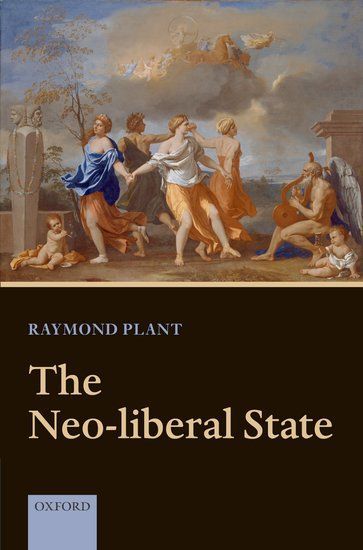
The aim of the book is two-fold. First of all it is to provide a fair, complete and analytical account of the Neo-liberal conception of the role and function of the state in modern society. The second aim is to provide a critical assessment of some of the central elements of this conception. The book will look at the emphasis of Neo-liberals on procedural and rule governed approaches to the role of the state rather than outcome or end state views of the role of government and to consider how this conception of politics relates to issues such as the rule of law, freedom, justice, rights, the relationship to the market economy, to civil society and to look at the role of government in relation to the provision of welfare and public sector services more generally. It builds up the Neo-liberal case in respect of these aspects of modern society by drawing upon the works of central Neo-liberal thinkers such as Hayek, Mises, Menger, as well as thinkers such as Oakeshott, Nozick and Rotbard who are not directly Neo-liberals but whose works have been important for the development of central Neo-liberal themes. The second part of the book provides what might be regarded as an immanent critique of the Neo-liberal case built up in the first part of the study. It takes Neo-liberal ideas very seriously and shows how incoherences arise within and between those ideas such that a plausible form of Neo-liberalism as opposed to Libertarianism on the one hand and Social Democracy on the other is very difficult to state. The theme of this book is very germane given the considerable debate which is now taking place in the context of the world financial crisis about the appropriate role for the state.
ما از اخلاق چه انتظاری داریم؟ این سوال شاید تاحدودی برای عموم مردم و یا متخصصان این رشته قابل پاسخ باشد؛ اینکه خوب بودن را به ما بیاموزد و در تنظیم روابط فردی م...

جشن کتاب تهران به ایستگاه سی و یکم رسیده است. حال و احوال نشر کتاب خوب نیست و باید فرهنگدوستان را به خرید و هدیه دادن کتاب ترغیب نمود. خانه اخلاقپژوهان جوان ب...

بنیاد کتابهای اخلاق اسلامی عمدتا پالایش جان از آلودگیها و آراستن آن به زیباییها است. اندیشه محوری این قبیل کتابها آن است که انسان فعلی آنی نیست که باید باشد...

-
0 Comments