Notice: تابع WP_Block_Type_Registry::register به طورنادرست فراخوانی شد. نامهای نوع بلوک نباید حروف بزرگ داشته باشند. لطفاً برای اطلاعات بیشتر، اشکال زدایی در وردپرس را مشاهده کنید. (این پیام در نگارش 5.0.0 افزوده شده است.) in /home/ethicsho/public_html/wp-includes/functions.php on line 5313
Warning: Use of undefined constant TDC_PATH_LEGACY - assumed 'TDC_PATH_LEGACY' (this will throw an Error in a future version of PHP) in /home/ethicsho/public_html/wp-content/plugins/td-composer/td-composer.php on line 109
Warning: Use of undefined constant TDSP_THEME_PATH - assumed 'TDSP_THEME_PATH' (this will throw an Error in a future version of PHP) in /home/ethicsho/public_html/wp-content/plugins/td-composer/td-composer.php on line 113 بایگانیهای HV7419 .P65 2012 - خانه اخلاق پژوهان جوان Notice: Trying to access array offset on value of type bool in /home/ethicsho/public_html/wp-content/plugins/wp-ulike/inc/general-functions.php on line 807
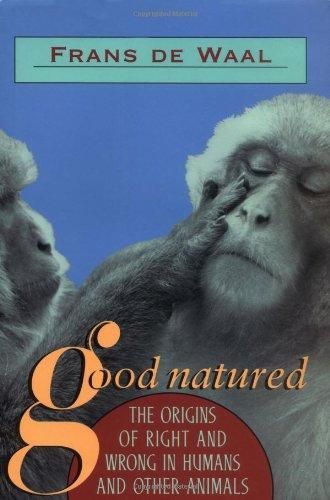
To observe a dog’s guilty look.to witness a gorilla’s self-sacrifice for a wounded mate, to watch an elephant herd’s communal effort on behalf of a stranded calf–to catch animals in certain acts is to wonder what moves them. Might there he a code of ethics in the animal kingdom? Must an animal be human to he humane? In this provocative book, a renowned scientist takes on those who have declared ethics uniquely human Making a compelling case for a morality grounded in biology, he shows how ethical behavior is as much a matter of evolution as any other trait, in humans and animals alike.World famous for his brilliant descriptions of Machiavellian power plays among chimpanzees-the nastier side of animal life–Frans de Waal here contends that animals have a nice side as well. Making his case through vivid anecdotes drawn from his work with apes and monkeys and holstered by the intriguing, voluminous data from his and others’ ongoing research, de Waal shows us that many of the building blocks of morality are natural: they can he observed in other animals. Through his eyes, we see how not just primates but all kinds of animals, from marine mammals to dogs, respond to social rules, help each other, share food, resolve conflict to mutual satisfaction, even develop a crude sense of justice and fairness.Natural selection may be harsh, but it has produced highly successful species that survive through cooperation and mutual assistance. De Waal identifies this paradox as the key to an evolutionary account of morality, and demonstrates that human morality could never have developed without the foundation of fellow feeling our species shares with other animals. As his work makes clear, a morality grounded in biology leads to an entirely different conception of what it means to he human–and humane.
This volume contains selected essays in moral and political philosophy by Thomas Hurka. The essays address a wide variety of topics, from the well-rounded life and the value of playing games to proportionality in war and the ethics of nationalism. They also share a common aim: to illuminate the surprising richness and subtlety of our everyday moral thought by revealing its underlying structure, which they often do by representing that structure on graphs. More specifically, the essays all give what the first in the volume calls “structural” as against “foundational” analyses of moral views. Eschewing the grander ambition of grounding our ideas about, say, virtue or desert in claims that use different concepts and concern some other, allegedly more fundamental topic, they examine these ideas in their own right and with close attention to their details. As well as illuminating their individual topics, the essays illustrate the insights this structural method can yield.
At last, a comprehensive collection of essays that examines and advances ethical evaluations of the controversial and increasingly popular practice of embryo adoption. In the United States alone, 400,000 frozen embryos created for in vitro fertilization exist but are no longer desired for that purpose. What are we morally obliged or permitted to do about these “spare” embryos? More of their genetic parents are considering donating these embryos to others to gestate and raise. This practice is politically volatile (figuring in debates about embryonic stem cells) and medically and morally complex. At the present time within the Roman Catholic Church there is no official teaching on embryo adoption. Catholic ethical analyses grapple with the way embryo adoption comports with respect for embryonic human life yet challenges Catholic moral critiques of assisted reproductive technologies. This volume is the first to bring together leading philosophers and theologians to engage Catholic debates about embryo adoption in an interactive format. The editors, a philosopher bioethicist and a moral theologian, provide a helpful overview of the practice and the arguments surrounding embryo adoption. They engage neglected Catholic ethical resources and issues to advance the current debate and chart new directions in Catholic moral thinking about this intriguing practice. The volume also includes a description of embryo adoption from a physician practitioner along with reflections from a couple who successfully adopted an embryo.
Modern ethical theory has experienced a resurgence of interest in the virtues. Long relegated to the ancient and medieval past, virtue theory is now considered by many to be a viable alternative to the otherwise dominant Kantian and Utilitarian ethical theories. Alasdair MacIntyre is a central figure in this movement, whose work forms an expanding yet consistent and influential project to address fundamental issues in ethical theory and American culture. However, many of his ideas were anticipated by John Dewey, who also has a great deal to say about the virtues in a moral life. This book offers, as it were, a critique of MacIntyre by Dewey that allows these two philosophers to converse about the nature and origins of the virtues and their importance for living a good life. Stephen Carden argues that Dewey has the more comprehensive view of the virtues and that a close comparison of their ideas reveals several significant weaknesses in MacIntyre’s position. >
The Blackwell Companion to Heidegger is a complete guide to the work and thought of Martin Heidegger, one of the most influential philosophers of the twentieth century. Considers the most important elements of Heidegger’s intellectual biography, including his notorious involvement with National Socialism Provides a systematic and comprehensive exploration of Heidegger’s work One of the few books on Heidegger to cover his later work as well as Being and Time Includes key critical responses to Heidegger’s philosophy Contributors include many of the leading interpreters of, and commentators on, the work of Heidegger
ما از اخلاق چه انتظاری داریم؟ این سوال شاید تاحدودی برای عموم مردم و یا متخصصان این رشته قابل پاسخ باشد؛ اینکه خوب بودن را به ما بیاموزد و در تنظیم روابط فردی م...

جشن کتاب تهران به ایستگاه سی و یکم رسیده است. حال و احوال نشر کتاب خوب نیست و باید فرهنگدوستان را به خرید و هدیه دادن کتاب ترغیب نمود. خانه اخلاقپژوهان جوان ب...

بنیاد کتابهای اخلاق اسلامی عمدتا پالایش جان از آلودگیها و آراستن آن به زیباییها است. اندیشه محوری این قبیل کتابها آن است که انسان فعلی آنی نیست که باید باشد...

-
0 Comments