Notice: تابع WP_Block_Type_Registry::register به طورنادرست فراخوانی شد. نامهای نوع بلوک نباید حروف بزرگ داشته باشند. لطفاً برای اطلاعات بیشتر، اشکال زدایی در وردپرس را مشاهده کنید. (این پیام در نگارش 5.0.0 افزوده شده است.) in /home/ethicsho/public_html/wp-includes/functions.php on line 5313
Warning: Use of undefined constant TDC_PATH_LEGACY - assumed 'TDC_PATH_LEGACY' (this will throw an Error in a future version of PHP) in /home/ethicsho/public_html/wp-content/plugins/td-composer/td-composer.php on line 109
Warning: Use of undefined constant TDSP_THEME_PATH - assumed 'TDSP_THEME_PATH' (this will throw an Error in a future version of PHP) in /home/ethicsho/public_html/wp-content/plugins/td-composer/td-composer.php on line 113 بایگانیهای HV6322.7 .L47 2004 - خانه اخلاق پژوهان جوان Notice: Trying to access array offset on value of type bool in /home/ethicsho/public_html/wp-content/plugins/wp-ulike/inc/general-functions.php on line 807
Repeatedly and successfully, the celebrated Harvard philosopher Robert Nozick has reached out to a broad audience beyond the confines of his discipline, addressing ethical and social problems that matter to every thoughtful person. Here Nozick continues his search for the connections between philosophy and “ordinary” experience. In the lively and accessible style that his readers have come to expect, he offers a bold theory of rationality, the one characteristic deemed to fix humanity’s “specialness”. What are principles for? asks Nozick. We could act simply on whim, or maximize our self-interest and recommend that others do the same. As Nozick explores rationality of decision and rationality of belief, he shows how principles actually function in our day-to-day thinking and in our efforts to live peacefully and productively with one another. In Nozick’s view, misconceptions of rationality have resulted in many intractable philosophical problems. For example, the Kantian attempt to make principled behavior the sole ultimate standard of conduct extends rationality beyond its bounds. In this provocative volume, Nozick reformulates current decision theory to include the symbolic meaning of actions in areas from controlling impulses to fighting society’s war against drugs. The author proposes a new rule of rational decision, “maximizing decision-value”, which is a weighted sum of causal, evidential, and symbolic utility. In a particularly fascinating section of the book he traces the implications of this rule for the famous Prisoner’s Dilemma and for Newcomb’s Problem. Rationality of belief, according to Nozick, involves two aspects: support by reasons that make the belief credible, andgeneration by a process that reliably produces true beliefs. A new evolutionary account explains how some factual connections are instilled in us as seemingly self-evident, thus reversing the direction of Kant’s “Copernican Revolution”. Proposing a theory of rational belief that includes both the intellectual credibility of the belief and the practical consequences of believing it, Nozick also provides a fresh resolution of the “lottery paradox”. Finally, Nozick explores the scope and limits of instrumental rationality, or the effective and efficient pursuit of given goals, and suggests some new conditions on the rationality of goals. Throughout, the book combines daring speculations with detailed investigations to portray the nature and status of rationality and the essential role that imagination plays in this singular human aptitude.
K. Danner Clouser is one of the most important figures in establishing and shaping the fields of medical ethics, bioethics, and the philosophy of education in the second half of the twentieth century. Clouser challenged many established approaches to moral theory and offered innovative strategies for integrating the humanities into professional education, especially that of physicians and nurses. The contributions published in Building Bioethics: Conversations with Clouser and Friends on Medical Ethics are unique both in their devotion to a critical review of his contributions, and in bringing together internationally known figures in bioethics, medical ethics, and philosophy of medicine to comment upon Clouser’s work. These leaders of the field include Tom Beauchamp, Daniel Callahan, James Childress, Nancy Dubler, H. Tristram Engelhardt, Al Jonsen, Loretta Kopelman, Larry McCullough, John Moskop, and Robert Veatch. This book merits special attention from those interested in bioethics, philosophy of medicine, medical ethics, philosophy, medical education, religious studies, and nursing education.
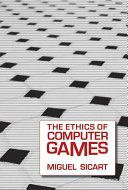
Despite the emergence of computer games as a dominant cultural industry (and the accompanying emergence of computer games as the subject of scholarly research), we know little or nothing about the ethics of computer games. Considerations of the morality of computer games seldom go beyond intermittent portrayals of them in the mass media as training devices for teenage serial killers. In this first scholarly exploration of the subject, Miguel Sicart addresses broader issues about the ethics of games, the ethics of playing the games, and the ethical responsibilities of game designers. He argues that computer games are ethical objects, that computer game players are ethical agents, and that the ethics of computer games should be seen as a complex network of responsibilities and moral duties. Players should not be considered passive amoral creatures; they reflect, relate, and create with ethical minds. The games they play are ethical systems, with rules that create gameworlds with values at play.Drawing on concepts from philosophy and game studies, Sicart proposes a framework for analyzing the ethics of computer games as both designed objects and player experiences. After presenting his core theoretical arguments and offering a general theory for understanding computer game ethics, Sicart offers case studies examining single-player games (using Bioshock as an example), multiplayer games (illustrated by Defcon), and online gameworlds (illustrated by World of Warcraft) from an ethical perspective. He explores issues raised by unethical content in computer games and its possible effect on players and offers a synthesis of design theory and ethics that could be used as both analytical tool and inspiration in the creation of ethical gameplay.
In recent years, libertarian impulses have increasingly influenced national and economic debates, from welfare reform to efforts to curtail affirmative action. Murray N. Rothbard’s classic The Ethics of Liberty stands as one of the most rigorous and philosophically sophisticated expositions of the libertarian political position. What distinguishes Rothbard’s book is the manner in which it roots the case for freedom in the concept of natural rights and applies it to a host of practical problems. An economist by profession, Rothbard here proves himself equally at home with philosophy. And while his conclusions are radical–that a social order that strictly adheres to the rights of private property must exclude the institutionalized violence inherent in the state–his applications of libertarian principles prove surprisingly practical for a host of social dilemmas, solutions to which have eluded alternative traditions. The Ethics of Liberty authoritatively established the anarcho-capitalist economic system as the most viable and the only principled option for a social order based on freedom. This edition is newly indexed and includes a new introduction that takes special note of the Robert Nozick-Rothbard controversies.
ما از اخلاق چه انتظاری داریم؟ این سوال شاید تاحدودی برای عموم مردم و یا متخصصان این رشته قابل پاسخ باشد؛ اینکه خوب بودن را به ما بیاموزد و در تنظیم روابط فردی م...

جشن کتاب تهران به ایستگاه سی و یکم رسیده است. حال و احوال نشر کتاب خوب نیست و باید فرهنگدوستان را به خرید و هدیه دادن کتاب ترغیب نمود. خانه اخلاقپژوهان جوان ب...

بنیاد کتابهای اخلاق اسلامی عمدتا پالایش جان از آلودگیها و آراستن آن به زیباییها است. اندیشه محوری این قبیل کتابها آن است که انسان فعلی آنی نیست که باید باشد...

-
0 Comments