Notice: تابع WP_Block_Type_Registry::register به طورنادرست فراخوانی شد. نامهای نوع بلوک نباید حروف بزرگ داشته باشند. لطفاً برای اطلاعات بیشتر، اشکال زدایی در وردپرس را مشاهده کنید. (این پیام در نگارش 5.0.0 افزوده شده است.) in /home/ethicsho/public_html/wp-includes/functions.php on line 5313
Warning: Use of undefined constant TDC_PATH_LEGACY - assumed 'TDC_PATH_LEGACY' (this will throw an Error in a future version of PHP) in /home/ethicsho/public_html/wp-content/plugins/td-composer/td-composer.php on line 109
Warning: Use of undefined constant TDSP_THEME_PATH - assumed 'TDSP_THEME_PATH' (this will throw an Error in a future version of PHP) in /home/ethicsho/public_html/wp-content/plugins/td-composer/td-composer.php on line 113 بایگانیهای HV4708 .G78 2011 - خانه اخلاق پژوهان جوان Notice: Trying to access array offset on value of type bool in /home/ethicsho/public_html/wp-content/plugins/wp-ulike/inc/general-functions.php on line 807
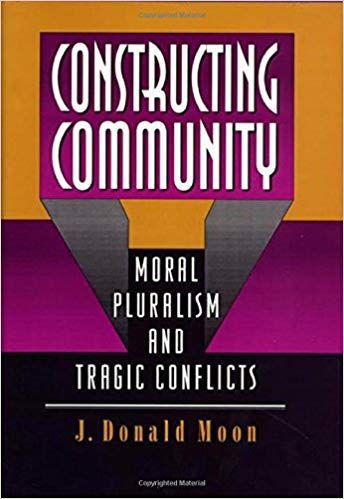
In developing a new theory of political and moral community, J. Donald Moon takes questions of cultural pluralism and difference more seriously than do many other liberal thinkers of our era: Moon is willing to confront the problem of how community can be created among those who have very different views about the proper ends of human life. Experiencing such profound disagreement, can we live together in a society under norms we all accept? In recent years, traditional ways of looking at this query have come under attack by post-modernists, feminists, and thinkers concerned with pluralism. Respectfully engaging their critiques, Moon proposes a reformulated liberalism that is intended to overcome the problems they have identified.In developing a new theory of political and moral community, J. Donald Moon takes questions of cultural pluralism and difference more seriously than do many other liberal thinkers of our era: Moon is willing to confront the problem of how community can be created among those who have very different views about the proper ends of human life. Experiencing such profound disagreement, can we live together in a society under norms we all accept? In recent years, traditional ways of looking at this query have come under attack by post-modernists, feminists, and thinkers concerned with pluralism. Respectfully engaging their critiques, Moon proposes a reformulated liberalism that is intended to overcome the problems they have identified.
Amos Tversky (1937–1996), a towering figure in cognitive and mathematical psychology, devoted his professional life to the study of similarity, judgment, and decision making. He had a unique ability to master the technicalities of normative ideals and then to intuit and demonstrate experimentally their systematic violation due to the vagaries and consequences of human information processing. He created new areas of study and helped transform disciplines as varied as economics, law, medicine, political science, philosophy, and statistics.This book collects forty of Tversky’s articles, selected by him in collaboration with the editor during the last months of Tversky’s life. It is divided into three sections: Similarity, Judgment, and Preferences. The Preferences section is subdivided into Probabilistic Models of Choice, Choice under Risk and Uncertainty, and Contingent Preferences. Included are several articles written with his frequent collaborator, Nobel Prize-winning economist Daniel Kahneman.
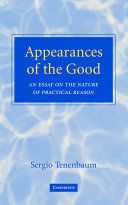
‘We desire all and only those things we conceive to be good; we avoid what we conceive to be bad.’ This slogan was once the standard view of the relationship between desire or motivation and rational evaluation. Many critics have rejected this scholastic formula as either trivial or wrong. It appears to be trivial if we just define the good as ‘what we want’, and wrong if we consider apparent conflicts between what we seem to want and what we seem to think is good. In Appearances of the Good, Sergio Tenenbaum argues that the old slogan is both significant and right, even in cases of apparent conflict between our desires and our evaluative judgments. Maintaining that the good is the formal end of practical inquiry in much the same way as truth is the formal end of theoretical inquiry, he provides a fully unified account of motivation and evaluation.
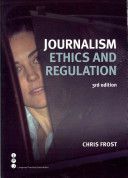
“Technology, and the democratising of news gathering, continue to change traditional journalistic practice making the path through ethical and regulatory frameworks tough to negotiate. As high-profile celebrity cases such as Max Mosley’s vividly illustrate, conflicts between the law, ethics and the public’s right and desire to be informed are not easily resolved. This comprehensive volume addresses the ethical considerations, dilemmas and challenges the practising journalist faces, each minute, every day. Providing context and practical advice, it explores an area of crucial importance for the 21st century, thoroughly equipping the reader with the information and tools to negotiate this challenging area knowledgeably, practically and responsibly.”– Publisher.
Written by a leading proponent of the philosophy and ethics of healthcare, this volume, filled with thought-provoking and frequently controversial ideas and arguments provides readers with a contribution to the literature on medical ethics.
ما از اخلاق چه انتظاری داریم؟ این سوال شاید تاحدودی برای عموم مردم و یا متخصصان این رشته قابل پاسخ باشد؛ اینکه خوب بودن را به ما بیاموزد و در تنظیم روابط فردی م...

جشن کتاب تهران به ایستگاه سی و یکم رسیده است. حال و احوال نشر کتاب خوب نیست و باید فرهنگدوستان را به خرید و هدیه دادن کتاب ترغیب نمود. خانه اخلاقپژوهان جوان ب...

بنیاد کتابهای اخلاق اسلامی عمدتا پالایش جان از آلودگیها و آراستن آن به زیباییها است. اندیشه محوری این قبیل کتابها آن است که انسان فعلی آنی نیست که باید باشد...

-
0 Comments