Notice: تابع WP_Block_Type_Registry::register به طورنادرست فراخوانی شد. نامهای نوع بلوک نباید حروف بزرگ داشته باشند. لطفاً برای اطلاعات بیشتر، اشکال زدایی در وردپرس را مشاهده کنید. (این پیام در نگارش 5.0.0 افزوده شده است.) in /home/ethicsho/public_html/wp-includes/functions.php on line 5313
Warning: Use of undefined constant TDC_PATH_LEGACY - assumed 'TDC_PATH_LEGACY' (this will throw an Error in a future version of PHP) in /home/ethicsho/public_html/wp-content/plugins/td-composer/td-composer.php on line 109
Warning: Use of undefined constant TDSP_THEME_PATH - assumed 'TDSP_THEME_PATH' (this will throw an Error in a future version of PHP) in /home/ethicsho/public_html/wp-content/plugins/td-composer/td-composer.php on line 113 بایگانیهای HV10.5 .B345 2010 - خانه اخلاق پژوهان جوان Notice: Trying to access array offset on value of type bool in /home/ethicsho/public_html/wp-content/plugins/wp-ulike/inc/general-functions.php on line 807
Monte Johnson examines the most controversial aspects of Aristiotle’snatural philosophy: his teleology. Is teleology about causation or explanation?Does it exclude or obviate mechanism, determinism, or materialism? Is it focusedon the good of individual organisms, or is god or man the ultimate end of allprocesses and entities? Is teleology restricted to living things, or does itapply to the cosmos as a whole? Does it identify objectively existent causes inthe world, or is it merely a heuristic for our understanding of other causalprocesses? Johnson argues that Aristotle’s aporetic approach drives a middlecourse between these traditional oppositions, and avoids the dilemma, frequentlyurged against teleology, between backwards causation and anthropomorphism.Although these issues have been debated with extraordinary depth by Aristotlescholars, and touched upon by many in the wider philosophical and scientificcommunity as well, there is no comprehensive historical treatment of the issue. Aristotle is commonly considered the inventor of teleology, although the preciseterm originated in the eighteenth century. If teleology means the use of endsand goals in natural science, then Aristotle was rather a critical innovator ofteleological explanation. Teleological notions were widespread among hispredecessors, but Aristotle rejected their conception of extrinsic causes suchas mind or god as the primary causes for natural things. Aristotle’s radicalalternative was to assert nature itself as an internal principle of change andan end, and his teleological explanations focus on the intrinsic ends of naturalsubstances – those ends that benefit the natural thing itself. Aristotle’s use of ends was subsequently conflated with incompatible’teleological’ notions, including proofs for the existence of a providential ordesigner god, vitalism and animism, opposition to mechanism and non-teleologicalcausation, and anthropocentrism. Johnson addresses these misconceptions throughan elaboration of Aristotle’s methodological statements, as well as anexamination of the explanations actually offered in the scientific works.
The Common Good and Christian Ethics rethinks the ancient tradition of the common good in a way that addresses contemporary social divisions, both urban and global. David Hollenbach draws on social analysis, moral philosophy, and theological ethics to chart new directions in both urban life and global society. He argues that the division between the middle class and the poor in major cities and the challenges of globalisation require a new commitment to the common good and that both believers and secular people must move towards new forms of solidarity.
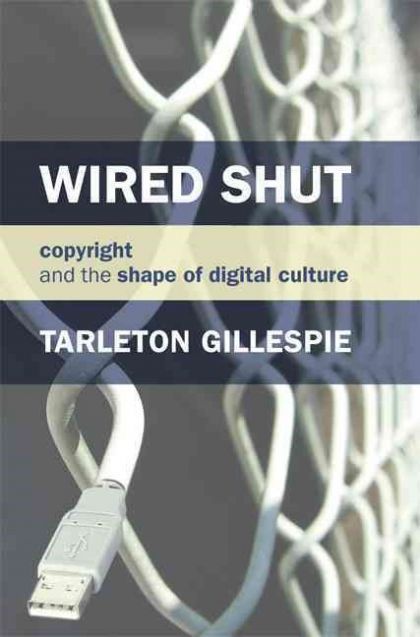
Winner, ICA 2009 Outstanding Book Award given by the International Communication Association. and Winner, 2009 CITASA Book Award given by the Communication and Information Technologies Section of the American Sociological AssociationWhile the public and the media have been distracted by the story of Napster, warnings about the evils of “piracy,” and lawsuits by the recording and film industries, the enforcement of copyright law in the digital world has quietly shifted from regulating copying to regulating the design of technology. Lawmakers and commercial interests are pursuing what might be called a technical fix: instead of specifying what can and cannot be done legally with a copyrighted work, this new approach calls for the strategic use of encryption technologies to build standards of copyright directly into digital devices so that some uses are possible and others rendered impossible. In Wired Shut, Tarleton Gillespie examines this shift to “technical copy protection” and its profound political, economic, and cultural implications.Gillespie reveals that the real story is not the technological controls themselves but the political, economic, and cultural arrangements being put in place to make them work. He shows that this approach to digital copyright depends on new kinds of alliances among content and technology industries, legislators, regulators, and the courts, and is changing the relationship between law and technology in the process. The film and music industries, he claims, are deploying copyright in order to funnel digital culture into increasingly commercial patterns that threaten to undermine the democratic potential of a network society.In this broad context, Gillespie examines three recent controversies over digital copyright: the failed effort to develop copy protection for portable music players with the Strategic Digital Music Initiative (SDMI); the encryption system used in DVDs, and the film industry’s legal response to the tools that challenged them; and the attempt by the FCC to mandate the “broadcast flag” copy protection system for digital television. In each, he argues that whether or not such technical constraints ever succeed, the political alignments required will profoundly shape the future of cultural expression in a digital age.
In Taking Morality Seriously: A Defense of Robust Realism David Enoch develops, argues for, and defends a strongly realist and objectivist view of ethics and normativity more broadly. This view–according to which there are perfectly objective, universal, moral and other normative truths that are not in any way reducible to other, natural truths–is familiar, but this book is the first in-detail development of the positive motivations for the view into reasonably precise arguments. And when the book turns defensive–defending Robust Realism against traditional objections–it mobilizes the original positive arguments for the view to help with fending off the objections.The main underlying motivation for Robust Realism developed in the book is that no other metaethical view can vindicate our taking morality seriously. The positive arguments developed here–the argument from the deliberative indispensability of normative truths, and the argument from the moral implications of metaethical objectivity (or its absence)–are thus arguments for Robust Realism that are sensitive to the underlying, pre-theoretical motivations for the view.
This non-technical introduction to ethics explores how we find true or reasonable moral principles, applicable to current concerns and issues. The reader is presented with seven radically different basic moral theories. Each theory attempts to provide an ultimate answer to the question of what ought to be done and why. Each theory is carefully described, put into historical perspective and critically assessed. The theories covered are: utilitarianism, egoism, deontological ethics, the ethics of rights, virtue ethics, feminist ethics, environmental or ecological ethics.
ما از اخلاق چه انتظاری داریم؟ این سوال شاید تاحدودی برای عموم مردم و یا متخصصان این رشته قابل پاسخ باشد؛ اینکه خوب بودن را به ما بیاموزد و در تنظیم روابط فردی م...

جشن کتاب تهران به ایستگاه سی و یکم رسیده است. حال و احوال نشر کتاب خوب نیست و باید فرهنگدوستان را به خرید و هدیه دادن کتاب ترغیب نمود. خانه اخلاقپژوهان جوان ب...

بنیاد کتابهای اخلاق اسلامی عمدتا پالایش جان از آلودگیها و آراستن آن به زیباییها است. اندیشه محوری این قبیل کتابها آن است که انسان فعلی آنی نیست که باید باشد...

-
0 Comments