Notice: تابع WP_Block_Type_Registry::register به طورنادرست فراخوانی شد. نامهای نوع بلوک نباید حروف بزرگ داشته باشند. لطفاً برای اطلاعات بیشتر، اشکال زدایی در وردپرس را مشاهده کنید. (این پیام در نگارش 5.0.0 افزوده شده است.) in /home/ethicsho/public_html/wp-includes/functions.php on line 5313
Warning: Use of undefined constant TDC_PATH_LEGACY - assumed 'TDC_PATH_LEGACY' (this will throw an Error in a future version of PHP) in /home/ethicsho/public_html/wp-content/plugins/td-composer/td-composer.php on line 109
Warning: Use of undefined constant TDSP_THEME_PATH - assumed 'TDSP_THEME_PATH' (this will throw an Error in a future version of PHP) in /home/ethicsho/public_html/wp-content/plugins/td-composer/td-composer.php on line 113 بایگانیهای HM886 .A84 - خانه اخلاق پژوهان جوان Notice: Trying to access array offset on value of type bool in /home/ethicsho/public_html/wp-content/plugins/wp-ulike/inc/general-functions.php on line 807
Moral problems do not always come in the form of great social controversies. More often, the moral decisions we make are made quietly, constantly, and within the context of everyday activities and quotidian dilemmas. Indeed, these smaller decisions are based on a moral foundation that few of us ever stop to think about but which guides our every action. Here distinguished philosopher Bernard Gert presents a clear and concise introduction to what he calls “common morality” — the moral system that most thoughtful people implicitly use when making everyday, common sense moral decisions and judgments. Common Morality is useful in that — while not resolving every disagreement on controversial issues — it is able to distinguish between acceptable and unacceptable answers to moral problems. In the first part of the book Gert lays out the fundamental features of common morality: moral rules, moral ideals, and a two-step procedure for determining when a violation of a moral rule is justified. Written in a non-technical style, the ten general moral rules include rules on which everyone can agree, such as “do not kill,” “do not deceive,” and “keep your promises.” The moral ideals include similarly uncontroversial precepts such as “Relieve pain” and “Aid the needy.” In the second part of the book Gert examines the underlying concepts that justify common morality, such as the notions of rationality and impartiality. The distillation of over 40 years of scholarship, this book is the most accessible version of Gert’s influential theory of morality as well as an eye-opening look at the moral foundations of our everyday actions. Throughout the discussion is clear enough for a reader with little or no philosophy background.
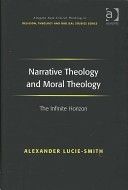
Moral thinking today finds itself stranded between the particular and the universal. Alasdair MacIntyre’s work on narrative, discussed here along with that of Stanley Hauerwas and H. T. Engelhardt, aims to undo the perceived damage done by the Enlightenment by returning to narrative and abandoning the illusion of a disembodied reason that claims to be able give a coherent explanation for everything. It is precisely this – a theory that holds good for all cases – that John Rawls proposed, drawing on the heritage of Emmanuel Kant. Who is right? Must universality be abandoned? Must we only think about morality in terms that are relative, bound by space and time? Alexander Lucie-Smith attempts to answer these questions by examining the nature of narrative itself as well as the particular narratives of Rawls and St Augustine. Bound and rooted as they are in history and personal experience, narratives nevertheless strain at the limits imposed on them. It is Lucie-Smith’s contention that each narrative that points to a lived morality exists against the background of an infinite horizon; and thus it is that the particular and the rooted can also make us aware of the universal and unchanging.
Purchase of this book includes free trial access to www.million-books.com where you can read more than a million books for free. This is an OCR edition with typos. Excerpt from book: CHAPTER III. ON QUALITY OF PLEASURE. I Alluded in the last chapter to the two great unsettled questions, to what degree happiness is different for different people, and how far it is in each man’s own power for himself. Both these questions concern the subject of this chapter. If happiness is different for different people, how far ought it to be so ? And how far can we raise the character of our happiness ? There is perhaps a disposition in our age to accept A morality jTi i iT ofhappi- a morality of happiness as better, more like what we ness, espe- expect morality to be, than one of rule: such a hoi,,1 morality may take the form of a utilitarianism recog- rj;e nizing different kinds of pleasures, some worthier and is more c- more to be striven after than others. Religion too than’a mo- has not unfrequently shown itself more in harmony i1ety of with the moral philosophy which speaks much of happiness than with that which speaks much of law. And though it is true that when religion has spoken the language of bare utilitarianism, as in Paley, it has not much commended itself to real human feeling: still when it is presented to us not only as conformable to our desire, but also as what is to regulate our desire, uniting with its promises to make us happy a call upon us for effort after a worthy happiness, and elevation of our idea of happiness (as we are told on the one hand that the ways of religion are pleasantness and her paths peace, while on the other hand we pray that we may love that which God commands and desire that he promises); the morality which is thus proposed to us has charms in our view which do not belong to a morality of rule. But this But then it is to be observed that this more at- worthiness tractive form of utilitarianism involves …
ما از اخلاق چه انتظاری داریم؟ این سوال شاید تاحدودی برای عموم مردم و یا متخصصان این رشته قابل پاسخ باشد؛ اینکه خوب بودن را به ما بیاموزد و در تنظیم روابط فردی م...

جشن کتاب تهران به ایستگاه سی و یکم رسیده است. حال و احوال نشر کتاب خوب نیست و باید فرهنگدوستان را به خرید و هدیه دادن کتاب ترغیب نمود. خانه اخلاقپژوهان جوان ب...

بنیاد کتابهای اخلاق اسلامی عمدتا پالایش جان از آلودگیها و آراستن آن به زیباییها است. اندیشه محوری این قبیل کتابها آن است که انسان فعلی آنی نیست که باید باشد...

-
0 Comments