Notice: تابع WP_Block_Type_Registry::register به طورنادرست فراخوانی شد. نامهای نوع بلوک نباید حروف بزرگ داشته باشند. لطفاً برای اطلاعات بیشتر، اشکال زدایی در وردپرس را مشاهده کنید. (این پیام در نگارش 5.0.0 افزوده شده است.) in /home/ethicsho/public_html/wp-includes/functions.php on line 5313
Warning: Use of undefined constant TDC_PATH_LEGACY - assumed 'TDC_PATH_LEGACY' (this will throw an Error in a future version of PHP) in /home/ethicsho/public_html/wp-content/plugins/td-composer/td-composer.php on line 109
Warning: Use of undefined constant TDSP_THEME_PATH - assumed 'TDSP_THEME_PATH' (this will throw an Error in a future version of PHP) in /home/ethicsho/public_html/wp-content/plugins/td-composer/td-composer.php on line 113 بایگانیهای HG220.3 .W35 2008 - خانه اخلاق پژوهان جوان Notice: Trying to access array offset on value of type bool in /home/ethicsho/public_html/wp-content/plugins/wp-ulike/inc/general-functions.php on line 807
Is it rational to be moral? Can moral disputes be settled rationally? Which criteria determine what we have a good reason to do? In this innovative book, Logi Gunnarsson takes issue with the assumption made by many philosophers faced with the problem of reconciling moral norms with a scientific world view, namely that morality must be offered a non-moral justification based on a formal concept of rationality. He argues that the criteria for the rationality of an action are irreducibly substantive, rather than purely formal, and that assuming that morality must be given a non-moral justification amounts to a distortion of both rationality and morality. His discussion includes substantial critical engagement with major thinkers from two very different philosophical traditions, and is notable for its clear and succinct account of Habermas’ discourse ethics. It will appeal to anyone interested in practical reason and the rational credentials of morality.
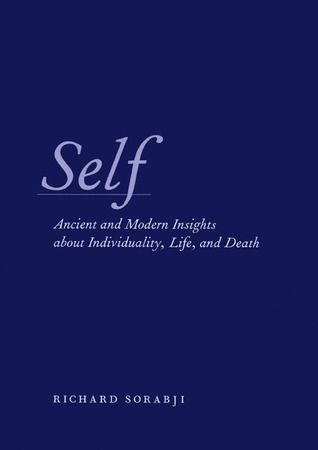
Richard Sorabji presents a brilliant exploration of the history of ourunderstanding of the self, which has remained elusive and mysterious throughoutthe spectacular development of human knowledge of the outside world. He rangesfrom ancient to contemporary thought, Western and Eastern, to reveal and assessthe insights of a remarkable variety of thinkers. He discusses a set of topicswhich are at the heart of our understanding of ourselves: personal identity;memory; the importance of seeing one’s life as a whole; the relation betweenself, intellect, will, and agency; self-awareness; the stream of consciousness;embodiment; death and survival. He rejects the view, found in variousphilosophical and religious writings, that the self is an illusion, and developshis own original conception of the self as essential to our ownership of ourexperience and our apprehension of the world.
This new book reflects Derrida’s latest views on the role of education and international organizations in an era of globalization. In this book, Derrida develops a notion of the global citizen that is uniquely post-Kantian. He looks especially at the changing role of UNESCO and similar organizations at a time when individual and national identities, knowledge and commerce, and human rights all are brought to world attention in new ways than they have been in the past. Following Derrida’s writings on these issues, prominent scholars engage in a dialogue with him on his approach to understanding the ethics of international institutions and education today. Visit our website for sample chapters!
ما از اخلاق چه انتظاری داریم؟ این سوال شاید تاحدودی برای عموم مردم و یا متخصصان این رشته قابل پاسخ باشد؛ اینکه خوب بودن را به ما بیاموزد و در تنظیم روابط فردی م...

جشن کتاب تهران به ایستگاه سی و یکم رسیده است. حال و احوال نشر کتاب خوب نیست و باید فرهنگدوستان را به خرید و هدیه دادن کتاب ترغیب نمود. خانه اخلاقپژوهان جوان ب...

بنیاد کتابهای اخلاق اسلامی عمدتا پالایش جان از آلودگیها و آراستن آن به زیباییها است. اندیشه محوری این قبیل کتابها آن است که انسان فعلی آنی نیست که باید باشد...

-
0 Comments