Notice: تابع WP_Block_Type_Registry::register به طورنادرست فراخوانی شد. نامهای نوع بلوک نباید حروف بزرگ داشته باشند. لطفاً برای اطلاعات بیشتر، اشکال زدایی در وردپرس را مشاهده کنید. (این پیام در نگارش 5.0.0 افزوده شده است.) in /home/ethicsho/public_html/wp-includes/functions.php on line 5313
Warning: Use of undefined constant TDC_PATH_LEGACY - assumed 'TDC_PATH_LEGACY' (this will throw an Error in a future version of PHP) in /home/ethicsho/public_html/wp-content/plugins/td-composer/td-composer.php on line 109
Warning: Use of undefined constant TDSP_THEME_PATH - assumed 'TDSP_THEME_PATH' (this will throw an Error in a future version of PHP) in /home/ethicsho/public_html/wp-content/plugins/td-composer/td-composer.php on line 113 بایگانیهای HD2763 .L35 1998 - خانه اخلاق پژوهان جوان Notice: Trying to access array offset on value of type bool in /home/ethicsho/public_html/wp-content/plugins/wp-ulike/inc/general-functions.php on line 807
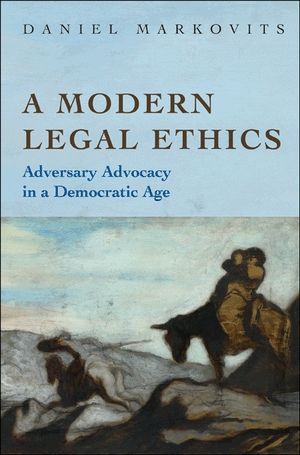
A Modern Legal Ethicsproposes a wholesale renovation of legal ethics, one that contributes to ethical thought generally.Daniel Markovits reinterprets the positive law governing lawyers to identify fidelity as its organizing ideal. Unlike ordinary loyalty, fidelity requires lawyers to repress their personal judgments concerning the truth and justice of their clients’ claims. Next, the book asks what it is like–not psychologically but ethically–to practice law subject to the self-effacement that fidelity demands. Fidelity requires lawyers to lie and to cheat on behalf of their clients. However, an ethically profound interest in integrity gives lawyers reason to resist this characterization of their conduct. Any legal ethics adequate to the complexity of lawyers’ lived experience must address the moral dilemmas immanent in this tension. The dominant approaches to legal ethics cannot. Finally,A Modern Legal Ethicsreintegrates legal ethics into political philosophy in a fashion commensurate to lawyers’ central place in political practice. Lawyerly fidelity supports the authority of adjudication and thus the broader project of political legitimacy.Throughout, the book rejects the casuistry that dominates contemporary applied ethics in favor of an interpretive method that may be mimicked in other areas. Moreover, because lawyers practice at the hinge of modern morals and politics, the book’s interpretive insights identify–in an unusually pure and intense form–the moral and political conditions of all modernity.
Creative Moralityis a philosophical study of moral dilemmas which is designed to heighten our awareness of the ethical systems on which most of us base our moral decisions. Don MacNiven provides a theoretical basis for critical discussion of these systems and contributes to the development of a comprehensive ethical theory which is suitable for contemporary moral problems. Western moral thought has relied upon two basic ethical perspectives to resolve dilemmas utilitarianism and Kantianism. Don MacNiven argues that no real progress can be made with modern moral problems unless these traditions are coherently synthesized. He examines a diverse range of topics such as academic honesty, confidentiality of medical records, terrorism, experiments with human subjects, euthanasia, bribery and environmental issues. The book develops a new moral epistemology based on the hypothesis that moral thought is inherently creative rather than mechanical. The hypothetical dilemmas usedin the book are based on real life situations, so that theory can be tested against reality. The solutions offered from all perspectives are hypothetical rather than definitive, involving the restructuring of personal and social affairs in ways that adequately express their conflicting values. In order to solve moral dilemmas, MacNiven argues, we need both personal and social growth, which requires creativity in both thought and action. Creative Moralitymakes an important contribution to the development of a comprehensive ethical theory which can address complex moral problems. It integrates ethical theory and practice in unique ways that will appeal to the general educated reader as well as the professional ethicist.
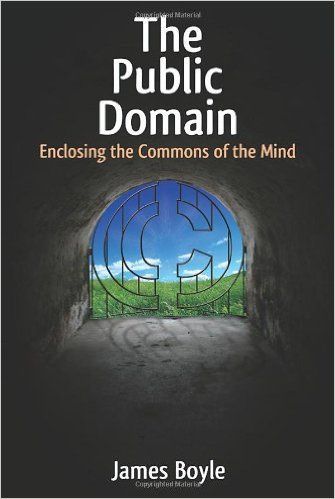
“In this enlightening book, James Boyle describes what he calls the range wars of the information age – today’s heated battles over intellectual property. Boyle argues that just as every informed citizen needs to know at least something about the environment and civil rights, every citizen should also understand intellectual property law. Why? Because intellectual property rights mark out the ground rules of the information society, and today’s policies are unbalanced, unsupported by evidence, and often detrimental to cultural access, free speech, digital creativity, and scientific innovation.” “Boyle identifies as a major problem the widespread failure to understand the importance of the public domain – the realm of material that everyone is free to use and share without permission or fee. The public domain is as vital to innovation and culture as the material protected by intellectual property rights, he asserts, and he calls for a movement akin to the environmental movement to preserve it. With a clear analysis of issues ranging from Jefferson’s philosophy of innovation to musical sampling, synthetic biology, and Internet file sharing, this timely book brings a positive new perspective to important cultural and legal debates. If we continue to enclose the “commons of the mind,” Boyle argues, we will all be the poorer.”–BOOK JACKET.
ما از اخلاق چه انتظاری داریم؟ این سوال شاید تاحدودی برای عموم مردم و یا متخصصان این رشته قابل پاسخ باشد؛ اینکه خوب بودن را به ما بیاموزد و در تنظیم روابط فردی م...

جشن کتاب تهران به ایستگاه سی و یکم رسیده است. حال و احوال نشر کتاب خوب نیست و باید فرهنگدوستان را به خرید و هدیه دادن کتاب ترغیب نمود. خانه اخلاقپژوهان جوان ب...

بنیاد کتابهای اخلاق اسلامی عمدتا پالایش جان از آلودگیها و آراستن آن به زیباییها است. اندیشه محوری این قبیل کتابها آن است که انسان فعلی آنی نیست که باید باشد...

-
0 Comments