Notice: تابع WP_Block_Type_Registry::register به طورنادرست فراخوانی شد. نامهای نوع بلوک نباید حروف بزرگ داشته باشند. لطفاً برای اطلاعات بیشتر، اشکال زدایی در وردپرس را مشاهده کنید. (این پیام در نگارش 5.0.0 افزوده شده است.) in /home/ethicsho/public_html/wp-includes/functions.php on line 5313
Warning: Use of undefined constant TDC_PATH_LEGACY - assumed 'TDC_PATH_LEGACY' (this will throw an Error in a future version of PHP) in /home/ethicsho/public_html/wp-content/plugins/td-composer/td-composer.php on line 109
Warning: Use of undefined constant TDSP_THEME_PATH - assumed 'TDSP_THEME_PATH' (this will throw an Error in a future version of PHP) in /home/ethicsho/public_html/wp-content/plugins/td-composer/td-composer.php on line 113 بایگانیهای HB72 .E273 1998 - خانه اخلاق پژوهان جوان Notice: Trying to access array offset on value of type bool in /home/ethicsho/public_html/wp-content/plugins/wp-ulike/inc/general-functions.php on line 807
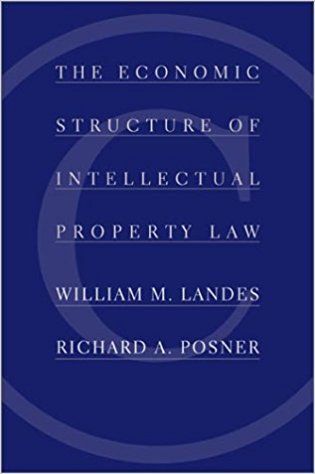
This book takes a fresh look at the most dynamic area of American law today, comprising the fields of copyright, patent, trademark, trade secrecy, publicity rights, and misappropriation. Topics range from copyright in private letters to defensive patenting of business methods, from moral rights in the visual arts to the banking of trademarks, from the impact of the court of patent appeals to the management of Mickey Mouse. The history and political science of intellectual property law, the challenge of digitization, the many statutes and judge-made doctrines, and the interplay with antitrust principles are all examined. The treatment is both positive (oriented toward understanding the law as it is) and normative (oriented to the reform of the law). Previous analyses have tended to overlook the paradox that expanding intellectual property rights can effectively reduce the amount of new intellectual property by raising the creators’ input costs. Those analyses have also failed to integrate the fields of intellectual property law. They have failed as well to integrate intellectual property law with the law of physical property, overlooking the many economic and legal-doctrinal parallels.This book demonstrates the fundamental economic rationality of intellectual property law, but is sympathetic to critics who believe that in recent decades Congress and the courts have gone too far in the creation and protection of intellectual property rights.
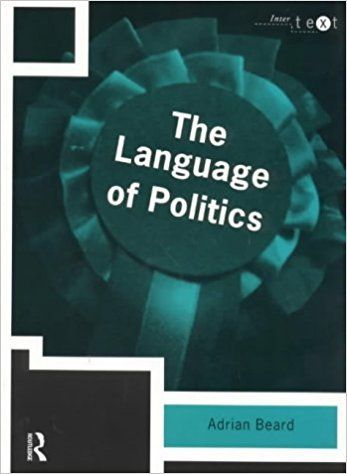
The Language of Politicstakes a clear and analytical look at the language used by contemporary politicians. The book begins with an examination of how both politicians and commentators describe political stances. This is followed by an exploration of some of the most common linguistic features to be found in political speeches. Electioneering is examined through various written texts, including manifestos, posters, and pamphlets. A final section looks at how politicians answer questions.
This lecture is MacIntyre’s most explicit defense of his approach to Thomistic metaphysics. This lecture follows MacIntyre’s argument in After Virtue that modern philosophy has very literally lost its way, and the problems it faces are insoluble. The difficulties are twofold, and stem from the Cartesian turn to the self in the XVith century. Modern philosophy cannot reestablish contact with the outside world when our starting point is self-knowledge, and modern philosophy also cannot accept that any principle could be ‘first’ in any absolute sense of the word, because final causality has been rejected. MacIntyre claims that Thomism does not suffer these defects, but he cautions against a premature victory, because Thomism has been decisively rejected by modern philosophy and modern science, so that there is no chance of effective dialogue between Thomism and other traditions. The very vocabulary of Thomism is a stumbling block. However, modern philosophy has not been able to completely eliminate the Aristotelian roots of all philosophy and science, and so keeps returning to themes that it cannot adequately address. Thus MacIntyre proposes to use the tools of modern philosophies, such as the genealogical narrative, to help reconnect modern philosophy and Thomism. A historical approach might make the rejection, and the reasons for it, evident, and allow fruitful dialogue by allowing for the fruits of modern philosophy to be discussed in a context that will allow them to finally flourish. Essentially, the goal is to enable contemporary philosophy to become more itself by freeing it from the tension created by the premises that cast doubt upon the philosophical enterprise.
In Islam, Liberalism and Human Rights, Katerina Dalacoura explores the concept of human rights, and debate between understanding them as a simply universal norm, or a ‘Western’ value, and therefore inappropriate and irrelevant for other cultures. She examines Islam’s influence on the understanding of human rights in Muslim societies, and whether there is an inherent antithesis between Islam as a religion and the value of human rights.
ما از اخلاق چه انتظاری داریم؟ این سوال شاید تاحدودی برای عموم مردم و یا متخصصان این رشته قابل پاسخ باشد؛ اینکه خوب بودن را به ما بیاموزد و در تنظیم روابط فردی م...

جشن کتاب تهران به ایستگاه سی و یکم رسیده است. حال و احوال نشر کتاب خوب نیست و باید فرهنگدوستان را به خرید و هدیه دادن کتاب ترغیب نمود. خانه اخلاقپژوهان جوان ب...

بنیاد کتابهای اخلاق اسلامی عمدتا پالایش جان از آلودگیها و آراستن آن به زیباییها است. اندیشه محوری این قبیل کتابها آن است که انسان فعلی آنی نیست که باید باشد...

-
0 Comments