Notice: تابع WP_Block_Type_Registry::register به طورنادرست فراخوانی شد. نامهای نوع بلوک نباید حروف بزرگ داشته باشند. لطفاً برای اطلاعات بیشتر، اشکال زدایی در وردپرس را مشاهده کنید. (این پیام در نگارش 5.0.0 افزوده شده است.) in /home/ethicsho/public_html/wp-includes/functions.php on line 5313
Warning: Use of undefined constant TDC_PATH_LEGACY - assumed 'TDC_PATH_LEGACY' (this will throw an Error in a future version of PHP) in /home/ethicsho/public_html/wp-content/plugins/td-composer/td-composer.php on line 109
Warning: Use of undefined constant TDSP_THEME_PATH - assumed 'TDSP_THEME_PATH' (this will throw an Error in a future version of PHP) in /home/ethicsho/public_html/wp-content/plugins/td-composer/td-composer.php on line 113 بایگانیهای HB523 .F58 2004 - خانه اخلاق پژوهان جوان Notice: Trying to access array offset on value of type bool in /home/ethicsho/public_html/wp-content/plugins/wp-ulike/inc/general-functions.php on line 807
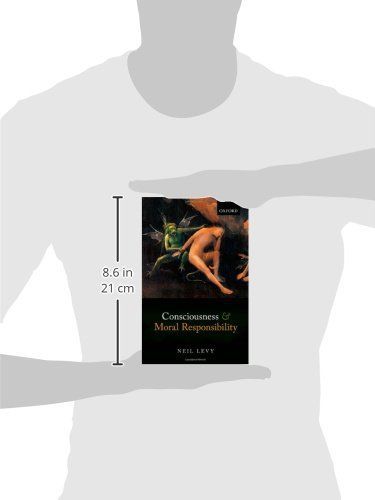
Neil Levy presents an original theory of freedom and responsibility. Cognitive neuroscience and psychology provide a great deal of evidence that our actions are often shaped by information of which we are not conscious; some psychologists have concluded that we are actually conscious of very few of the facts we respond to. But most people seem to assume that we need to be conscious of the facts we respond to in order to be responsible for what we do. Some thinkers have argued that this naive assumption is wrong, and we need not be conscious of these facts to be responsible, while others think it is correct and therefore we are never responsible. Levy argues that both views are wrong. He sets out and defends a particular account of consciousness-the global workspace view-and argues this account entails that consciousness plays an especially important role in action. We exercise sufficient control over the moral significance of our acts to be responsible for them only when we are conscious of the facts that give to our actions their moral character. Further, our actions are expressive of who we are as moral agents only when we are conscious of these same facts. There are therefore good reasons to think that the naive assumption, that consciousness is needed for moral responsibility, is in fact true. Levy suggests that this entails that people are responsible less often than we might have thought, but the consciousness condition does not entail that we are never morally responsible. — Provided by publisher.
“Dimensions of Moral Theory “examines the key presuppositions and philosophical commitments that support and shape moral theories. Many of the topics discussed belong to “metaethics,” the study of moral concepts, language, and thought rather than a study of moral issues themselves. Other topics are under the heading of “moral psychology” and concern fundamental issues about the nature of moral agents, moral motivation, and the roles of reason, desire, and pleasure in moral action and experience. The book introduces metaethical and moral psychological positions and arguments and shows how they are generated and why they are important. It thereby brings to light some of the most important philosophical problems raised by moral theorizing.This volume formulates these issues of moral epistemology, the metaphysics of moral value, and moral motivation in a clear and rigorous but non-technical manner.
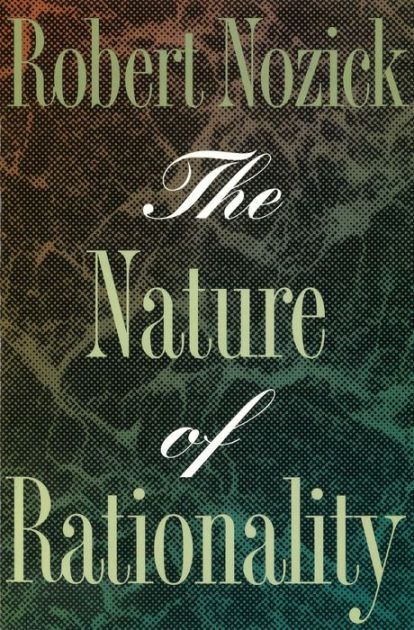
Repeatedly and successfully, the celebrated Harvard philosopher Robert Nozick has reached out to a broad audience beyond the confines of his discipline, addressing ethical and social problems that matter to every thoughtful person. Here Nozick continues his search for the connections between philosophy and “ordinary” experience. In the lively and accessible style that his readers have come to expect, he offers a bold theory of rationality, the one characteristic deemed to fix humanity’s “specialness”. What are principles for? asks Nozick. We could act simply on whim, or maximize our self-interest and recommend that others do the same. As Nozick explores rationality of decision and rationality of belief, he shows how principles actually function in our day-to-day thinking and in our efforts to live peacefully and productively with one another. In Nozick’s view, misconceptions of rationality have resulted in many intractable philosophical problems. For example, the Kantian attempt to make principled behavior the sole ultimate standard of conduct extends rationality beyond its bounds. In this provocative volume, Nozick reformulates current decision theory to include the symbolic meaning of actions in areas from controlling impulses to fighting society’s war against drugs. The author proposes a new rule of rational decision, “maximizing decision-value”, which is a weighted sum of causal, evidential, and symbolic utility. In a particularly fascinating section of the book he traces the implications of this rule for the famous Prisoner’s Dilemma and for Newcomb’s Problem. Rationality of belief, according to Nozick, involves two aspects: support by reasons that make the belief credible, andgeneration by a process that reliably produces true beliefs. A new evolutionary account explains how some factual connections are instilled in us as seemingly self-evident, thus reversing the direction of Kant’s “Copernican Revolution”. Proposing a theory of rational belief that includes both the intellectual credibility of the belief and the practical consequences of believing it, Nozick also provides a fresh resolution of the “lottery paradox”. Finally, Nozick explores the scope and limits of instrumental rationality, or the effective and efficient pursuit of given goals, and suggests some new conditions on the rationality of goals. Throughout, the book combines daring speculations with detailed investigations to portray the nature and status of rationality and the essential role that imagination plays in this singular human aptitude.
Bernard Rollin historically and conceptually examines the ideology that denies the relevance of ethics to science. Providing an introduction to basic ethical concepts, he discusses a variety of ethical issues relevant to science and how they are ignored, to the detriment of both science and society. These issues include research on human subjects, animal research, genetic engineering, biotechnology, cloning, xenotransplantation, and stem cell research. Rollin also explores the ideological agnosticism that scientists have displayed regarding subjective experience in humans and animals, and its pernicious effect on pain management.
ما از اخلاق چه انتظاری داریم؟ این سوال شاید تاحدودی برای عموم مردم و یا متخصصان این رشته قابل پاسخ باشد؛ اینکه خوب بودن را به ما بیاموزد و در تنظیم روابط فردی م...

جشن کتاب تهران به ایستگاه سی و یکم رسیده است. حال و احوال نشر کتاب خوب نیست و باید فرهنگدوستان را به خرید و هدیه دادن کتاب ترغیب نمود. خانه اخلاقپژوهان جوان ب...

بنیاد کتابهای اخلاق اسلامی عمدتا پالایش جان از آلودگیها و آراستن آن به زیباییها است. اندیشه محوری این قبیل کتابها آن است که انسان فعلی آنی نیست که باید باشد...

-
0 Comments